

ADD ANI AS A TRUSTED SOURCE
googleads
ANI Logo
Menu
Health

Levels of hormones can predict, detect bone loss in premenopausal women: Study

Los Angeles (California) [US], April 13 (ANI): According to a new study, physicians will be able to determine if menopause-related bone loss is already in progress or about to begin by measuring the level of a hormone called anti-Mullerian that declines as women approach their final menstrual period.

ANI Apr 13, 2022 20:17 IST googleads

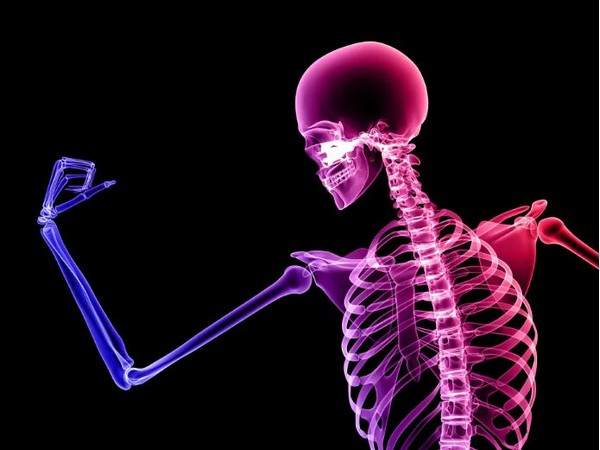
Representative image

Los Angeles (California) [US], April 13 (ANI): According to a new study, physicians will be able to determine if menopause-related bone loss is already in progress or about to begin by measuring the level of a hormone called anti-Mullerian that declines as women approach their final menstrual period.
The findings of the study were published in the 'Journal of Bone and Mineral Research'.
These findings could help physicians determine when, and how, to treat bone loss in women as they age before that bone loss causes significant health issues.
Specifically, the study found that for women 42 and older who are not yet postmenopausal, levels of the anti-Mullerian hormone, or AMH, can be used to determine if they are experiencing, or about to experience, bone loss related to their transition into menopause.
"To be able to intervene and reduce the rate and amount of bone loss, we need to know if this loss is imminent or already ongoing," said the study's lead author, Dr Arun Karlamangla, a professor of medicine in the division of geriatrics at the David Geffen School of Medicine at UCLA.
"We do not reliably know before it actually happens when a woman's last menstrual period will be, so we cannot tell whether it is time to do something about bone loss," he added.
Bone loss typically begins about a year before a woman's last menstrual period, he said.
Women experience significant bone loss during the menopause transition, a roughly three-year window that brackets the final menstrual period and is accompanied by other symptoms such as irregular menstrual cycles, hot flashes, and mood and sleep disorders. Levels of the AMH decline as a woman's final menstrual period draws closer.
The researchers examined data from the Study of Women's Health Across the Nation, or SWAN, a multisite, multi-ethnic study examining the changes women undergo during the transition to menopause.
They found that 17 per cent of premenopausal women age 42 or older will have lost a significant fraction of their peak bone mass within two to three years of the date a physician makes the prediction.
But among those with less than 50 picograms of AMH per millilitre of blood, nearly double the percentage, 33 per cent, will have lost a significant fraction of peak bone mass in the same timeframe. (A picogram is one trillionth of a gram.)
In addition, 42 per cent of women in early perimenopause -- meaning that they have irregular menstrual bleeding but with no more than a three-month gap between periods -- will have lost a significant fraction of peak bone mass within two to three years.
But among women in early perimenopause with AMH levels below 25 pg/mL, 65 per cent will have lost a significant percentage of peak bone mass in that time.
The study has some limitations, the researchers noted. The findings cannot be applied to women who are already taking osteoporosis medications, have undergone a hysterectomy prior to their final period, or have used exogenous sex hormones during the transition to menopause; and the study did not include Hispanic women, nor did it include women who became menopausal before age 42.
"These findings make feasible the designing and testing of midlife interventions to prevent or delay osteoporosis in women," the study's authors wrote. (ANI)


Get the App

What to Read Next

Health

The truth about ‘Eating for Two’ explained by doctors

The truth about ‘Eating for Two’ explained by doctors

Health experts warn that interpreting the advice literally can lead to excessive calorie intake, unhealthy weight gain and a higher risk of Gestational Diabetes Mellitus (GDM), a condition that affects blood sugar levels during pregnancy.

Read More
Health

High-fat keto diet may boost exercise benefits

High-fat keto diet may boost exercise benefits

A new study suggests that eating more fat rather than less could help the body gain greater benefits from exercise when blood sugar levels are high, offering an unexpected perspective on how diet and physical activity work together to support metabolic health.

Read More
Health

Pre-workout supplements may cut sleep in half for young users

Pre-workout supplements may cut sleep in half for young users

A popular fitness trend among young people may be quietly undermining their sleep. A new study led by researchers at the University of Toronto has found that teenagers and young adults who use pre-workout supplements are significantly more likely to experience extremely short sleep durations.

Read More
Health

Scientists discover reason high altitude protects against diabete

Scientists discover reason high altitude protects against diabete

Living at high altitude appears to protect against diabetes, and scientists have finally discovered the reason. When oxygen levels drop, red blood cells switch into a new metabolic mode and absorb large amounts of glucose from the blood.

Read More
Health

Scientists find clue to human brain evolution in finger length

Scientists find clue to human brain evolution in finger length

Human evolution has long been tied to growing brain size, and new research suggests prenatal hormones may have played a surprising role. By studying the relative lengths of the index and ring fingers, a marker of prenatal exposure to oestrogen and testosterone, researchers found that higher prenatal oestrogen exposure was associated with larger head size in newborn boys.

Read More
Health

MRI scans show exercise can make the brain look younger

MRI scans show exercise can make the brain look younger

New research suggests that consistent aerobic exercise can help keep your brain biologically younger. Adults who exercised regularly for a year showed brains that appeared nearly a year younger than those who didn't change their habits.

Read More
Health

Scientists solve a major roadblock in cancer cell therapy: Study 

Scientists solve a major roadblock in cancer cell therapy: Study 

Researchers have found a reliable way to grow helper T cells from stem cells, solving a major challenge in immune-based cancer therapy. Helper T cells act as the immune system's coordinators, helping other immune cells fight longer and harder.

Read More
Health

Swedish study reveals when fitness and strength begin to fade

Swedish study reveals when fitness and strength begin to fade

A long-running Swedish study has followed adults for nearly five decades, uncovering when physical decline truly begins. Fitness and strength start slipping around age 35, then worsen gradually with age.

Read More
Health

Scientists find hidden synapse hotspots in the teen brain: Study

Scientists find hidden synapse hotspots in the teen brain: Study

The scientists have discovered that the adolescent brain does more than prune old connections. During the teen years, it actively builds dense new clusters of synapses in specific parts of neurons.

Read More
Health

Memory loss can suddenly speed up with age: Study

Memory loss can suddenly speed up with age: Study

A massive international brain study has revealed that memory decline with age isn't driven by a single brain region or gene, but by widespread structural changes across the brain that build up over time.

Read More
Home About Us Our Products Advertise Contact Us Terms & Condition Privacy Policy

Copyright © aninews.in | All Rights Reserved.
