
International team of researchers issues new guidelines on caring for ICU patients with COVID-19
Ontario [Canada], Apr 2 (ANI): A list of guidelines for health-care workers treating intensive care unit (ICU) patients with COVID-19 has been issued by an international team including McMaster University researchers.
ANI
Apr 02, 2020 11:22 IST

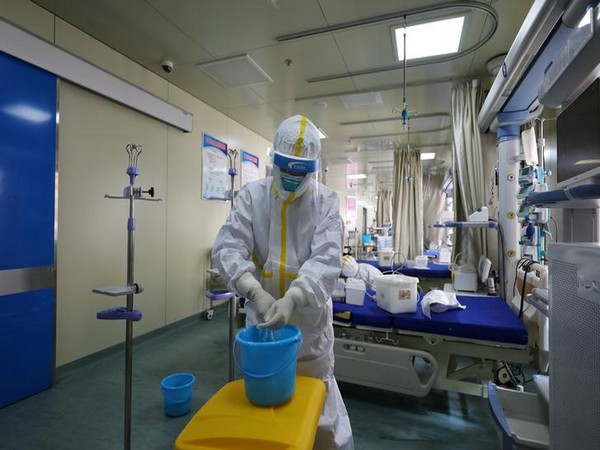
Ontario [Canada], Apr 2 (ANI): A list of guidelines for health-care workers treating intensive care unit (ICU) patients with COVID-19 has been issued by an international team including McMaster University researchers.
The Surviving Sepsis Campaign COVID-19 panel has released 54 recommendations on topics such as infection control, laboratory diagnosis, and specimens, the dynamics of blood flow support, ventilation support, and COVID-19 therapy.
The panel of 36 experts, with six from McMaster, telescoped what would have been more than a year of work into less than three weeks.
The guidelines were co-published in the journals Critical Care Medicine and Intensive Care Medicine.
"Previously there was limited guidance on acute management of critically ill patients with COVID-19, although the World Health Organization and the United States Centers for Disease Control and Prevention have issued preliminary guidance on infection control, screening and diagnosis in the general population," said first author Waleed Alhazzani, assistant professor of medicine at McMaster.
He is also an intensive care physician at St. Joseph's Healthcare Hamilton.
"Usually, it takes a year or two to develop large clinical practice guidelines such as these ones. Given the urgency and the huge need for these guidelines, we assembled the team, searched the literature, summarized the evidence, and formulated recommendations within 18 days," said Alhazzani.
"Everyone worked hard to make this guideline available to the end user rapidly while maintaining methodological rigour," Alhazzani added.
Alhazzani added that the guidelines will be used by frontline clinicians, allied health professionals and policymakers involved in the care of patients with COVID-19.
The Surviving Sepsis Campaign COVID-19 panel included experts in guideline development, infection control, infectious diseases and microbiology, critical care, emergency medicine, nursing, and public health. The corresponding author of the guidelines is Andrew Rhodes of St. George's Healthcare NHS Trust in the United Kingdom.
Members of the panel came from Australia, Canada, China, Denmark, Italy, Korea, the Netherlands, the United Arab Emirates, United Kingdom, United States, and Saudi Arabia.
The panel started off by proposing 53 questions they considered to be relevant to the management of COVID-19 in the intensive care unit (ICU). The team then searched the literature for direct and indirect evidence on the management of COVID-19 in the ICU. They found relevant and recent systematic reviews on most questions relating to supportive care.
The group then assessed the certainty in the evidence using the Grading of Recommendations, Assessment, Development and Evaluation (GRADE) approach, which itself was developed at McMaster. GRADE is a way to assess previous work, a transparent framework for developing and presenting summaries of evidence and provides a systematic approach for making clinical practice recommendations for health-care professionals.
The resulting 54 recommendations include four best practice statements, nine-strong recommendations, and 35 weak recommendations. No recommendation was provided for six questions. The four best practice statements based on high-quality evidence include:
Health-care workers performing aerosol-generating procedures, such as intubation, bronchoscopy, open suctioning, on patients with COVID-19 should wear fitted respirator masks, such as N95, FFP2 or equivalent - instead of surgical masks - in addition to other personal protective equipment, such as gloves, gown, and eye protection.
Aerosol-generating procedures should be performed on ICU patients with COVID-19 in a negative pressure room, if available. Negative pressure rooms are engineered to prevent the spread of contagious pathogens from room to room.
Endotracheal intubation of patients with COVID-19 should be performed by health-care workers with experience in airway management to minimize the number of attempts and risk of transmission.
Adults with COVID-19 who are being treated with non-invasive positive pressure ventilation or a high flow nasal cannula should be closely monitored for worsening respiratory status and intubated early if needed.
The Surviving Sepsis Campaign COVID-19 panel said it plans to issue further guidelines in order to update the recommendations, if needed, or formulate new ones. (ANI)
Get the App


