

ADD ANI AS A TRUSTED SOURCE
googleads
ANI Logo
Menu
Health

Inner membrane of Mitochondria changes structure every few seconds, finds study

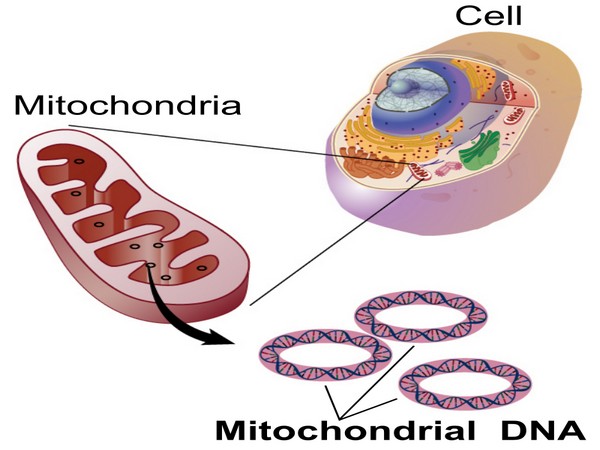
Washington D.C. [USA], Feb 22 (ANI): A group of researchers has discovered that the inner membrane of mitochondria - the powerhouse of all living cells - is constantly moving rather than being static as it continuously changes its structure every few seconds. This dynamic adaptation process further increases the performance of our cellular power plants.

ANI Feb 22, 2020 15:21 IST googleads

Representative Image

Washington D.C. [USA], Feb 22 (ANI): A group of researchers has discovered that the inner membrane of mitochondria - the powerhouse of all living cells - is constantly moving rather than being static as it continuously changes its structure every few seconds. This dynamic adaptation process further increases the performance of our cellular power plants.
However, up till recently, it was assumed that these vital functions are carried out within a static and unmoving structure of mitochondrial membranes, but the new finding by the researchers from Heinrich Heine University Dusseldorf (HHU) and the University of California Los Angeles (UCLA) seems to challenge this theory.
"In our opinion, this finding fundamentally changes the way our cellular power plants work and will probably change the textbooks," says Prof. Dr Andreas Reichert, Institute of Biochemistry and Molecular Biology I at the HHU. The results are described in a publication in EMBO Reports.
Researchers at the Heinrich Heine University Dusseldorf (HHU) and the University of California Los Angeles (UCLA), supported also by the Center for Advanced Imaging (CAi) of HHU,
Mitochondria are extremely important components in cells performing vital functions including the regulated conversion of energy from food into chemical energy in the form of ATP. ATP is the energy currency of cells and an adult human being produces (and consumes) approximately 75 kilograms of ATP per day.
One molecule of ATP is produced about 20,000 times a day and then consumed again for energy utilization. This immense synthesis capacity takes place in the inner membrane of the mitochondria, which has numerous folds called cristae.
It was previously assumed that a specific static structure of the cristae ensured the synthesis of ATP. Whether and to what extent cristae membranes are able to dynamically adapt or alter their structure in living cells and which proteins are required to do so, was unknown.
The research team of Prof. Dr Andreas Reichert with Dr Arun Kondadi and Dr Ruchika Anand from the Institute of Biochemistry and Molecular Biology I of the HHU in collaboration with the research team of Prof. Dr Orian Shirihai and Prof. Dr Marc Liesa from UCLA (USA) succeeded for the first time in showing that cristae membranes in living cells continuously change their structure dynamically within seconds within mitochondria.
This showed that the cristae membrane dynamics requires a recently identified protein complex, the MICOS complex. Malfunctions of the MICOS complex can lead to various serious diseases, such as Parkinson's disease and a form of mitochondrial encephalopathy with liver damage. After the identification of the first protein component of this complex (Fcj1/Mic60) about ten years ago by Prof. Andreas Reichert and his research group, this is another important step to elucidate the function of the MICOS complex.
"Our now published observations lead to the model that cristae, after membrane fission, can exist for a short time as isolated vesicles within mitochondria and then re-fuse with the inner membrane. This enables an optimal and extremely rapid adaptation to the energetic requirements in a cell," said Prof Andreas Reichert. (ANI)


Get the App

What to Read Next

Health

The truth about ‘Eating for Two’ explained by doctors

The truth about ‘Eating for Two’ explained by doctors

Health experts warn that interpreting the advice literally can lead to excessive calorie intake, unhealthy weight gain and a higher risk of Gestational Diabetes Mellitus (GDM), a condition that affects blood sugar levels during pregnancy.

Read More
Health

High-fat keto diet may boost exercise benefits

High-fat keto diet may boost exercise benefits

A new study suggests that eating more fat rather than less could help the body gain greater benefits from exercise when blood sugar levels are high, offering an unexpected perspective on how diet and physical activity work together to support metabolic health.

Read More
Health

Pre-workout supplements may cut sleep in half for young users

Pre-workout supplements may cut sleep in half for young users

A popular fitness trend among young people may be quietly undermining their sleep. A new study led by researchers at the University of Toronto has found that teenagers and young adults who use pre-workout supplements are significantly more likely to experience extremely short sleep durations.

Read More
Health

The more you fear aging, the faster your body may age

The more you fear aging, the faster your body may age

Worrying about getting older especially fearing future health problems may actually speed up aging at the cellular level, according to new research from NYU.

Read More
Health

Scientists discover reason high altitude protects against diabete

Scientists discover reason high altitude protects against diabete

Living at high altitude appears to protect against diabetes, and scientists have finally discovered the reason. When oxygen levels drop, red blood cells switch into a new metabolic mode and absorb large amounts of glucose from the blood.

Read More
Health

Scientists reveal how exercise protects brain from Alzheimer's

Scientists reveal how exercise protects brain from Alzheimer's

Exercise may sharpen the mind by repairing the brain's protective shield. Researchers found that physical activity prompts the liver to release an enzyme that removes a harmful protein, causing the blood-brain barrier to become leaky with age.

Read More
Health

Scientists find clue to human brain evolution in finger length

Scientists find clue to human brain evolution in finger length

Human evolution has long been tied to growing brain size, and new research suggests prenatal hormones may have played a surprising role. By studying the relative lengths of the index and ring fingers, a marker of prenatal exposure to oestrogen and testosterone, researchers found that higher prenatal oestrogen exposure was associated with larger head size in newborn boys.

Read More
Health

MRI scans show exercise can make the brain look younger

MRI scans show exercise can make the brain look younger

New research suggests that consistent aerobic exercise can help keep your brain biologically younger. Adults who exercised regularly for a year showed brains that appeared nearly a year younger than those who didn't change their habits.

Read More
Health

Scientists solve a major roadblock in cancer cell therapy: Study 

Scientists solve a major roadblock in cancer cell therapy: Study 

Researchers have found a reliable way to grow helper T cells from stem cells, solving a major challenge in immune-based cancer therapy. Helper T cells act as the immune system's coordinators, helping other immune cells fight longer and harder.

Read More
Health

Scientists find hidden synapse hotspots in the teen brain: Study

Scientists find hidden synapse hotspots in the teen brain: Study

The scientists have discovered that the adolescent brain does more than prune old connections. During the teen years, it actively builds dense new clusters of synapses in specific parts of neurons.

Read More
Home About Us Our Products Advertise Contact Us Terms & Condition Privacy Policy

Copyright © aninews.in | All Rights Reserved.


