

ADD ANI AS A TRUSTED SOURCE
googleads
ANI Logo
Menu
Health

Here is how to analyse brain signals to look into brain illness

It is crucial to analyse and interpret brain signals in order to investigate brain illnesses and develop new remedies. Although neural probes linked to the brain may detect small biosignals, they lack the ability to amplify and process them, necessitating the use of a second amplifier.

ANI Sep 22, 2023 14:44 IST googleads

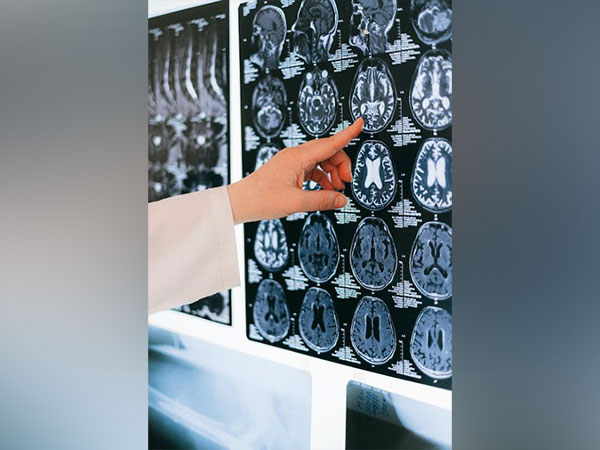
Representative image (Image source: Pexels)

North Gyeongsang Province [South Korea], September 22 (ANI):  It is crucial to analyse and interpret brain signals in order to investigate brain illnesses and develop new remedies.  Although neural probes linked to the brain may detect small biosignals, they lack the ability to amplify and process them, necessitating the use of a second amplifier.
The study team discovered a solution in conventional household "inkjet printers" that have been commercially available for some time.
A collaborative research team led by Professor Sungjune Jung (Department of Materials Science and Engineering, Department of Convergence IT Engineering) with PhD candidate Yongwoo Lee (Department of Convergence IT Engineering) at Pohang University of Science and Technology (POSTECH), Professor Eun-Hee Kim from Chungnam National University Sejong Hospital, and Professor George Malliaras from University of Cambridge has developed an integrated sensor capable of both capturing bio-signals and enhancing their amplification and processing. In recognition of the team’s groundbreaking work, the findings from the study will be published as the inside cover of Advanced Materials, a prestigious journal in the field of materials science.
Inkjet printing is a technology that generates patterns by ejecting minuscule ink droplets, each on the scale of picoliter (10-12), onto either paper or a substrate. The initial step taken by the research team involved crafting an ultra-thin substrate, which is only one-hundredth the thickness of a human hair. This was achieved by employing an exceptionally flexible material that easily adheres to the brain’s surface.
Subsequently, the team harnessed inkjet technology to imprint a sensor onto this substrate, one that possesses the unique capability of detecting, amplifying and processing bio-signals. In essence, they developed a sensor for brain signal amplification.
Following the sensor’s development, the research team conducted experiments involving mice. The results showcased the sensor’s swift recording of high-resolution brain-originating signals upon attachment to the rats’ cerebral cortex.
Professor Sungjune Jung who led the research explained, “This technology empowers the seamless creation of patterns in desired areas, paving the way for future manufacturing of customized bio-signal measurement devices.”
The study was conducted with the support of the Basic Research Program of the National Research Foundation of Korea and the Regional Future Science and Technology Program by the Ministry of Science and ICT. (ANI)


Get the App

What to Read Next

Health

Scientists reveal how exercise protects brain from Alzheimer's

Scientists reveal how exercise protects brain from Alzheimer's

Exercise may sharpen the mind by repairing the brain's protective shield. Researchers found that physical activity prompts the liver to release an enzyme that removes a harmful protein, causing the blood-brain barrier to become leaky with age.

Read More
Health

Scientists find clue to human brain evolution in finger length

Scientists find clue to human brain evolution in finger length

Human evolution has long been tied to growing brain size, and new research suggests prenatal hormones may have played a surprising role. By studying the relative lengths of the index and ring fingers, a marker of prenatal exposure to oestrogen and testosterone, researchers found that higher prenatal oestrogen exposure was associated with larger head size in newborn boys.

Read More
Health

MRI scans show exercise can make the brain look younger

MRI scans show exercise can make the brain look younger

New research suggests that consistent aerobic exercise can help keep your brain biologically younger. Adults who exercised regularly for a year showed brains that appeared nearly a year younger than those who didn't change their habits.

Read More
Health

Scientists find hidden synapse hotspots in the teen brain: Study

Scientists find hidden synapse hotspots in the teen brain: Study

The scientists have discovered that the adolescent brain does more than prune old connections. During the teen years, it actively builds dense new clusters of synapses in specific parts of neurons.

Read More
Health

Memory loss can suddenly speed up with age: Study

Memory loss can suddenly speed up with age: Study

A massive international brain study has revealed that memory decline with age isn't driven by a single brain region or gene, but by widespread structural changes across the brain that build up over time.

Read More
Health

Injection turns sleeping tumour immune cells into cancer fighters

Injection turns sleeping tumour immune cells into cancer fighters

The Korea Advanced Institute of Science and Technology (KAIST) researchers have developed a way to reprogram immune cells already inside tumours into cancer-killing machines.

Read More
Health

Collaborating minds think alike in shared task: Study

Collaborating minds think alike in shared task: Study

When two people work on a shared task, they process information alike, a new study revealed.

Read More
Health

This body trait helps keep your brain young: Study

This body trait helps keep your brain young: Study

Scientists discovered that more muscle and less hidden abdominal fat are linked to a younger biological brain age.

Read More
Health

Boosting this protein helps brain protect itself from Alzheimer’s

Boosting this protein helps brain protect itself from Alzheimer’s

Researchers discovered that raising the protein Sox9 can help the brain's astrocytes clear out toxic plaque buildup linked to Alzheimer's.

Read More
Health

Hypertension affects brain much earlier than expected: Study

Hypertension affects brain much earlier than expected: Study

Hypertension may impair the brain far earlier than previously understood -- even before a measurable rise in blood pressure occurs -- according to a new preclinical study from Weill Cornell Medicine. The changes help explain why hypertension is a major risk factor for developing cognitive disorders, such as vascular cognitive impairment and Alzheimer's disease.

Read More
Home About Us Our Products Advertise Contact Us Terms & Condition Privacy Policy

Copyright © aninews.in | All Rights Reserved.
