

ADD ANI AS A TRUSTED SOURCE
googleads
ANI Logo
Menu
Health

Here is how sun damages our skin: study

Washington D.C. [USA], Aug 24 (ANI): Researchers have discovered the mechanism through which ultraviolet radiation, emitted by the sun, damages our skin.

ANI Aug 24, 2019 15:47 IST googleads

Representative image

Washington D.C. [USA], Aug 24 (ANI): Researchers have discovered the mechanism through which ultraviolet radiation, emitted by the sun, damages our skin.
The study was published in the journal ' Mechanical Behavior of Biomedical Materials'.
What kind of ultraviolet radiation is the worst for our skin? And how exactly does the sun damage it? Those two questions are at the heart of a new study by Zachary W. Lipsky, a biomedical engineering PhD candidate at Binghamton University. The study was overseen by Assistant Professor of Biomedical Engineering Guy K. German.
Ultraviolet radiation which the human eye can't perceive is broken down into four categories depending on wavelength and photon energy. Previous studies have documented how each type of UV radiation penetrates to different depths into the skin and that prolonged exposure can lead to skin cancer, but exactly how it damages human skin in other ways has received less attention.
Researchers from the cosmetics industry have debated for years whether UVA is worse than UVB for causing photodamage, which leads to the early onset of wrinkles and increased tissue fragility.
The Binghamton study used samples of female breast skin, chosen because it is typically exposed only to low levels of sunlight that were subjected to various wavelengths of UV radiation. What Lipsky and German found is that no UV range is more harmful than another, rather the damage scales with the amount of UV energy that the skin absorbs.
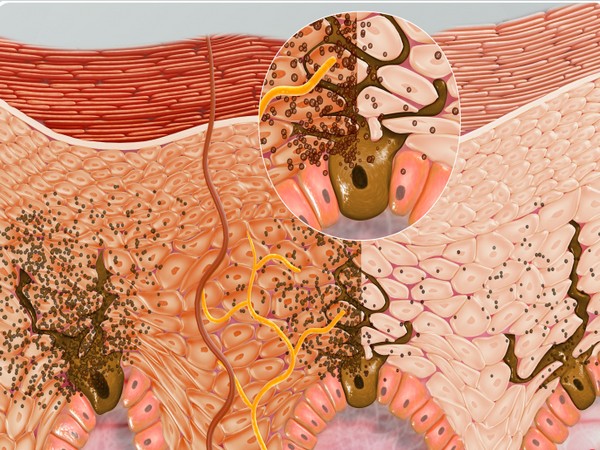
A more significant discovery, however, is the mechanism for how exactly UV damages skin. The study shows that UV weakens the bonds between cells in the stratum corneum, the top layer of skin by affecting proteins in corneodesmosomes that help the cells to adhere together. That's why sunburn leads to skin peeling.
Building on the findings of this study, Lipsky and German are doing further research about how UV radiation affects deeper layers of the skin.
As those experiments continue, Lipsky said the most important takeaway, for now, is that skin protection is important no matter what season of the year it is.
"We're trying to push the message to use sunscreen not just for preventing skin cancer, but also to keep the integrity of your skin so you don't get infections or other problems," Lipsky said. (ANI)

Get the App

What to Read Next

Health

Eating more vitamin C can physically change your skin

Eating more vitamin C can physically change your skin

Scientists discovered that vitamin C from food travels through the bloodstream into every layer of the skin, boosting collagen and skin renewal.

Read More
Health

Hidden blood molecules show surprising anti-ageing power: Study

Hidden blood molecules show surprising anti-ageing power: Study

Scientists have discovered new anti-ageing compounds produced by a little-studied blood bacterium, opening up promising avenues for future skin-rejuvenation therapies.

Read More
Health

Researchers creates new robotic “skin”

Researchers creates new robotic “skin”

Researchers have created a revolutionary robotic skin that brings machines closer to human-like touch.

Read More
Health

Researchers devise process to convert skin cell into neurons

Researchers devise process to convert skin cell into neurons

Researchers devised a process to convert a skin cell directly into a neuron, eliminating the need to generate induced pluripotent stem cells. Such neurons could be used to treat spinal cord injuries or diseases such as ALS.

Read More
Health

Researchers create gel that can self-heal like human skin: Study

Researchers create gel that can self-heal like human skin: Study

Gels are commonly used products that are soft and sticky. They can be applied to hair or to the jelly-like components in various foodstuffs. While human skin shares gel-like characteristics, it has unique qualities that are very hard to replicate. It combines high stiffness with flexibility, and it has remarkable self-healing capabilities, often healing completely within 24 hours after injury.

Read More
Health

Rise in temperature increases death rate, says top expert

Rise in temperature increases death rate, says top expert

Amid intense heatwave conditions in the country, long exposure to the sun can lead to an increase in the death rate in cardiovascular patients.

Read More
Health

Study probes enzyme's role in prostate cancer progression

Study probes enzyme's role in prostate cancer progression

A new study published in Science Advances explains how an enzyme called SMYD3 may play a role in the advancement of prostate cancer to a more hazardous and aggressive stage.

Read More
Health

Study throws fresh light on skin's protective features

Study throws fresh light on skin's protective features

Researchers have discovered that haemoglobin, a protein found in red blood cells that binds oxygen, is also present in the epidermis, our skin's outermost bodily tissue

Read More
Health

Study finds hydrogel that improves wound healing in diabetics

Study finds hydrogel that improves wound healing in diabetics

Researchers have discovered a low-cost anti-inflammatory hydrogel that could one day be used to treat persistent skin lesions such as those observed in diabetics.

Read More
Health

Wealthy people are more prone to develop melanoma

Wealthy people are more prone to develop melanoma

A new study sponsored by McGill University analyses why people living in Atlantic regions are more prone than other Canadians to get melanoma, delivering lessons on skin cancer prevention for the entire country.

Read More
Home About Us Our Products Advertise Contact Us Terms & Condition Privacy Policy

Copyright © aninews.in | All Rights Reserved.




