Heart attack plus cardiac arrest survivors at higher risk of early death: Research
Washington [US], March 8 (ANI): The findings of a new study suggest that patients who survive a heart attack together with sudden cardiac arrest are at a higher risk of dying within six years following hospital discharge.
ANI
Mar 08, 2022 05:16 IST

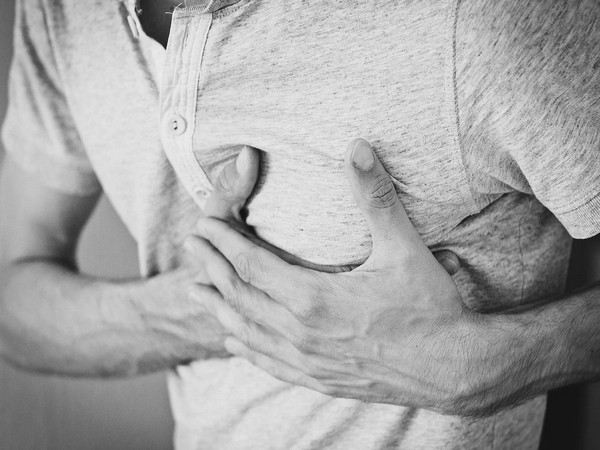
Washington [US], March 8 (ANI): The findings of a new study suggest that patients who survive a heart attack together with sudden cardiac arrest are at a higher risk of dying within six years following hospital discharge.
This research was published in the 'Journal of the American Heart Association'.
A heart attack is when blood flow to the heart is blocked, and sudden cardiac arrest is when the heart malfunctions and suddenly stops beating unexpectedly. Cardiac arrest can be fatal if not treated immediately.
Most heart attacks do not lead to sudden cardiac arrest. But when sudden cardiac arrest occurs, heart attack is a common cause.
The study draws on data from 13,444 patients collected between 2010 and 2017.
It shows for the first time that patients who had heart attacks and then a sudden cardiac arrest were at a greater risk of developing further complications. Those who had a cardiac arrest at the time of their heart attack were twice as likely as those suffering heart attack alone to go on to develop abnormal heart rhythms known as ventricular arrhythmia (VA). Those with a cardiac arrest were also 36 per cent more likely to die on average within three years following discharge from hospital.
The researchers suggest that this small subgroup of patients may benefit from additional treatments such an implantable cardioverter defibrillator (ICD) - a small device that treats people with abnormal heart rhythms - to see if it improves their long-term health outcomes. This is because in some cases heart attacks can lead to a condition called ventricular arrhythmia (VA) - a type of abnormal heartbeat where the heart begins beating faster before going into a spasm and stops pumping completely- which can cause sudden cardiac arrest.
Dr Fu Siong Ng, senior author of the study and Clinical Senior Lecturer in Cardiac Electrophysiology at Imperial College London, said:
"Most patients who have heart attacks do not experience a cardiac arrest. However, our study has revealed that there are a small group of patients who do, and if they survive the initial cardiac arrest they are at increased of further complications and early death. This study has highlighted that we may need to look at how we treat these types of patients and our current guidelines may need to be updated. There is a case that in addition to the current treatments on offer to heart attack patients these patients may benefit from ICDs. However, we would need to carry out a clinical trial to validate this theory."
Arunashis Sau, first author of the study and Clinical Research Fellow at Imperial College London, added:
"This is the first study to have found a link between patients who have heart attacks together with sudden cardiac arrests and early death after surviving the initial event. Our findings have significant implications for this subgroup of patients and how we treat them. The study raises the question on what more we can do to potentially provide more treatment options so that we can improve these patients' outcomes."
Doctors treat heart attack patients by unblocking coronary arteries in the heart as well as other treatments such as beta blocker tablets to slow down the heart. Patients who experience cardiac arrests are treated with a defibrillator- a device that gives a high energy electric shock to get the heart beating again.
Previous studies have suggested that patients who experience a sudden cardiac arrest following a heart attack may represent a subgroup of patients who are at risk of further complications such as VA. However, these studies have limited long-term follow-up data of patients and these studies are significantly smaller.
Researchers wanted to analyse the long-term impact of sudden cardiac arrest on heart attack patients. They analysed clinical data of 13,444 heart attack patients who were admitted and discharged from five NHS Trust hospitals in England. They were followed up on average for three years. A total of 280 patients had a heart attack and cardiac arrest and survived to discharge.
They found that these patients were over twice as likely to have subsequent VA at follow-up. They also found that there was a 36 per cent increase in death within three years of discharge, compared with the group of patients who had a heart attack, but not a cardiac arrest.
The researchers suggest that further studies are needed to fully assess how to reduce the risk of recurrent VA in this cohort, and whether an ICD should be considered for patients who present with cardiac arrest and a heart attack. (ANI)
Get the App