Hairdressers, beauticians, accountants might be at higher risk of ovarian cancer: Study
A case-control study published online in the journal Occupational & Environmental Medicine found that particular employment positions, such as hairdressers, beauticians, and accountants, may be related with an increased risk of ovarian cancer.
ANI
Jul 11, 2023 20:31 IST


Washington [US], July 11 (ANI): A case-control study published online in the journal Occupational & Environmental Medicine found that particular employment positions, such as hairdressers, beauticians, and accountants, may be related with an increased risk of ovarian cancer.
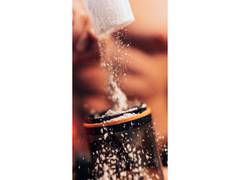
Those working in sales, retail, clothing and construction industries may also be vulnerable, while high cumulative exposure to particular agents, including talcum powder, ammonia, propellant gases, petrol and bleaches may have an important role, the findings suggest.
Few modifiable risk factors for ovarian cancer have been identified. Environmental factors, including those associated with the workplace, may increase the risk, but relatively few studies have evaluated the occupational hazards faced by women, say the researchers.
And those that have, have often failed to account for potentially influential factors, previous employment history, or have included relatively few participants, so limiting the findings.
To try and avoid these issues, the researchers drew on lifetime employment history from a population-based case-control study, to carry out an exploratory analysis looking at two dimensions of the workplace environment: employment in a particular role or industry; and specific occupational exposures.
They included participants in the PRevention of OVArian Cancer in Quebec (PROVAQ) study, all of whom were aged 18–79, and who had been recruited from seven Montreal hospitals between 2010 and 2016 after being diagnosed with epithelial ovarian cancer.
In all, 491 of these women meeting the inclusion criteria for the current study were matched for age and electoral roll district with 897 women who didn’t have ovarian cancer.
Information was collected from all the participants on sociodemographic background, medical history, prescribed meds, reproductive history, weight and height, lifestyle factors and lifetime employment history.
More of the women with ovarian cancer had lower educational attainment, shorter oral contraceptive use, and either no or fewer children than women in the comparison group. These are all potential risk factors for the disease.
For each job held for at least 6 months, participants reported the job title: start and end dates; working hours, including shift work; and main tasks performed.
Cumulative length of employment in a job or industry was then categorised as never, less than 10 years, and 10 or more years.
The Canadian job-exposure matrix (CANJEM) was used to calculate participants’ exposure to specific agents in the workplace, and the relationship between exposure to each of the 29 most common agents and ovarian cancer risk was then assessed.
After accounting for potentially influential factors, the calculations indicated that several job roles may be linked to a heightened risk of the disease.
Specifically, working for 10 or more years as a hairdresser, barber, beautician and in related roles was associated with a three-fold higher risk, while employment for 10 or more years in accountancy was associated with a doubling in risk, and working in construction with a near tripling in risk.
Similarly, long term work in the clothing industry, including embroidery, was associated with an 85% heightened risk of developing the disease while working in sales or retail was associated with heightened risks, respectively, of 45% and 59%.
Heightened risks of more than 40% were observed for high cumulative exposure (8 or more years)—compared with none—to 18 different agents. These included talcum powder; ammonia; hydrogen peroxide; hair dust; synthetic fibres; polyester fibres; organic dyes and pigments; cellulose; formaldehyde; propellant gases; naturally occurring chemicals in petrol and bleaches.
Hairdressers, beauticians and related workers were the jobs most frequently exposed to 13 agents, including ammonia, hydrogen peroxide, organic dyes and pigments, and bleaches, and the second most frequent occupation exposed to talcum powder.
It’s not clear, however, if these associations were driven by a single agent, a combination, or other workplace factors, say the researchers.
The numbers of women employed in certain occupations——paper, printing, textile production, dry cleaning, manufacturing—or who had been exposed to specific agents, including those previously reported as potential ovarian cancer risk factors—asbestos and pesticides—were small, acknowledge the researchers.
And some statistically significant associations observed were likely due to chance, given the number of analyses performed, they add. Further studies to replicate the findings will be needed, they emphasise.
But they nonetheless conclude that their results “suggest that employment in certain occupations and specific occupational exposures may be associated with increased risks of ovarian cancer.”
The current study “reminds us that while the lack of representation of women in occupational cancer studies—and indeed, even potential strategies to address this issue—have been long recognised, there is still a need for improvement in studying women’s occupational risks,” write Drs Melissa Friesen and Laura Beane Freeman of the US National Cancer Institute in a linked commentary.
“By excluding women, we miss the opportunity to identify risk factors for female specific cancers, to evaluate whether sex-specific differences in risk occur, and to study exposures occurring in occupations held primarily by women,” they conclude. (ANI)
Get the App