
Hair care product chemicals can remain in surprising concentrations in air
According to Purdue University researchers, the normal morning routine for many Americans includes inhaling several milligrams of pollutants that may be hazardous to their health.
ANI
Nov 28, 2023 21:34 IST

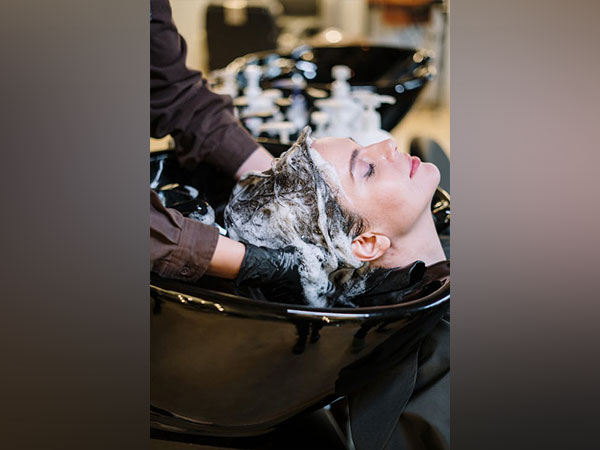
Indiana [US], November 28 (ANI): According to Purdue University researchers, the normal morning routine for many Americans includes inhaling several milligrams of pollutants that may be hazardous to their health.
Nusrat Jung, an assistant professor in the Lyles School of Civil Engineering, discovered that several chemicals, particularly cyclic volatile methyl siloxanes, which are ubiquitous in hair care products, linger in the air after use in a newly published paper in Environmental Science & Technology, a journal of the American Chemical Society (ACS).
According to Jung's team, a person can inhale a total of 1-17 milligrams of potentially dangerous substances in a single home hair care session.
"We found the results to be extremely alarming," Jung said. "We did not expect to see such significant emissions of volatile chemical mixtures from off-the-shelf hair care products during typical hair care routines that many people perform each and every day."
The often greatest -- and most concerning -- chemical inhaled, Jung said, is decamethylcyclopentasiloxane (aka D5 siloxane). It is an organosilicon compound and is often listed first or second in the ingredient lists of many hair care products, indicating it can be among the most abundant ingredients.
It has become a common ingredient over the past few decades in many personal care products due to its low surface tension, inertness, high thermal stability and smooth texture.
"D5 siloxane has been found to lead to adverse effects on the respiratory tract, liver and nervous system of laboratory animals," Jung said.
"The use of the chemical in wash-off cosmetic products has already been restricted in the European Union because of this. Many of these products are scented, too, and some of the chemicals used to make these fragrances are potentially dangerous to inhale as well."
According to the European Chemicals Agency, D5 siloxane is classified as "very persistent, very bioaccumulative." And while the test results on laboratory animals are already concerning, Jung said, there is little information on their human impact.
"There has not been much in-depth research into this, so we really have no idea to what extent the threat these chemicals pose when inhaled over a long period of time," Jung said.
"There have been tests into 'wash-off' products like shampoos, but almost none for 'leave-on' products like hair gels, oils, creams, waxes and sprays."
Jung's research also noted that applying high heat to these chemicals, such as through curling irons and hair straighteners, serves to further release the chemicals into the air.
When met with temperatures of 210 degrees Celsius, researchers found the chemical emissions from the hair care products increased anywhere from 50 per cent to 310 per cent.
To make matters worse, Jung said, these airborne chemicals do not merely remain in a single room or even just the home.
"Home ventilation is likely a major pathway of indoor-to-outdoor siloxane transport," Jung said.
"In urban environments, this is especially significant as you will have hundreds -- even thousands -- of homes ventilating out potentially harmful chemicals into the urban atmosphere all in a short span of time as people get ready for work and school in the morning. These chemicals are then collectively piped back into buildings through ventilation systems once more. So even if using products with harmful chemicals is not part of your hair care routine, you will still be impacted due to your surroundings in an urban environment."
Considering an average use frequency of hair care products between two and five times per week, based on surveys on hair care product usage patterns, and assuming that 10 per cent of leave-on hair care products are siloxane-based, the total indoor-to-outdoor emission of D5 could reach 0.4 to 6 metric tons per year in the US.
"The best solution is to simply not use these products," Jung said. "I used to use similar products myself to straighten my hair, but after we analysed the data, it became immediately clear that the best thing I could do to protect my own health was to stop using them."
If one must use these products, the next best thing is to have an exhaust fan running to minimise the amount of chemicals inhaled, said Purdue civil engineering PhD student and researcher Jinglin Jiang.
"Ventilation can be an effective way to reduce siloxane exposures during indoor hair care routines," Jiang said. "Our model shows that turning on the bathroom exhaust fan can reduce D5 inhalation exposures by over 90 per cent."
That, however, further contributes to its environmental impact. Jung's research reports that the cumulative indoor-to-outdoor D5 emission with the exhaust fan always off reaches 710 milligrams within three hours, while the indoor-to-outdoor D5 emission with the exhaust fan always on reaches 900 milligrams within only one hour.
"There's a good reason why these chemicals are restricted from being used in wash-off hair care products in certain parts of the world," Jung said.
"The effects on people and the planet need to be studied further and regulatory action needs to be taken." (ANI)
Tags:
Get the App


