

ADD ANI AS A TRUSTED SOURCE
googleads
ANI Logo
Menu
Health

Fear encourages physical distancing during pandemic: study

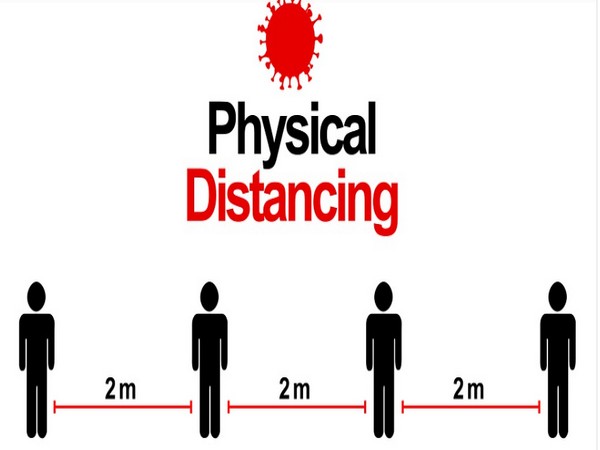
Washington [US], October 22 (ANI): Despite guidelines plastered on the walls and floors of grocery and retail stores encouraging customers to maintain six-feet of physical distance, many do not.

ANI Oct 22, 2020 09:27 IST googleads

Representative image

Washington [US], October 22 (ANI): Despite guidelines plastered on the walls and floors of grocery and retail stores encouraging customers to maintain six-feet of physical distance, many do not.
A recent study has identified two key messaging components, that is, negativity and anthropomorphism or attributing human characteristics to nonhuman objects, could improve the persuasiveness of those appeals and trigger compliance.
The research was conducted by the University of Houston Conrad N. Hilton College of Hotel and Restaurant Management and was published in The Service Industries Journal.
Adjusting the messaging to stress the negative health outcomes associated with not following physical distancing guidelines, including the possibility of severe sickness or death, could more effectively persuade consumers to comply, according to the study co-authored by UH associate professor Priyanko Guchait.
The study found that adding intimidating human attributes to the otherwise invisible coronavirus, such as a scary red face with long sharp teeth and tentacles, significantly strengthens that message.
"We don't know how the coronavirus looks because we can't see it, so how can people be afraid of it? Giving it human characteristics and making it look scary strengthens the effect when combined with the negative messaging," said Guchait.
The researchers applied the regulatory focus theory, a persuasion theory in the field of psychology which focuses on framing the information either negatively or positively. Based on a hypothetical supermarket scenario, survey respondents were presented with different physical distancing messages that either used preventive or promotive language - some included a "Mr Deadly COVID-19" scary face.
The preventive messaging emphasized potential costs and negative outcomes: If you don't maintain physical distance, you could get infected and endanger your life. In contrast, promotive messaging highlighted potential benefits and positive outcomes: Maintaining physical distance protects you from infection and secures your life.
"Preventive language was significantly more effective in this study because people are persuaded by loss language, especially in high-risk, health-related situations. It's the same thing with traffic accidents where people follow the rules because they know they could die. They experience fear and that's why they follow traffic rules," said Guchait, who collaborated on the research with visiting scholar The Khoa Do and Chen-Ya Wang from National Tsing Hua University in Taiwan.
Despite a consistent rise in coronavirus cases and deaths, many customers underestimate the importance of complying with physical distancing. A survey of grocery and food workers conducted by the United Food and Commercial Workers International Union at the beginning of the pandemic last spring, found that up to 85 per cent of customers at grocery and retail stores did not practice physical distancing. Other surveys have revealed that people consistently underrate the risk of getting infected themselves or transmitting the virus to others.
The researchers hope the service industry will adapt and change how they frame and present physical distancing appeals, particularly small retail and grocery businesses which lack the resources to fully implement expensive health and safety interventions.
"This is more about playing with the human mind, which we know is more impactful than actual devices such as partitions or physical barriers," said Guchait. "We encourage stores to add the picture of a scary coronavirus along with preventive messaging because it could save them money but, more importantly, it could save lives." (ANI)


Get the App

What to Read Next

Health

High-fat keto diet may boost exercise benefits

High-fat keto diet may boost exercise benefits

A new study suggests that eating more fat rather than less could help the body gain greater benefits from exercise when blood sugar levels are high, offering an unexpected perspective on how diet and physical activity work together to support metabolic health.

Read More
Health

Scientists reveal how exercise protects brain from Alzheimer's

Scientists reveal how exercise protects brain from Alzheimer's

Exercise may sharpen the mind by repairing the brain's protective shield. Researchers found that physical activity prompts the liver to release an enzyme that removes a harmful protein, causing the blood-brain barrier to become leaky with age.

Read More
Health

Swedish study reveals when fitness and strength begin to fade

Swedish study reveals when fitness and strength begin to fade

A long-running Swedish study has followed adults for nearly five decades, uncovering when physical decline truly begins. Fitness and strength start slipping around age 35, then worsen gradually with age.

Read More
Health

Air pollution may reduce health benefits of exercise: Study

Air pollution may reduce health benefits of exercise: Study

A new study led by researchers at University College London (UCL) shows that chronic exposure to toxic air can significantly diminish the health benefits of regular physical activity.

Read More
Health

Risk of long Covid in kids doubles after second infection

Risk of long Covid in kids doubles after second infection

Children and adolescents were twice as likely to experience long Covid after contracting Covid for the second time, compared to their peers with a single previous infection.

Read More
Health

Scientists find simple tweaks that cut diabetes risk by 31%

Scientists find simple tweaks that cut diabetes risk by 31%

A Mediterranean-style diet, in combination with reduced caloric intake, moderate physical activity, and professional support for weight loss, may cut the risk of type 2 diabetes (T2D) by 31%, according to a new study co-authored by researchers at Harvard T.H. Chan School of Public Health.

Read More
Health

Active lifestyle at any point in adulthood may extend lifespan

Active lifestyle at any point in adulthood may extend lifespan

A sweeping analysis of 85 studies confirms that those who stay active consistently reduce their mortality risk by 30-40%, while even those who become active later in life enjoy a 20-25% reduction. The study has been published in the British Journal of Sports Medicine.

Read More
Health

Childhood cancer survivors face risk of COVID 19

Childhood cancer survivors face risk of COVID 19

The results show that childhood cancer survivors had a lower risk of contracting COVID 19, but were 58 per cent more likely to develop severe disease if they did become infected.

Read More
Health

Researchers develop innovative model to study sense of smell

Researchers develop innovative model to study sense of smell

Using a newly devised, three-dimensional model to study the regeneration of nerve tissue in the nose, researchers at Tufts University School of Medicine and the Graduate School of Biomedical Sciences (GSBS) and colleagues have discovered that one type of stem cell thought to be dormant may play a more significant role in preserving the sense of smell than originally believed.

Read More
Health

New mRNA vaccine is more effective, less costly to develop

New mRNA vaccine is more effective, less costly to develop

A new type of mRNA vaccine is more scalable and adaptable to continuously evolving viruses such as SARS-CoV-2 and H5N1, according to a study by researchers at the University of Pittsburgh School of Public Health and the Pennsylvania State University.

Read More
Home About Us Our Products Advertise Contact Us Terms & Condition Privacy Policy

Copyright © aninews.in | All Rights Reserved.


