

ADD ANI AS A TRUSTED SOURCE
googleads
ANI Logo
Menu
Health

Eye scans provide vital information about kidney health: Study

According to studies, 3D eye scans can give critical information about kidney health that can assist in tracking disease progression.

ANI Dec 05, 2023 16:02 IST googleads

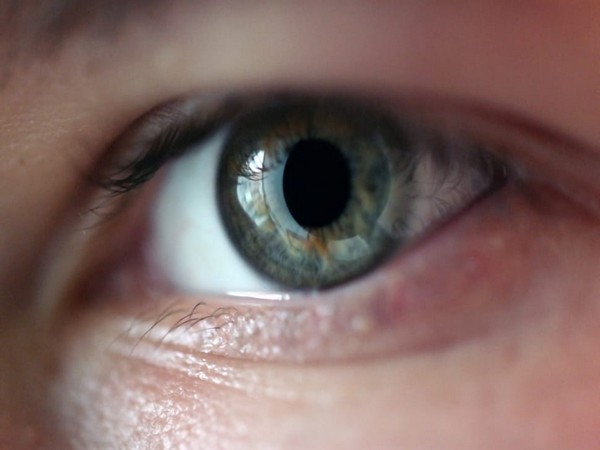
Representative Image

Washington DC [US], December 5 (ANI): According to studies, 3D eye scans can give critical information about kidney health that can assist in tracking disease progression.
The advance could revolutionise the monitoring of kidney disease, which often progresses without symptoms in the early stages.
Experts say the technology has potential to support early diagnosis as current screening tests cannot detect the condition until half of the kidney function has been lost.
Researchers used highly-magnified images to detect changes to the retina - the layer of tissue at the back of the eye that senses light and sends signals to the brain. They found that the images offer a quick, non-invasive way to monitor kidney health.
The eye is the only part of the body where it is possible to view a key process called microvascular circulation - and this flow of blood through the body's tiniest vessels is often affected in kidney disease.
Researchers at the University of Edinburgh investigated whether 3D images of the retina, taken using a technology called optical coherence tomography (OCT), could be used to identify and accurately predict the progression of kidney disease.
OCT scanners - used in most high street opticians - use light waves to create a cross-sectional picture of the retina, displaying each individual layer, within a few minutes.
The team looked at OCT images from 204 patients at different stages of kidney disease, including transplant patients, alongside 86 healthy volunteers.
They found that patients with chronic kidney disease had thinner retinas compared with healthy volunteers. The study also showed that thinning of the retina progressed as kidney function declined.
These changes were reversed when kidney function was restored following a successful transplant. Patients with the most severe form of the disease, who received a kidney transplant, experienced rapid thickening of their retinas after surgery.
More people than ever are at risk of kidney disease, which is often caused by other conditions that put a strain on the kidneys, including diabetes, high blood pressure and obesity.
With further research, regular eye checks could one day aid early detection and monitoring to prevent the disease from progressing. It could also allow patients to make lifestyle changes that reduce the risk of health complications, experts say.
The technology, supported by Heidelberg Engineering's imaging platform, could also aid the development of new drugs, the research team says.
It could do so by measuring changes in the retina that indicate whether - and in what way - the kidney responds to potential new treatments.
The researchers say further studies - including longer-term clinical trials in larger groups of patients - are needed before the technology can be routinely used.
An estimated 7.2million people in the UK live with chronic kidney disease - more than 10% of the population. It costs the NHS around £7billion each year.
The study is published in Nature Communications. It was funded by Kidney Research UK, and supported by Edinburgh Innovations, the University's commercialisation service.
Dr Neeraj (Bean) Dhaun, Professor of Nephrology at the University of Edinburgh's Centre for Cardiovascular Science, said: "We hope that this research, which shows that the eye is a useful window into the kidney, will help identify more people with early kidney disease - providing an opportunity to start treatments before it progresses.
"It also offers potential for new clinical trials and the development of drug treatments for a chronic disease that, so far, has proved extremely difficult to treat."
Dr Aisling McMahon, executive director of research and policy at Kidney Research UK, said: "Kidney patients often face invasive procedures to monitor their kidney health, often on top of receiving gruelling treatments like dialysis.
"This fantastic research shows the potential for a far kinder way of monitoring kidney health. We are continuing to support the team as they investigate whether their approach could also be used to diagnose and intervene in kidney disease earlier." (ANI)


Get the App

What to Read Next

Health

The truth about ‘Eating for Two’ explained by doctors

The truth about ‘Eating for Two’ explained by doctors

Health experts warn that interpreting the advice literally can lead to excessive calorie intake, unhealthy weight gain and a higher risk of Gestational Diabetes Mellitus (GDM), a condition that affects blood sugar levels during pregnancy.

Read More
Health

High-fat keto diet may boost exercise benefits

High-fat keto diet may boost exercise benefits

A new study suggests that eating more fat rather than less could help the body gain greater benefits from exercise when blood sugar levels are high, offering an unexpected perspective on how diet and physical activity work together to support metabolic health.

Read More
Health

Pre-workout supplements may cut sleep in half for young users

Pre-workout supplements may cut sleep in half for young users

A popular fitness trend among young people may be quietly undermining their sleep. A new study led by researchers at the University of Toronto has found that teenagers and young adults who use pre-workout supplements are significantly more likely to experience extremely short sleep durations.

Read More
Health

The more you fear aging, the faster your body may age

The more you fear aging, the faster your body may age

Worrying about getting older especially fearing future health problems may actually speed up aging at the cellular level, according to new research from NYU.

Read More
Health

Scientists reveal how exercise protects brain from Alzheimer's

Scientists reveal how exercise protects brain from Alzheimer's

Exercise may sharpen the mind by repairing the brain's protective shield. Researchers found that physical activity prompts the liver to release an enzyme that removes a harmful protein, causing the blood-brain barrier to become leaky with age.

Read More
Health

Scientists find clue to human brain evolution in finger length

Scientists find clue to human brain evolution in finger length

Human evolution has long been tied to growing brain size, and new research suggests prenatal hormones may have played a surprising role. By studying the relative lengths of the index and ring fingers, a marker of prenatal exposure to oestrogen and testosterone, researchers found that higher prenatal oestrogen exposure was associated with larger head size in newborn boys.

Read More
Health

MRI scans show exercise can make the brain look younger

MRI scans show exercise can make the brain look younger

New research suggests that consistent aerobic exercise can help keep your brain biologically younger. Adults who exercised regularly for a year showed brains that appeared nearly a year younger than those who didn't change their habits.

Read More
Health

Swedish study reveals when fitness and strength begin to fade

Swedish study reveals when fitness and strength begin to fade

A long-running Swedish study has followed adults for nearly five decades, uncovering when physical decline truly begins. Fitness and strength start slipping around age 35, then worsen gradually with age.

Read More
Health

Memory loss can suddenly speed up with age: Study

Memory loss can suddenly speed up with age: Study

A massive international brain study has revealed that memory decline with age isn't driven by a single brain region or gene, but by widespread structural changes across the brain that build up over time.

Read More
Health

Injection turns sleeping tumour immune cells into cancer fighters

Injection turns sleeping tumour immune cells into cancer fighters

The Korea Advanced Institute of Science and Technology (KAIST) researchers have developed a way to reprogram immune cells already inside tumours into cancer-killing machines.

Read More
Home About Us Our Products Advertise Contact Us Terms & Condition Privacy Policy

Copyright © aninews.in | All Rights Reserved.
