

ADD ANI AS A TRUSTED SOURCE
googleads
ANI Logo
Menu
Health

Exercise post vaccine shot boosts antibodies? Research suggests so

Iowa [US], February 12 (ANI): Exercising post vaccination surely gets the heart pumping but can it increase one's antibodies? Researchers at Iowa State University suggested that 90 minutes of mild to moderate-intensity exercise directly after a flu or COVID-19 vaccine may provide an extra immune boost.

ANI Feb 12, 2022 14:58 IST googleads

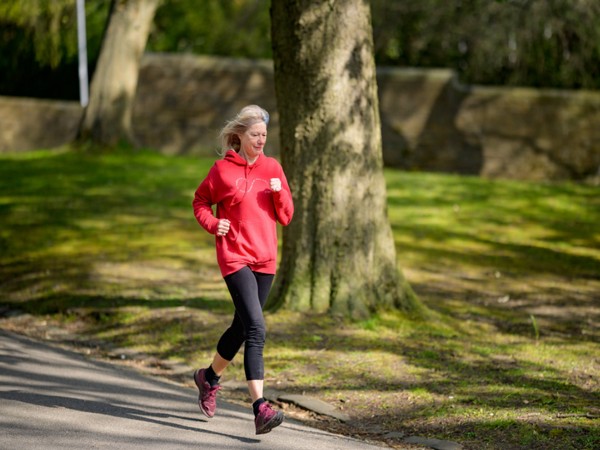
Representative image

Iowa [US], February 12 (ANI): Exercising post vaccination surely gets the heart pumping but can it increase one's antibodies? Researchers at Iowa State University suggested that 90 minutes of mild to moderate-intensity exercise directly after a flu or COVID-19 vaccine may provide an extra immune boost.
The newly published study in the journal 'Brain, Behavior, and Immunity', found that participants who cycled on a stationary bike or took a brisk walk for an hour-and-a-half after getting a jab produced more antibodies in the following four weeks compared to participants who sat or continued with their daily routine post-immunization.
The researchers found similar results when they ran an experiment with mice and treadmills.
Antibodies are essentially the body's "search and destroy" line of defence against viruses, bacteria, fungi and parasites. Vaccines help the immune system learn how to identify something foreign and respond by bolstering the body's defences, including an increase in antibodies.
"Our preliminary results are the first to demonstrate a specific amount of time can enhance the body's antibody response to the Pfizer-BioNtech COVID-19 vaccine and two vaccines for influenza," said Kinesiology Professor Marian Kohut, lead author of the paper.
The researchers said the study's findings could directly benefit people with a range of fitness levels. Nearly half of the participants in the experiment had a BMI in the overweight or obese category. During 90 minutes of exercise, they focused on maintaining a pace that kept their heart rate around 120-140 beats per minute rather than distance.
In the study, the researchers also tested whether participants could get the same bump in antibodies with just 45-minutes of exercising. They found the shorter workout did not increase the participants' antibody levels. Kohut said the research team may test whether 60 minutes is enough to generate a response in a follow-up study.
As to why prolonged, mild- to moderate-intensity exercise could improve the body's immune response, Kohut said there may be multiple reasons. Working out increased blood and lymph flow, which helped circulate immune cells. As these cells moved around the body, they were more likely to detect something that's foreign.
Data from the mouse experiment also suggested a type of protein (i.e., interferon alpha) produced during exercise helps generate virus-specific antibodies and T- cells.
"But a lot more research is needed to answer the why and how. There are so many changes that take place when we exercise -- metabolic, biochemical, neuroendocrine, circulatory. So, there's probably a combination of factors that contribute to the antibody response we found in our study," said Kohut.
The researchers are continuing to track the antibody response in the participants six months post-immunization and have launched another study that focused on exercise's effects on people who receive booster shots. (ANI)


Get the App

What to Read Next

Health

The truth about ‘Eating for Two’ explained by doctors

The truth about ‘Eating for Two’ explained by doctors

Health experts warn that interpreting the advice literally can lead to excessive calorie intake, unhealthy weight gain and a higher risk of Gestational Diabetes Mellitus (GDM), a condition that affects blood sugar levels during pregnancy.

Read More
Health

High-fat keto diet may boost exercise benefits

High-fat keto diet may boost exercise benefits

A new study suggests that eating more fat rather than less could help the body gain greater benefits from exercise when blood sugar levels are high, offering an unexpected perspective on how diet and physical activity work together to support metabolic health.

Read More
Health

Pre-workout supplements may cut sleep in half for young users

Pre-workout supplements may cut sleep in half for young users

A popular fitness trend among young people may be quietly undermining their sleep. A new study led by researchers at the University of Toronto has found that teenagers and young adults who use pre-workout supplements are significantly more likely to experience extremely short sleep durations.

Read More
Health

The more you fear aging, the faster your body may age

The more you fear aging, the faster your body may age

Worrying about getting older especially fearing future health problems may actually speed up aging at the cellular level, according to new research from NYU.

Read More
Health

Scientists reveal how exercise protects brain from Alzheimer's

Scientists reveal how exercise protects brain from Alzheimer's

Exercise may sharpen the mind by repairing the brain's protective shield. Researchers found that physical activity prompts the liver to release an enzyme that removes a harmful protein, causing the blood-brain barrier to become leaky with age.

Read More
Health

MRI scans show exercise can make the brain look younger

MRI scans show exercise can make the brain look younger

New research suggests that consistent aerobic exercise can help keep your brain biologically younger. Adults who exercised regularly for a year showed brains that appeared nearly a year younger than those who didn't change their habits.

Read More
Health

Scientists solve a major roadblock in cancer cell therapy: Study 

Scientists solve a major roadblock in cancer cell therapy: Study 

Researchers have found a reliable way to grow helper T cells from stem cells, solving a major challenge in immune-based cancer therapy. Helper T cells act as the immune system's coordinators, helping other immune cells fight longer and harder.

Read More
Health

Swedish study reveals when fitness and strength begin to fade

Swedish study reveals when fitness and strength begin to fade

A long-running Swedish study has followed adults for nearly five decades, uncovering when physical decline truly begins. Fitness and strength start slipping around age 35, then worsen gradually with age.

Read More
Health

Memory loss can suddenly speed up with age: Study

Memory loss can suddenly speed up with age: Study

A massive international brain study has revealed that memory decline with age isn't driven by a single brain region or gene, but by widespread structural changes across the brain that build up over time.

Read More
Health

Injection turns sleeping tumour immune cells into cancer fighters

Injection turns sleeping tumour immune cells into cancer fighters

The Korea Advanced Institute of Science and Technology (KAIST) researchers have developed a way to reprogram immune cells already inside tumours into cancer-killing machines.

Read More
Home About Us Our Products Advertise Contact Us Terms & Condition Privacy Policy

Copyright © aninews.in | All Rights Reserved.
