 हिंदी खबर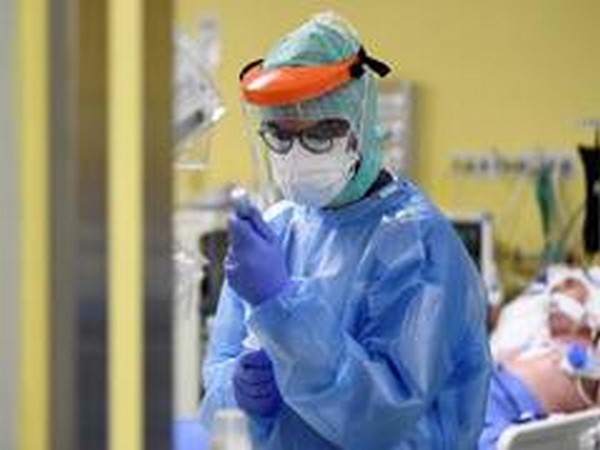

Washington D.C. [USA], June 2 (ANI): Physical distancing of two metres or more to prevent person-to-person transmission of COVID-19, suggests the research conducted by an international team led by McMaster University and St. Joseph's Healthcare Hamilton.
Face masks and eye protection decrease the risk of infection, too.
The systematic review and meta-analysis was commissioned by the World Health Organization. The findings were published today in The Lancet.
"Physical distancing likely results in a large reduction of COVID-19," said lead author Holger Schunemann, professor of the departments of health research methods, evidence, and impact, and medicine at McMaster.
Schunemann is co-director of the World Health Organization (WHO) Collaborating Centre for Infectious Diseases, Research Methods and Recommendations. He also is director of Cochrane Canada and McMaster GRADE Centre.
"Although the direct evidence is limited, the use of masks in the community provides protection, and possibly N95 or similar respirators worn by health-care workers suggest greater protection than other face masks," Schunemann said.
"Availability and feasibility and other contextual factors will probably influence recommendations that organizations develop about their use. Eye protection may provide additional benefits," Schunemann added.
The systematic review was conducted by a large, international collaborative of researchers, front-line and specialist clinicians, epidemiologists, patients, public health and health policy experts of published and unpublished literature in any language.
They sought direct evidence on COVID-19 and indirect evidence on related coronaviruses causative of Severe Acute Respiratory Syndrome (SARS) and Middle East Respiratory Syndrome (MERS).
The team used Cochrane methods and the Grading of Recommendations, Assessment, and Evaluation (GRADE) approach which is used world-wide to assess the certainty of evidence.
They identified no randomized control trials addressing the three coronaviruses but 44 relevant comparative studies in health-care and non-health-care (community) settings across 16 countries and six continents from inception to early May 2020.
The authors noted more global, collaborative, well-conducted studies of different personal protective strategies are needed. For masks, large randomized trials are underway and are urgently needed.
The scientific lead is Derek Chu, a clinician scientist in the departments of health research methods, evidence, and impact, and medicine at McMaster and an affiliate of the Research Institute of St. Joe's Hamilton.
"There is an urgent need for all caregivers in health-care settings and non-health-care settings to have equitable access to these simple personal protective measures, which means scaling up production and consideration about repurposing manufacturing," said Chu.
"However, although distancing, face masks, and eye protection were each highly protective, none made individuals totally impervious from infection and so, basic measures such as hand hygiene are also essential to curtail the current COVID-19 pandemic and future waves," Chu further added. (ANI)


