 हिंदी खबर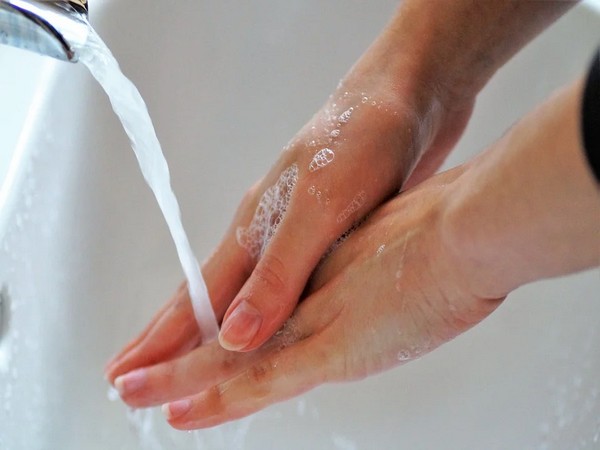

Washington DC [USA], May 8 (ANI): Improved everyday hygiene practices, such as hand-washing, decreases the risk of common infections by up to 50 per cent, reducing the need for antibiotics by up to 30 per cent, according to a new position paper.
Global public health experts are now calling for home and community hygiene to become part of strategic plans to reduce hundreds of thousands of deaths from AMR (Antimicrobial Resistance) globally each year.
The position paper is published in the American Journal of Infection Control (AJIC).
As witnessed during the recent global efforts to delay the spread of COVID-19, hygiene practices, including hand-washing, have become an essential part of everyone's daily routine and are considered to be the first line of defence in reducing the spread of common infections.
However, national and international AMR strategies, while focussing on the important role of hygiene in the healthcare setting, fail to recognise the key role that home and community hygiene plays.
The position paper, developed on behalf of the Global Hygiene Council (GHC) and published online in AJIC, explores the role of targeted hygiene in the home and everyday life settings to reduce antibiotic prescribing and its likely impact on antibiotic resistance. It provides evidence that practising hand hygiene in homes and community settings can prevent infections and therefore reduce the need for antibiotics.
One intervention study demonstrated a 30 per cent reduction of antibiotic prescriptions for common respiratory infections in a group who used hand sanitisers compared with a control group.
The position paper also demonstrates the increasing prevalence of multidrug-resistant bacteria in the home and community. It is considered that 35 per cent of common infections occurring in healthcare and the community are already resistant to antibiotics and that in some low-and middle-income countries, resistance to antibiotics is as high as 90 per cent, causing 2,000 people to die every day globally.
Lead author, Jean-Yves Maillard, Professor of Pharmaceutical Microbiology at the School of Pharmacy and Pharmaceutical Sciences, at Cardiff University, said, "In light of the current COVID-19 pandemic and evidence presented in this paper, it is more urgent than ever for policymakers to recognise the role of community hygiene to minimise the spread of infections, which in turn will help in reducing the consumption of antibiotics and help the fight against AMR."
To coincide with the publication of the paper, the GHC has launched a manifesto calling upon national and international policymakers, health agencies and healthcare professionals to further recognise the importance of hygiene in the home and everyday life settings and acknowledge the following:
1. IPC committees, responsible for implementing national AMR plans, should recognise that improved hand and surface hygiene in the home and community are key to minimise the spread of infections and as a consequence the consumption of antibiotics, which will then help in the fight against AMR. To achieve this, recommendations for improved hygiene in the wider community should be included in global AMR action plans by 2022 and in all national plans by 2025.
2. IPC advice, guidance and education for HCPs on hand and surface hygiene and its relation to AMR should not be limited to healthcare settings, but also include recommendations to influence the wider community with immediate effect.
3. Relevant medical associations should ensure messaging around the home and community hygiene is cascaded to members through amending on-going and existing AMR training and education.
With evidence to show that home and community hygiene urgently needs to be taken more seriously, it is time for the global community to collaborate and recognise that reducing the need for antibiotic prescribing and the circulation of AMR strains in healthcare settings cannot be achieved without also reducing the circulation of infections and AMR strains in the community. (ANI)




