 हिंदी खबर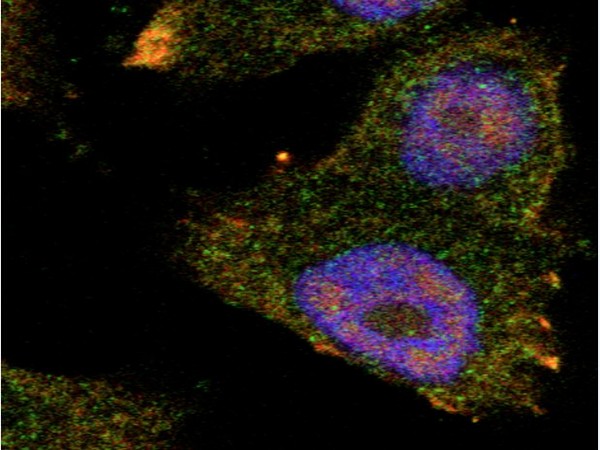

Canberra [Australia], June 1 (ANI): New research by QIMR Berghofer Medical Research Institute and The University of Queensland has revealed how lowering cholesterol could potentially prevent or help stop the spread of prostate cancer.
The researchers made the discovery after identifying a change in function of the hnRNPK protein in people with advanced prostate cancer.
Their laboratory tests show lowering cholesterol can help control the release of hnRNPK protein from prostate cancer cells. The protein is released in small particles called exosomes - which prostate cancer cells send out to prepare other parts of the body for cancer spread.
The team is now developing a prototype blood test to detect the level of released hnRNPK, which may one day be used to identify patients who should be given cholesterol lowering drugs to prevent metastases.
The lead researcher from QIMR Berghofer's Precision and Systems Biomedicine Group, Ms Harley Robinson, said the hnRNPK protein controls the content of the exosomes sent out by prostate cancer cells to prepare other parts of the body for the spreading disease.
"The hnRNPK protein usually resides in the nucleus of a cell but our laboratory tests on prostate cancer cells found the protein outside the nucleus, in the messaging centre where the exosomes are being prepared, and in exosomes that have been released by cells," said Ms Robinson, who has conducted the research as part of her PhD studies at The University of Queensland.
The exosomes act like a pre-planting conditioner that makes the environment in the new parts of the body receptive to the cancer cells when they eventually reach the site.
"Our lab work showed that reducing the cholesterol levels or boosting OMEGA-3 levels in the cells could stop the hnRNPK message from leaving the cancer cell and spreading its dangerous message."
Senior researcher and head of QIMR Berghofer Medical Research Institute's Precision and Systems Biomedicine Group, Associate Professor Harley Robinson said cholesterol and OMEGA-3 levels in cells regulate each other, but in cancer the balance gets shifted with cholesterol dominating the cells.
"This understanding of the role cholesterol plays in sending out these metastatic messages to other parts of the body, means we could potentially use statins or other cholesterol lowering drugs to prevent metastases," Associate Professor Hill said.
"Conversely it might be possible to boost OMEGA-3 levels through supplements to protect against cancer spread. The findings are very exciting and we think this hnRNPK protein might play a role in metastases in other cancers as well, but it is early days and more research is needed to confirm the link," Hill added.
The laboratory research was conducted on human cells and then validated in patient samples.
"Our pilot study of samples from eight prostate cancer patients revealed the release of hnRNPK outside the cell was 100 per cent accurate in predicting which patients would experience cancer spreading - despite treatment," said Associate Professor Hill.
"We are hopeful a blood test using this biomarker would allow doctors to identify patients who should be given re-purposed cholesterol lowering drugs to prevent cancer spread, but also detect patients who are unlikely to have problems with metastases and therefore could safely avoid additional, morbid treatments."
The researchers plan to soon evaluate a larger group of samples, which will be selected from a completed prostate cancer clinical trial led by Emeritus Professor Frank Gardiner and Dr Matthew Roberts (consultant Urologist at RBWH & UQ Centre for Clinical Research).
The research findings are published in the journal Clinical and Translational Medicine. The project was primarily supported by the Australian Research Council and RSL Stephens sub-branch.
It involved collaborators from Griffith University, University of Western Australia and Ochsner Health Systems, New Orleans, US. (ANI)


