 हिंदी खबर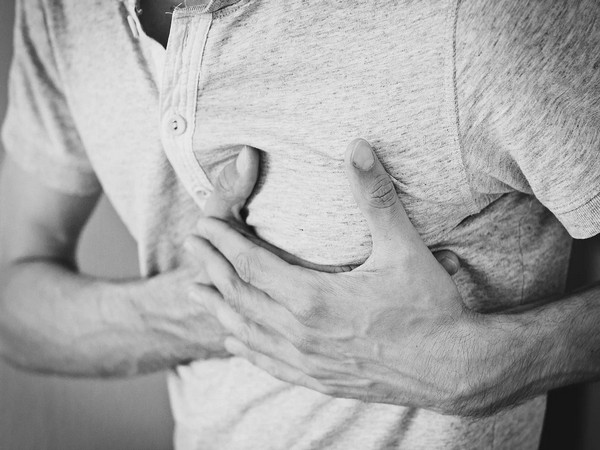

Washington (US), February 5 (ANI): A new study has found that COVID-19 patients who suffer cardiac arrest have a higher probability of dying in comparison to those who are not infected with it. Women particularly have a nine times higher chance of dying due to the same reason.
According to research published in the 'European Heart Journal', the study from Sweden included 1946 people who suffered a cardiac arrest out of hospital (OHCA) and 1080 who suffered one in hospital (IHCA) between 1 January and 20 July. During the pandemic phase of the study, COVID-19 was involved in at least 10 per cent of all OHCAs and 16 per cent of IHCAs.
Coronavirus patients who had an OHCA had a 3.4-fold increased risk of dying within 30 days, while IHCA patients had a 2.3-fold increased risk of dying within 30 days. None of these patients had been discharged alive from the hospital by the time the study was written in October 2020. Many had died and the rest were still being treated in hospital.
The first author of the study, Dr Pedram Sultanian, a doctoral student at the University of Gothenburg (Sweden) said, "Our study clearly shows that cardiac arrest and COVID-19 is a very lethal combination. Patients with the coronavirus should be monitored intensively and measures are taken to prevent cardiac arrest, for instance with the use of continuous heart monitors for patients at high risk."
This is the first detailed report of characteristics and outcomes in COVID-19 patients who suffer cardiac arrest. The researchers analysed data from the Swedish Registry for Cardiopulmonary Resuscitation (SRCR), which is a nationwide registry that started to collect data on COVID-19 from 1 April 2020 onwards. The researchers included all cardiac arrests registered in the SRCR from 1 January to 20 July 2020 and divided them into a pre-pandemic group (before 16 March) and a pandemic group (16 March to 20 July).
They found that 7.6 per cent of pre-pandemic patients were still alive 30 days after suffering an OHCA. Once the pandemic started, 9.8 per cent of patients without COVID-19 and 4.7 per cent with COVID-19 survived for 30 days; 83.4 per cent of COVID-19 patients died within 24 hours.
Pre-pandemic, 36.4 per cent of IHCA patients survived for 30 days, but once the pandemic started 39.5 per cent of non-COVID-19 patients and 23.1 per cent of COVID-19 patients survived for 30 days; 60.5 per cent of COVID-19 patients died within 24 hours.
The slightly improved survival for uninfected patients suffering OHCA and IHCA during the pandemic is not statistically significant, but the researchers believe that if there is an actual improvement, it might be explained in part by the 8.2 per cent increase in cardiac arrests witnessed by bystanders and the 47 per cent increase in bystanders using defibrillators.
When they compared pre-pandemic cases with COVID-19 cases, the researchers found that the overall risk of dying following an OHCA nearly tripled; it was increased 4.5-fold for men and by a third for women. The overall risk of dying after an IHCA more than doubled; it was increased by a half in men and more than nine-fold in women.
The researchers also found a 2.7-fold increase in the proportion of OHCAs caused by breathing problems and an 8.6 per cent increase in compression-only cardiopulmonary resuscitation (CPR) during the pandemic. The percentage of people who were treated with both chest compression as well as mouth-to-mouth resuscitation fell from 33 per cent pre-pandemic to 23 per cent during the pandemic.
In March the European Resuscitation Council and the Swedish Resuscitation Council issued guidelines recommending that bystanders who see a cardiac arrest should avoid mouth-to-mouth resuscitation and concentrate on chest compressions in the case of suspected COVID-19 infection.
Senior author of the study, Dr Araz Rawshani, physician and researcher at the University of Gothenburg said, "Although previous studies have indicated that compression-only CPR delivered by bystanders may be as effective as compressions and ventilation combined, this may not apply to cases with COVID-19, since they are primarily suffering from respiratory failure. We believe this is an important finding that could possibly help authorities in handling the pandemic. Since COVID-19 transmits through droplets, bystanders should avoid mouth-to-mouth resuscitation in accordance with current recommendations. There is no unanimous answer for how society and healthcare providers should adapt in the light of this issue."
He added, "The study also shows that fewer patients in hospital with COVID-19 were monitored with electrocardiograms, which is potentially life-saving as it enables a cardiac arrest to be spotted immediately. We believe that COVID-19 patients should be monitored with ECGs and monitored for oxygen saturation, as this would allow for prompt recognition of irregular heartbeats and declining oxygen saturation."
Limitations of the study include the fact that the county of Stockholm, where the majority of coronavirus cases have occurred, had not reported data on OHCAs at the time of the study and this reduced the number of COVID-19 patients in the study; and some cases of COVID-19 may have been misclassified, particularly for cardiac arrests occurring out of the hospital. (ANI)


