

ADD ANI AS A TRUSTED SOURCE
googleads
ANI Logo
Menu
Health

Common blood test could advance heart failure treatment, researchers explain

New York [USA], July 19 (ANI): A team of researchers has developed a new use for a common blood test, which could provide potentially life-saving treatment for heart failure.

ANI Jul 19, 2020 09:28 IST googleads

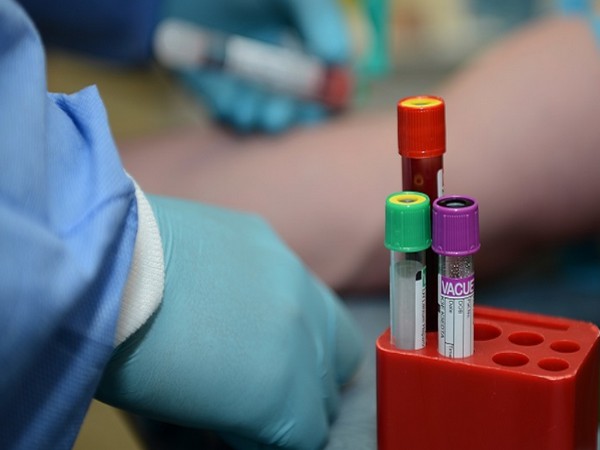
Representative Image.

New York [USA], July 19 (ANI): A team of researchers has developed a new use for a common blood test, which could provide potentially life-saving treatment for heart failure.
The study was conducted by the researchers at the New York Institute of Technology College of Osteopathic Medicine (NYITCOM) and FuWai Heart Hospital, Beijing.
Biomedical experts believe that half of heart failure patients likely have low levels of the thyroid hormone T3 in their cardiac tissue. While heart failure symptoms are commonly attributed to cardiovascular conditions like coronary artery disease and high blood pressure, a growing number of studies suggest that low cardiac T3 may significantly contribute to a patient's symptoms and underlying heart dysfunction.
Heart failure occurs when the heart cannot keep up with its workload, causing symptoms such as shortness of breath, fatigue, swollen legs, and rapid heartbeat. In recent years, scientists have actively researched the connection between thyroid hormones and cardiac function, with clinical studies suggesting that borderline-low thyroid hormone levels may increase the risk of death in heart failure patients, and animal studies indicating that restored cardiac thyroid levels can dramatically improve heart function.
The symptoms of low cardiac T3 are also virtually indistinguishable from other conditions that lead to heart failure, suggesting that a significant number of underlying heart dysfunction and heart failure symptoms may actually be caused by a treatable T3 hormone imbalance.
Despite this treatability, clinicians are hesitant to prescribe T3 to heart patients, as too much of the hormone could accidentally trigger an irregular heartbeat. In addition, no method has yet been identified to titrate, or continually measure and adjust, for the dosage of T3 needed to safely restore the heart's thyroid hormone function.
Now, as seen in Frontiers, an existing biomarker called brain natriuretic peptide (BNP) may provide the much-needed solution. In medicine, biomarkers are biological molecules found in a patient's blood, fluid, or tissue sample that can indicate whether a disease or condition is present. They can also be used to see how well the body responds to treatments. During heart failure, the heart will secrete higher levels of the biomarker BNP into blood, a key indication that the heart disease is worsening.
"I have been rather obsessed with the need for a serum biomarker for cardiac tissue T3 levels for many years. It dawned on me that the clinical literature showed a very consistent inverse relationship between serum T3 and BNP levels," said Martin Gerdes, Ph.D., chair and professor of biomedical sciences at NYITCOM, who was one of the study's researchers.
The researchers hypothesized that by analyzing a patient's BNP levels in response to added T3, clinicians could titrate for just the right dosage required. Using rat models of heart failure caused by low T3 and heart attack, the researchers tested their theory, examining changes in BNP, cardiac function, and heart failure genes after T3 treatment. For the first time, they discovered through a simple blood test, not an extensive, invasive procedure, that T3 could be adjusted to safely restore cardiac hormone balance. In addition, because heart patients routinely undergo BNP and thyroid hormone testing, these widely used biomarkers could be easily monitored from blood tests.
"The results were remarkable, suggesting that serum BNP levels can be used to titrate the volume of T3 required. When T3 treatment led to a reduction in serum BNP levels, this was associated with improved cardiac function and reversal of these heart failure genes," said Gerdes. (ANI)


Get the App

What to Read Next

Health

The truth about ‘Eating for Two’ explained by doctors

The truth about ‘Eating for Two’ explained by doctors

Health experts warn that interpreting the advice literally can lead to excessive calorie intake, unhealthy weight gain and a higher risk of Gestational Diabetes Mellitus (GDM), a condition that affects blood sugar levels during pregnancy.

Read More
Health

High-fat keto diet may boost exercise benefits

High-fat keto diet may boost exercise benefits

A new study suggests that eating more fat rather than less could help the body gain greater benefits from exercise when blood sugar levels are high, offering an unexpected perspective on how diet and physical activity work together to support metabolic health.

Read More
Health

Scientists discover reason high altitude protects against diabete

Scientists discover reason high altitude protects against diabete

Living at high altitude appears to protect against diabetes, and scientists have finally discovered the reason. When oxygen levels drop, red blood cells switch into a new metabolic mode and absorb large amounts of glucose from the blood.

Read More
Health

Scientists reveal how exercise protects brain from Alzheimer's

Scientists reveal how exercise protects brain from Alzheimer's

Exercise may sharpen the mind by repairing the brain's protective shield. Researchers found that physical activity prompts the liver to release an enzyme that removes a harmful protein, causing the blood-brain barrier to become leaky with age.

Read More
Health

Scientists find clue to human brain evolution in finger length

Scientists find clue to human brain evolution in finger length

Human evolution has long been tied to growing brain size, and new research suggests prenatal hormones may have played a surprising role. By studying the relative lengths of the index and ring fingers, a marker of prenatal exposure to oestrogen and testosterone, researchers found that higher prenatal oestrogen exposure was associated with larger head size in newborn boys.

Read More
Health

MRI scans show exercise can make the brain look younger

MRI scans show exercise can make the brain look younger

New research suggests that consistent aerobic exercise can help keep your brain biologically younger. Adults who exercised regularly for a year showed brains that appeared nearly a year younger than those who didn't change their habits.

Read More
Health

Scientists find hidden synapse hotspots in the teen brain: Study

Scientists find hidden synapse hotspots in the teen brain: Study

The scientists have discovered that the adolescent brain does more than prune old connections. During the teen years, it actively builds dense new clusters of synapses in specific parts of neurons.

Read More
Health

Memory loss can suddenly speed up with age: Study

Memory loss can suddenly speed up with age: Study

A massive international brain study has revealed that memory decline with age isn't driven by a single brain region or gene, but by widespread structural changes across the brain that build up over time.

Read More
Health

Injection turns sleeping tumour immune cells into cancer fighters

Injection turns sleeping tumour immune cells into cancer fighters

The Korea Advanced Institute of Science and Technology (KAIST) researchers have developed a way to reprogram immune cells already inside tumours into cancer-killing machines.

Read More
Health

Scientists found a way to help ageing guts heal themselves

Scientists found a way to help ageing guts heal themselves

Researchers have discovered a way to help aging intestines heal themselves using CAR T-cell therapy. By targeting senescent cells that build up over time, the treatment boosted gut regeneration, reduced inflammation, and improved nutrient absorption in mice.

Read More
Home About Us Our Products Advertise Contact Us Terms & Condition Privacy Policy

Copyright © aninews.in | All Rights Reserved.
