 हिंदी खबर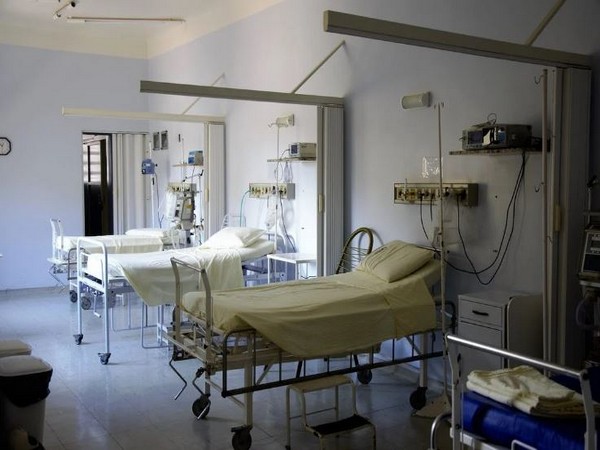

Washington [US], October 17 (ANI): The findings of recent research suggest that certain hospital room features, such as having a window view and distance from a nursing station, may influence clinical outcomes after undergoing high-risk operations.
The findings were presented at the Scientific Forum of the American College of Surgeons (ACS) Clinical Congress 2022.
Each year, about USD 50 billion is spent on the construction of healthcare facilities in the United States. Architecture and interior design can enhance patient care and outcomes. A seminal comparative study published in Science in 1984 revealed that having a window view may influence recovery from surgery, and additional research has found that severely ill patients who are assigned to ICU rooms that are not well visualized by the medical staff may experience worse outcomes.
However, little research has investigated how room features such as single versus double occupancy, distance from a nursing station, and a window view may impact clinical outcomes. Researchers at the University of Michigan sought to understand whether certain hospital room features impact mortality and length of stay after surgery.
"We were fascinated to see from a previous study that mortality was different in rooms that were in the line of sight of a nurse's station. Nurses could more readily assess the patient's condition and intervene more quickly in severe events. We wanted to see how this finding would play out at our institution, specifically in a surgical population," said study coauthor Mitchell J. Mead, a health and design scholar at the University of Michigan.
He added, "One of the next big steps for health care design is to understand these pathways of causation that can lead to different clinical outcomes in patients staying in hospital rooms with different features."
The analysis for this single-site study involved 3,964 patients who underwent 13 high-risk surgical procedures (including colectomy, pancreatectomy, and kidney transplant) at the University of Michigan Hospital between 2016 and 2019. The patients were admitted to rooms on two hospital floors.
Patient rooms were coded based on their features--window or no window, single occupancy, double occupancy, distance to the nursing station, and line of sight to clinicians. Patient encounters were linked by room number to identify clinical outcomes, including mortality and length of stay, related to room design.
Key findings
Mortality rates for high-risk procedures varied across room design features and room types.
Room features that influenced clinical outcomes after surgery included distance from a nursing station, single room occupancy, and having a direct line of sight where clinicians can see into the room.
After adjusting for patient comorbidities and the complexity of the operation, mortality rates were 20 per cent higher (odds ratio 1.2) if patients were admitted to a hospital room without a window than if they were put in a room with a window.
For patients staying in a room without a window, 30-day mortality rates were 10 per cent higher (odds ratio 1.1).
Though mortality rates varied across room design, mortality rates did not vary by room type after accounting for the length of stay, suggesting that length of stay does not account for differences in mortality.
"This investigation provided evidence that patients had differential outcomes across room design features, when accounting for clinical risk, and warrants further investigation for how hospital design may be influencing outcomes," Mr Mead said.
When the authors looked at different rooms based on the favourable design features, it became clear that the sicker patients were more likely to get single rooms, closer to a nursing station and within direct line of sight, and a window view, added study coauthor Andrew M. Ibrahim, MD, MSc, assistant professor of surgery, architecture, and urban planning at the University of Michigan and co-director of the Center for Outcomes and Policy.
Dr Ibrahim noted that this study is just one example illustrating the often-overlooked relationship between hospital design and patient care. Investing in research to figure out what design features work best may be one key factor in improving patient outcomes. "I think we can get a much better return on what we build and hopefully design safer healthier hospitals," he said.
Future studies should investigate these outcomes at multiple hospitals to find out if the results are generalizable, the authors suggest. They are in the process of replicating a similar study across Michigan Medicine and hope to recruit collaborators across other hospital systems.
In addition, the researchers hope to expand their study to include other metrics like the use of pain medication and patient satisfaction across these room types.
"The common question we get asked is, do you want us to rebuild our hospitals? Of course, that is not practical. But we do recognize clear patterns where certain room types have better outcomes after surgery," Dr Ibrahim said. "We can start to prioritize the sickest patients there. Just the way we have developed precision health models for getting the right care to the patient, there may be a corollary for the right room for the right patient and procedure to optimize outcomes collectively." (ANI)




