ADD ANI AS A TRUSTED SOURCE
googleads
Menu
Health

Chemotherapy may lead to early menopause

Washington D.C. [USA] Aug 30(ANI): Chemotherapy may cause acute amenorrhea leading to early menopause in women with lung cancer, according to a new study.

ANI Aug 30, 2018 06:47 IST googleads

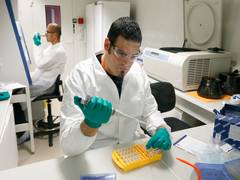
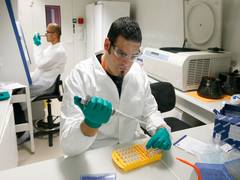
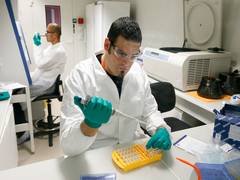
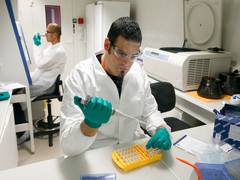
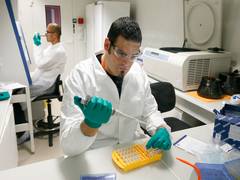
Representative image

Washington D.C. [USA] Aug 30(ANI): Chemotherapy may cause acute amenorrhea leading to early menopause in women with lung cancer, according to a new study.
The study is the first to comment on amenorrhea rates in women below 50. It concludes that women with lung cancer, who desire future fertility, should be educated about risks and options before starting treatment.
Premenopausal women with lung cancer may want children and should consult their healthcare providers about options for embryo and oocyte cryopreservation, the gold standard for fertility preservation.
The study included 182 premenopausal women (average age at diagnosis, 43 years). The Mayo Clinic Epidemiology and Genetics of Lung Cancer Research Program surveyed women between 1999 and 2016 at diagnosis and annually thereafter about their menstrual status. Types of lung cancer treatments were recorded, and frequencies of self-reported menopause at each survey were calculated.
The results suggested that chemotherapy for patients with lung cancer increases the risk of the early loss of menses in survivors.
Executive director of NAMS, Dr. JoAnn Pinkerton said, "Although more definitive research is needed, premenopausal women who need chemotherapy for lung cancer appear to have a similar risk of amenorrhea, early menopause, and loss of fertility as premenopausal women receiving chemotherapy for breast cancer and lymphoma."
"I agree that premenopausal patients with lung cancer need to be educated about the risk for chemotherapy-related amenorrhea, menopause issues (hot flashes, vaginal dryness, and bone loss), and the potential loss of fertility before chemotherapy is initiated," he added.
The full findings are present in Menopause: The Journal of the North American Menopause Society. (ANI)

Get the App

What to Read Next

Health

New cancer strategy can stop tumours before resistance takes hold

New cancer strategy can stop tumours before resistance takes hold

Researchers are applying evolutionary theory to cancer by changing treatments before tumours have time to develop resistance. Mathematical models suggest that rapid, carefully timed switches between multiple therapies could improve cure rates.

Read More
Health

Study unveils how colon cancer cells change identity to spread

Study unveils how colon cancer cells change identity to spread

Scientists have identified a molecular switch that could help explain why colorectal cancer becomes more deadly. Researchers found that when levels of a gene-regulating factor known as GATA6 decline, cancer cells lose their normal identity and transform into highly adaptable, fetal-like cells that can spread through the bloodstream and form new tumours in the liver.

Read More
Health

New vitamin B12 therapy shows promise against deadly brain cancer

New vitamin B12 therapy shows promise against deadly brain cancer

A newly published study in Oncoscience explored a potential new approach to treating glioblastoma, an aggressive form of brain cancer that remains extremely difficult to treat.

Read More
Health

Scientists discover why some DNA-doubled cells don't die: Study

Scientists discover why some DNA-doubled cells don't die: Study

Scientists have uncovered a surprising twist in how cells behave when division goes wrong. Sometimes a cell successfully copies its DNA but fails to split into two, leaving it with double the genetic material, a mistake linked to ageing, cancer, and other major diseases.

Read More
Health

'Hidden sugar patterns can help in early cancer detection'

'Hidden sugar patterns can help in early cancer detection'

Scientists have uncovered a hidden "sugar code" on the surface of human cells that could transform how diseases are detected. Using an advanced imaging technique called Glycan Atlasing, researchers at the Max Planck Institute mapped the tiny sugar structures coating cells and discovered that these patterns shift depending on what the cell is doing.

Read More
Home About Us Our Products Advertise Contact Us Terms & Condition Privacy Policy

Copyright © aninews.in | All Rights Reserved.