 हिंदी खबर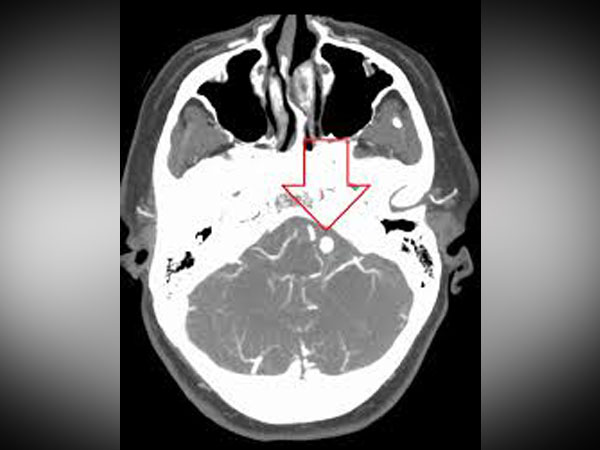

Washington DC [USA], May 19 (ANI): Drugs used for the treatment of cancer patients can also be used to treat brain aneurysms, claims a study.
The study was published in the 'American Journal of Human Genetics'.
Brain aneurysms are a bulge in a blood vessel caused by a weakness in the blood vessel wall. As blood passes through the weakened blood vessel, blood pressure causes a small area to bulge outwards.
They can develop anywhere in the body but are most common in the abdominal aorta (the artery that carries blood away from the heart) and the brain.
It's difficult to estimate exactly how many people are affected by brain aneurysms as they usually cause no symptoms until they rupture, but experts believe it could be anywhere from 1 in 100 to as many as 1 in 20 people.
Treatment is difficult, involving complex surgery which is currently only attempted in select cases.
Researchers have found a safer and more efficient possible treatment involving 'Receptor tyrosine kinase inhibitors'; a class of drug currently used to treat cancer.
Mark O'Driscoll, Professor of Human Molecular Genetics at the Genome Damage and Stability Centre at the University of Sussex, said, "This is an extremely exciting discovery which shows how basic lab-derived observations on a genetic level can move into a clinical setting and start making big changes to public healthcare and treatments.
Using sophisticated 'next generation' DNA sequencing technologies, teams in Washington lead by Manuel Ferreira, identified a new genetic basis of a form of a brain aneurysm (mutations PDGFRB). This was unexpected, as mutations in this gene have been previously identified in completely different human developmental disorders.
O'Driscoll, then found that multiple disease-associated mutations in PDGFRB caused a specific abnormality in its encoded protein. This abnormality causes its activity to remain locked in a hyperactive form, referred to as 'gain-of-function variants' - in effect, causing the protein to always be 'turned-on'.
"Our research focused primarily on understanding the genetic and cellular mechanisms underlying a particular type of aneurysm," said O'Driscoll.
"By finding a new genetic basis in some patients, we were also able to demonstrate that a known cancer drug could counter this genetic basis in most instances," O'Driscoll added.
"Understanding the genetics behind diseases like this is crucial in identifying possible treatments and next steps - and that is exactly what our part in this new research has shown," O'Driscoll said.
Drug repurposing is not unheard of, and there are already some success stories including the use of thalidomide as a treatment for leprosy as well as a blood cancer called multiple myeloma.
Dr Manuel Ferreira, lead author of the study said: "We are now very close to treating these aneurysm patients with PDGFRB variants with specific receptor tyrosine kinase inhibitors". (ANI)
Cancer drug could be repurposed to treat brain aneurysms
ANI | Updated: May 19, 2019 23:16 IST




