

ADD ANI AS A TRUSTED SOURCE
googleads
ANI Logo
Menu
Health

Cancer cell gene deactivation boosts immunotherapy for head, neck cancers

Los Angeles [US], March 24 (ANI): Researchers from the UCLA School of Dentistry were able to significantly slow the growth and spread of tumors in mice by targeting an enzyme that plays a key role in head and neck cancer cells. They were also able to enhance the effectiveness of immunotherapy, to which these types of cancers often become resistant.

ANI Mar 24, 2021 08:25 IST googleads

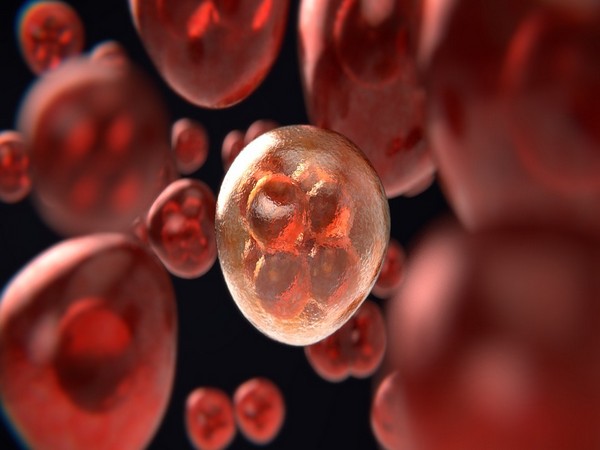
Representative Image

Los Angeles [US], March 24 (ANI): Researchers from the UCLA School of Dentistry were able to significantly slow the growth and spread of tumors in mice by targeting an enzyme that plays a key role in head and neck cancer cells. They were also able to enhance the effectiveness of immunotherapy, to which these types of cancers often become resistant.
Their findings, published online in the journal Molecular Cell, could help researchers develop more refined approaches to combatting highly invasive head and neck squamous cell cancers, which primarily affect the mouth, nose and throat.
Immunotherapy, which is used as a clinical treatment for various cancers, harnesses the body's natural defenses to combat disease. Yet some cancers, including head and neck squamous cell carcinomas, don't respond as well to the therapy as others do. The prognosis for these head and neck cancers is poor, with a high five-year mortality rate, and there is an urgent need for effective treatments.
The UCLA research team, led by distinguished professor Dr. Cun-Yu Wang, chair of oral biology at the dentistry school, demonstrated that by targeting a vulnerability in the cellular process of tumor duplication and immunity, they could affect tumor cells' response to immunotherapy.
The enzyme they focused on, KDM4A, is what is known as an epigenetic factor -- a molecule that regulates gene expression, silencing some genes in cells and activating others. In squamous cell head and neck cancers, overexpression of KDM4A promotes gene expression associated with cancer cell replication and spread.
It is well known that tumor cells can spread undetected by the immune system and, without surveillance, can metastasize to lymph nodes or other parts of the body. In this instance, tumor cells that develop in the epithelial layer that lines the structures of the head and neck can turn into head and neck squamous cell carcinoma when unchecked.
Cancer cell replication occurs through the abnormal spread and activation of signaling pathways for cancer cells, and the researchers asked the question: If we can disrupt these processes and identify a vulnerability, can we change the body's response to fighting cancer cells and its response to outside immunotherapy?
"We know that the KDM4A gene plays a critical role in cancer cell replication and spread, so we focused our study on removing this gene to see if we would get an opposite response," said Wang, the study's corresponding author and a member of the UCLA Jonsson Comprehensive Cancer Center.
By removing the KDM4A gene in their mouse models, the researchers witnessed a notable decrease in squamous cell carcinomas and far less metastasis of cancer to the lymph nodes -- a precursor to the spread of the disease throughout the body. Surprisingly, they also discovered that the KDM4A's removal also led to the recruitment and activation of the body's infection-fighting T cells, which killed cancer cells and stimulated inherent tumor immunity.
They then sought to uncover why the squamous carcinoma cells had such a poor response to immunotherapy treatment. In another set of mouse models, they again removed KDM4A and introduced a PD-1 blockade, which signals immunotherapy drugs to attack cancer cells. The combination of immunotherapy and KDM4A removal further decreased squamous cell cancer growth and lymph node metastasis.
Next, the researchers tested whether a small-molecule inhibitor of KDM4A could improve the efficacy of the original PD-1 blockade-based immunotherapy. They found that the inhibitor also significantly helped remove cancer stem cells, which are associated with cancer relapse.
The findings hold promise for the development of more specific inhibitors for KDM4A and more effective cancer immunotherapies.
"I am continuously impressed by Dr. Cun-Yu Wang and his team for breaking through barriers in our understanding of cancer-causing cellular processes," said Dr. Paul Krebsbach, dean and professor at the UCLA School of Dentistry. "The results of this study have major implications for the development of more effective, life-saving cancer therapies." (ANI)


Get the App

What to Read Next

Health

The truth about ‘Eating for Two’ explained by doctors

The truth about ‘Eating for Two’ explained by doctors

Health experts warn that interpreting the advice literally can lead to excessive calorie intake, unhealthy weight gain and a higher risk of Gestational Diabetes Mellitus (GDM), a condition that affects blood sugar levels during pregnancy.

Read More
Health

High-fat keto diet may boost exercise benefits

High-fat keto diet may boost exercise benefits

A new study suggests that eating more fat rather than less could help the body gain greater benefits from exercise when blood sugar levels are high, offering an unexpected perspective on how diet and physical activity work together to support metabolic health.

Read More
Health

Pre-workout supplements may cut sleep in half for young users

Pre-workout supplements may cut sleep in half for young users

A popular fitness trend among young people may be quietly undermining their sleep. A new study led by researchers at the University of Toronto has found that teenagers and young adults who use pre-workout supplements are significantly more likely to experience extremely short sleep durations.

Read More
Health

The more you fear aging, the faster your body may age

The more you fear aging, the faster your body may age

Worrying about getting older especially fearing future health problems may actually speed up aging at the cellular level, according to new research from NYU.

Read More
Health

Scientists reveal how exercise protects brain from Alzheimer's

Scientists reveal how exercise protects brain from Alzheimer's

Exercise may sharpen the mind by repairing the brain's protective shield. Researchers found that physical activity prompts the liver to release an enzyme that removes a harmful protein, causing the blood-brain barrier to become leaky with age.

Read More
Health

MRI scans show exercise can make the brain look younger

MRI scans show exercise can make the brain look younger

New research suggests that consistent aerobic exercise can help keep your brain biologically younger. Adults who exercised regularly for a year showed brains that appeared nearly a year younger than those who didn't change their habits.

Read More
Health

Scientists solve a major roadblock in cancer cell therapy: Study 

Scientists solve a major roadblock in cancer cell therapy: Study 

Researchers have found a reliable way to grow helper T cells from stem cells, solving a major challenge in immune-based cancer therapy. Helper T cells act as the immune system's coordinators, helping other immune cells fight longer and harder.

Read More
Health

Swedish study reveals when fitness and strength begin to fade

Swedish study reveals when fitness and strength begin to fade

A long-running Swedish study has followed adults for nearly five decades, uncovering when physical decline truly begins. Fitness and strength start slipping around age 35, then worsen gradually with age.

Read More
Health

Memory loss can suddenly speed up with age: Study

Memory loss can suddenly speed up with age: Study

A massive international brain study has revealed that memory decline with age isn't driven by a single brain region or gene, but by widespread structural changes across the brain that build up over time.

Read More
Health

Injection turns sleeping tumour immune cells into cancer fighters

Injection turns sleeping tumour immune cells into cancer fighters

The Korea Advanced Institute of Science and Technology (KAIST) researchers have developed a way to reprogram immune cells already inside tumours into cancer-killing machines.

Read More
Home About Us Our Products Advertise Contact Us Terms & Condition Privacy Policy

Copyright © aninews.in | All Rights Reserved.
