 हिंदी खबर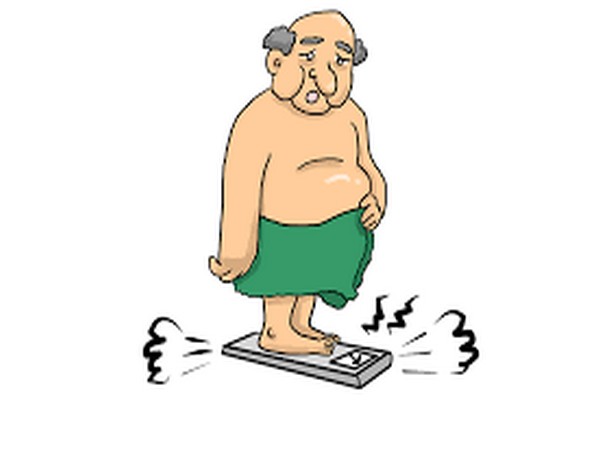

Washington D.C. [USA], June 10 (ANI): Increased level of abdominal and thigh fats are related to a higher risk of aggressive prostate cancer, a recent study has claimed.
The findings of the study, published in 'Cancer' journal, may lead to a better understanding of the relationship between obesity and prostate cancer and provide new insights for treatment.
Previous studies have shown that obesity is associated with an elevated risk of advanced prostate cancer and a poorer prognosis after diagnosis.
Also, emerging evidence suggests that the specific distribution of fat in the body may be an important factor.
To provide the high quality evidence, Barbra Dickerman of the Harvard T H Chan School of Public Health, and her colleagues analysed body fat distribution using the gold-standard measure of computed tomography imaging and assessed the risk of being diagnosed with, and dying from, prostate cancer among 1,832 Icelandic men who were followed for up to 13 years.
During the study, 172 men developed prostate cancer and 31 died from the disease. The accumulation of fat in specific areas such as visceral fat (deep in the abdomen, surrounding the organs) and thigh subcutaneous fat (just beneath the skin)--was associated with the risk of advanced and fatal prostate cancer.
High body mass index (BMI) and high waist circumference were also associated with higher risks of advanced and fatal prostate cancer.
"Interestingly, when we looked separately at men with a high BMI versus low BMI, we found that the association between visceral fat and advanced and fatal prostate cancer was stronger among men with a lower BMI. The precision of these estimates was limited in this subgroup analysis, but this is an intriguing signal for future research," noted Dickerman.
Additional studies are needed to investigate the role of fat distribution in the development and progression of prostate cancer and how changes in fat stores over time may affect patients' health, said Dickerman.
"Ultimately, identifying the patterns of fat distribution that are associated with the highest risk of clinically significant prostate cancer may help to elucidate the mechanisms linking obesity with aggressive disease and target men for intervention strategies," added Dickerman. (ANI)
Body fat distribution associated with increased risk of aggressive prostate cancer: Study
ANI | Updated: Jun 10, 2019 17:39 IST


