

ADD ANI AS A TRUSTED SOURCE
googleads
ANI Logo
Menu
Health

Blood test may help doctors detect pancreatic cancer, says study

Washington DC [USA], April 17 (ANI): In a multidisciplinary study, researchers have found that a blood test may be able to detect the most common form of pancreatic cancer when it is still in its early stages, while also helping doctors accurately stage a patient's disease and guide them to the appropriate treatment.

ANI Apr 17, 2020 08:58 IST googleads

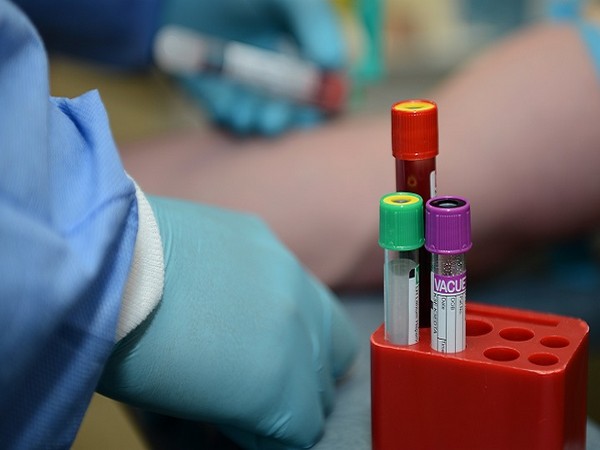
Representative image

Washington DC [USA], April 17 (ANI): In a multidisciplinary study, researchers have found that a blood test may be able to detect the most common form of pancreatic cancer when it is still in its early stages, while also helping doctors accurately stage a patient's disease and guide them to the appropriate treatment.
A study from the University of Pennsylvania found the test -- known as a liquid biopsy -- was more accurate at detecting the disease in a blinded study than any other known biomarker alone.
The team, which includes researchers from the Perelman School of Medicine, the Abramson Cancer Center, and the School of Engineering and Applied Science, published their findings today in Clinical Cancer Research, a journal of the American Association for Cancer Research.
Pancreatic ductal adenocarcinoma (PDAC), the most common form of pancreatic cancer, is the third-leading cause of cancer deaths. The overall five-year survival rate is just nine per cent and most patients live less than one year following their diagnosis.
One of the biggest challenges is catching the disease before it has progressed or spread.
If the disease is caught early, patients may be candidates for surgery to remove cancer, which can be curative. For locally advanced patients -- meaning patients whose cancer has not spread beyond the pancreas, but who are not candidates for surgery based on the size or location of the tumour -- treatment involves three months of systemic therapy like chemo or radiation, and then reassessing to see if surgery is an option.
For patients whose disease has spread, there are currently no curative treatment options.
"Right now, the majority of patients who are diagnosed already have metastatic disease. So, there is a critical need for a test that can not only detect the disease earlier but also accurately tell us who might be at a point where we can direct them to potentially curative treatment," said the study's co-senior author Erica L. Carpenter, MBA, PhD, director of the Liquid Biopsy Laboratory and a research assistant professor of Medicine.
The study's other co-senior author is David Issadore, PhD, an associate professor of Bioengineering and Electrical and Systems Engineering.
Researchers in this study developed a blood test to screen for a panel of biomarkers instead of just one biomarker on its own. These markers include carbohydrate antigen 19-9 (CA19-9) and KRAS mutational burden, which are known to be associated with PDAC.
In a blinded test group of 47 patients (20 with PDAC, 27 who were cancer-free), the test was 92 per cent accurate in its ability to detect disease, which outperforms the best-known biomarker, CA19-9 (89 per cent), alone.
The researchers then used samples from the 25 patients whose imaging showed did not have metastatic disease. The Penn test was 84 per cent accurate in determining disease staging, which is significantly higher than imaging alone (64 per cent).
While the test still needs to be validated in a larger cohort, researchers say they are excited by the promise of what it could potentially mean for a patient population in need of this kind of advancement.
"If validated, this test could not only provide a key tool for at-risk patients, but also a monitoring tool for patients with certain known risk factors like BRCA mutations," Carpenter said. (ANI)


Get the App

What to Read Next

Health

Scientists solve a major roadblock in cancer cell therapy: Study 

Scientists solve a major roadblock in cancer cell therapy: Study 

Researchers have found a reliable way to grow helper T cells from stem cells, solving a major challenge in immune-based cancer therapy. Helper T cells act as the immune system's coordinators, helping other immune cells fight longer and harder.

Read More
Health

Injection turns sleeping tumour immune cells into cancer fighters

Injection turns sleeping tumour immune cells into cancer fighters

The Korea Advanced Institute of Science and Technology (KAIST) researchers have developed a way to reprogram immune cells already inside tumours into cancer-killing machines.

Read More
Health

High-fat diets give liver cancer a dangerous head start: Study

High-fat diets give liver cancer a dangerous head start: Study

A high-fat diet does more than overload the liver with fat. New research from MIT shows that prolonged exposure to fatty foods can push liver cells into a survival mode that quietly raises the risk of cancer.

Read More
Health

Researchers have decoded rare cancer fighting plant compound

Researchers have decoded rare cancer fighting plant compound

UBC Okanagan researchers have uncovered how plants create mitraphylline, a rare natural compound linked to anti-cancer effects.

Read More
Health

Air pollution may reduce health benefits of exercise: Study

Air pollution may reduce health benefits of exercise: Study

A new study led by researchers at University College London (UCL) shows that chronic exposure to toxic air can significantly diminish the health benefits of regular physical activity.

Read More
Health

Blocking a single protein forces cancer cells to self-destruct

Blocking a single protein forces cancer cells to self-destruct

Researchers uncovered a powerful weakness in lung cancer by shutting down a protein that helps tumours survive stress.

Read More
Health

Single protein rewires leukemia cells to fuel their growth: Study

Single protein rewires leukemia cells to fuel their growth: Study

Researchers at the UCLA Health Jonsson Comprehensive Cancer Centre have identified a single protein, IGF2BP3, that links these two processes together in leukaemia cells. The protein alters how cells break down sugar, favouring a fast but inefficient energy pathway, while also modifying RNA that helps produce the proteins leukaemia cells need to survive and multiply.

Read More
Health

This new drug could be first to stop deadly fatty liver disease

This new drug could be first to stop deadly fatty liver disease

The Researchers at the University of California San Diego School of Medicine have identified a new investigational drug that shows promise in treating metabolic dysfunction-associated steatohepatitis (MASH), a serious form of fatty liver disease linked to obesity and type 2 diabetes that can lead to cirrhosis, liver failure, and even liver cancer.

Read More
Health

Scientists finds tools to reprogram immune cells

Scientists finds tools to reprogram immune cells

A team of researchers at Lund University in Sweden has identified the molecular tools that are needed to reprogram ordinary cells into specialised immune cells.

Read More
Health

Childhood cancer survivors face risk of COVID 19

Childhood cancer survivors face risk of COVID 19

The results show that childhood cancer survivors had a lower risk of contracting COVID 19, but were 58 per cent more likely to develop severe disease if they did become infected.

Read More
Home About Us Our Products Advertise Contact Us Terms & Condition Privacy Policy

Copyright © aninews.in | All Rights Reserved.


