 हिंदी खबर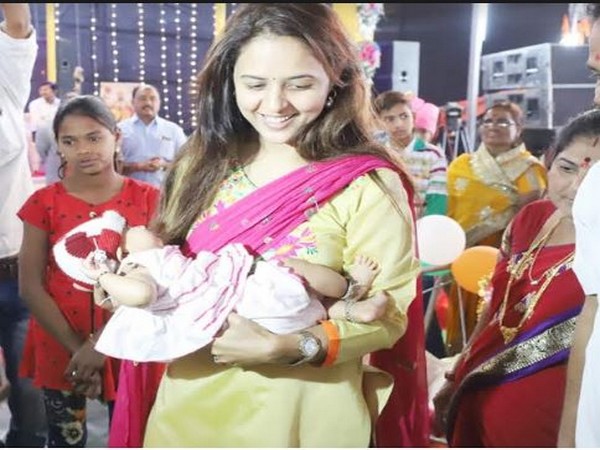

Beed (Maharashtra) [India], Jun 2 (ANI): Given the skewed sex ratio, rampant sex determination, female foeticide, malnutrition and tradition of giving a disturbing name to girls, the state Women and Child Development Department has gone into mission mode to 'save girls' in Beed. The department has developed and is implementing a people-centric awareness programme with the help of local civil society organisations.
Beed district is an administrative district in the state of Maharashtra in India. The district occupies an area of 10,693 km2 and has a population of 2,585,962 of which 17.91 per cent were urban (as of 2011). According to reliable sources, the urban population has gone up by a mere 2 per cent since the 2011 census.
Beed has been notorious for its discrimination against the girl child. From 2001 to 2011, child sex ratio (calculated as the number of girl per 1000 boys in the 0-6 year age group) dropped from 894 to 807.
In other words, for every 1,000 male children in the district, there were 807 female children.
Interestingly, as per the 2011 census, the average child sex ratio in India is 918 girls per 1,000 boys.
Rampant sex determination, female foeticide as well as a set of rather disturbing 'traditions', including naming girls, 'Nakushi' (unwanted in Marathi) or Kachrabai which means akin to garbage, or Dagadbai that means akin to stone, largely contribute to the strong daughter aversion in these parts.
A chiefly agrarian and largely backward district in the Marathwada region, Beed is witness to large-scale migration from October to March every year as a sizeable population moves to western Maharashtra and neighbouring Karnataka for the sugarcane-cutting season. Families that make ends meet solely by working as agricultural labour have an obvious preference for sons.
Yet, ever since alarming reports of rapidly declining child sex ratio emerged in 2011, the state health department has gone into mission mode to "save girls".
There are several facets to the sustained efforts that have been undertaken over the last seven-odd years. Of course, creating quality engagement with the community, and especially the women and girls, is the core driving factor in all these measures.
The state Women and Child Development Department has developed and is implementing a people-centric awareness programme with the input and cooperation of local civil society organisations (CSOs).
The Khatod Foundation is one such group that has been supporting the work of government health workers, health officers and doctors on the ground in Beed.
The Poshan Pakhwada, observed from 8th to 22nd March, 2019 to mark the first anniversary of the Poshan Abhiyan, presented an ideal opportunity for the health functionaries, the Anganwadi workers and the foundation to work together and train the spotlight on the twin curse of malnutrition and misogyny that has eclipsed the future of girls in the district.
It was a fortnight of events that focused on raising awareness and disseminating simple bits of valuable information on quality nutrition, hygiene, antenatal care, safe delivery, post-natal care, immunisation, and other aspects of mother and childcare.
In keeping with the overarching narrative of saving the girl child, in addition to speaking about nutrition and wellbeing, health workers and activists, also shared messages on equal treatment of girls and boys.
One notable initiative which has caught the fancy of the community was the grandbaby naming ceremony that was held exclusively for girls during the Kirtan Mahotsav in January 2019.
Celebrating the naming of girls is truly an innovative and significant strategy, as it squarely takes on the masculine narrative, which, incidentally, also favours boys and men when it comes to safeguarding health apart from extending them many other privileges.
Moreover, traditionally, the naming ceremony for boys is conducted with a lot of fanfare while it's a low-key affair for girls.
This year, as many as 501 baby girls were given a joyous welcome at the naming ceremony organised at the district headquarters, in the presence of thousands of community members.
The festivities were completely traditional although instead of the usual quiet family affair it was a magnificent public event.
For the health officials and CSO campaigners involved in organising the event, the look of sheer delight on the faces of the mothers was well worth the pains that had been put into making it a resounding success.
It's been an uphill task to boost the child sex ratio in the district but the results have started showing.
As per the latest data shared by the state health department, the number of girls per 1,000 boys has been steadily improving. So much so that now Beed has even bettered the national average--from a dismal 797 in 2011-12 it is a strong 938 in 2019!
Clearly, the combined messaging of securing the nutrition and health of mother and child and rooting for equality has made an impact.
The views expressed in the above article are that of Sushil Deshmukh of Charkha Development Communication Network. (ANI)
Beating malnutrition, misogyny in Beed district of Maharashtra
ANI | Updated: Jun 02, 2019 16:26 IST


