

ADD ANI AS A TRUSTED SOURCE
googleads
ANI Logo
Menu
Health

Back pain in adults may be due to human evolution, spine shape

Burnaby [Canada], Mar 6 (ANI): The reason why a lot of adults experience back pain might not have anything to do with their physical health but with the evolutionary past of humans, suggests a study.

ANI Mar 06, 2020 09:51 IST googleads

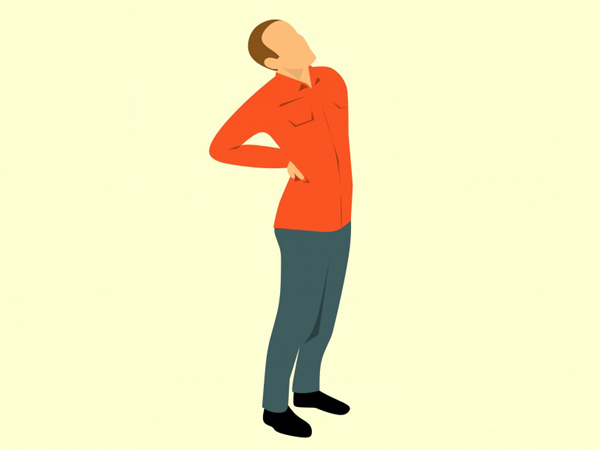
Representative image

Burnaby [Canada], Mar 6 (ANI): The reason why a lot of adults experience back pain might not have anything to do with their physical health but with the evolutionary past of humans, suggests a study.
The cause of back pain can be linked to humanity's evolutionary past, according to new research from a team of bioarchaeologists at Simon Fraser University, the University of Liverpool, and the University of Sydney.
The study was published in the journal- Evolution, Medicine, and Public Health.
The study examines why some people are more susceptible to a particular stress fracture known as spondylolysis - a condition that often affects athletes.
"Because spondylolysis only occurs in humans and does not affect our great ape cousins, it has long been assumed to be the result of increased stress placed on our spine by our unique ability to walk upright on two legs," said lead researcher, Kimberly Plomp.
"However, there have been few attempts to test this hypothesis," Plomp added.
The researchers used advanced 3D shape analysis techniques to compare the final lumbar vertebrae of humans with and without spondylolysis to the same bones in our closest living relatives, the great apes.
The team found that the differences between human vertebrae with spondylolysis and great ape vertebrae were greater than those between healthy human vertebrae and great ape vertebrae.
People who developed spondylolysis have vertebrae that are more wedge-shaped, where the front is taller than the back, in addition to other subtle shape differences.
The differences are consistent with the vertebrae having "overshot" the optimum for walking on two legs, leaving the individual prone to developing spondylolysis.
The latest research is the third study that the researchers have conducted linking vertebral shape and back pain to the evolutionary history of our lineage.
Previously, they have demonstrated that humans with intervertebral disc hernias have vertebrae that are more similar in shape to those of modern chimpanzees and those of our fossil ancestors than are humans with healthy spines.
"We can picture vertebral shape variation in humans as a spectrum with one end having vertebrae with an ancestral shape and the other end having vertebrae with exaggerated bipedal adaptations. Where an individual's vertebrae lie within this distribution has a bearing on their spinal health," said another researcher, Mark Collard.
"For decades, scholars have assumed that the reason humans are so commonly afflicted with back problems is that we walk on two legs. Our studies are the first to show a clear link between the shape of your vertebrae, bipedalism, and the health of your spine," added Collard.
"This is an area requiring further study, but our data show that studying the past can have a direct bearing on current societal issues - in this case, the prevention and management of back pain," said Keith Dobney. (ANI)


Get the App

What to Read Next

Health

Pre-workout supplements may cut sleep in half for young users

Pre-workout supplements may cut sleep in half for young users

A popular fitness trend among young people may be quietly undermining their sleep. A new study led by researchers at the University of Toronto has found that teenagers and young adults who use pre-workout supplements are significantly more likely to experience extremely short sleep durations.

Read More
Health

Scientists find clue to human brain evolution in finger length

Scientists find clue to human brain evolution in finger length

Human evolution has long been tied to growing brain size, and new research suggests prenatal hormones may have played a surprising role. By studying the relative lengths of the index and ring fingers, a marker of prenatal exposure to oestrogen and testosterone, researchers found that higher prenatal oestrogen exposure was associated with larger head size in newborn boys.

Read More
Health

MRI scans show exercise can make the brain look younger

MRI scans show exercise can make the brain look younger

New research suggests that consistent aerobic exercise can help keep your brain biologically younger. Adults who exercised regularly for a year showed brains that appeared nearly a year younger than those who didn't change their habits.

Read More
Health

Swedish study reveals when fitness and strength begin to fade

Swedish study reveals when fitness and strength begin to fade

A long-running Swedish study has followed adults for nearly five decades, uncovering when physical decline truly begins. Fitness and strength start slipping around age 35, then worsen gradually with age.

Read More
Health

Cambridge scientists create gel that could end arthritis pain

Cambridge scientists create gel that could end arthritis pain

Cambridge scientists have created a breakthrough material that can sense tiny chemical changes in the body, such as the increased acidity during an arthritis flare-up, and release drugs exactly when and where they're needed.

Read More
Health

Scientists uncover key protein in cellular fat storage: Study

Scientists uncover key protein in cellular fat storage: Study

Research conducted at the University of New South Wales (UNSW) has shed light on how cells in the body manage and store fat, potentially offering new insights into human health.

Read More
Health

Lilly Partners with API to launch ‘Obesity Gurukul’

Lilly Partners with API to launch ‘Obesity Gurukul’

Eli Lilly and Company (India), in collaboration with the Association of Physicians of India (API), on Friday announced the launch of 'API - Obesity Gurukul', a flagship Continuing Medical Education (CME) program aimed at enhancing physicians' clinical capabilities to address obesity, which is rapidly emerging as one of India's most pressing public health challenges.

Read More
Health

Childhood cancer survivors face risk of COVID 19

Childhood cancer survivors face risk of COVID 19

The results show that childhood cancer survivors had a lower risk of contracting COVID 19, but were 58 per cent more likely to develop severe disease if they did become infected.

Read More
Health

New research confirms that neurons form in the adult brain: Study

New research confirms that neurons form in the adult brain: Study

Researchers from Sweden have discovered that the human brain continues to grow new cells in the memory region--called the hippocampus--even into old age.

Read More
Health

Researchers new AI implant promises drug-free pain relief

Researchers new AI implant promises drug-free pain relief

A groundbreaking wireless implant promises real-time, personalised pain relief using AI and ultrasound power, no batteries, no wires, and no opioids. Designed by University of Southern California (USC) and University of California, Los Angeles (UCLA) engineers, it reads brain signals, adapts on the fly, and bends naturally with your spine.

Read More
Home About Us Our Products Advertise Contact Us Terms & Condition Privacy Policy

Copyright © aninews.in | All Rights Reserved.


