

ADD ANI AS A TRUSTED SOURCE
googleads
ANI Logo
Menu
Health

Baby's vaccine reactions related to birth delivery method: Study

According to research, a baby's delivery method influences how its immune system responds to two important childhood vaccines.

ANI Nov 15, 2022 23:03 IST googleads

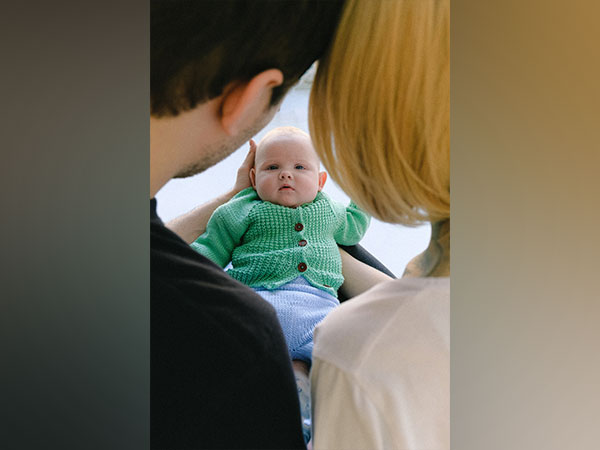
Representative Image

Washington [US], November 15 (ANI): According to research, a baby's delivery method influences how its immune system responds to two important childhood vaccines.
Babies born naturally were found to have higher antibody levels than those born via Caesarian section after receiving their jabs that protect against bacteria that cause lung infections and meningitis.
Research was carried out by a team from the University of Edinburgh, Spaarne Hospital and University Medical Centre in Utrecht and the National Institute for Public Health and the Environment in The Netherlands.
Experts say the findings could help to inform conversations about C-sections between expectant mothers and their doctors and shape the design of more tailored vaccination programmes.
Researchers studied the relationship between gut microbes and antibody levels after vaccination in a cohort of 120 babies vaccinated at 8 and 12 weeks against lung infections and meningitis.
The researchers tracked the development of the gut microbiome - the community of microbes that lives in our body - in the child's first year of life and their immune response to the vaccines by testing saliva samples at 12 and 18 months.
In the 101 babies tested for antibodies as a result of the vaccine that protects against lung infections, the investigators found double the antibody levels in babies delivered naturally compared with those delivered by C-section.
Breastfeeding was linked with 3.5 times higher antibody levels compared with formula-fed children who had been delivered naturally.
Levels of antibodies as a result of the vaccine that protects against meningitis were tested in 66 babies. Experts found the levels of antibodies were 1.7 times higher for naturally delivered babies, regardless of breastfeeding, compared with those delivered via C-section.
The gut microbiome is seeded at birth, developing rapidly over the first few months of life, and is influenced mostly by delivery mode, breastfeeding, and antibiotic use.
The team found a clear relationship between microbes in the gut of those babies and levels of antibodies.
For example, among a host of bacteria in the gut, high levels of two in particular - Bifidobacterium and E. Coli - were associated with a high antibody response to the vaccine that protects against lung infections.
High levels of E. Coli were also linked with a high antibody response to the vaccine that protects against meningitis.
The baby acquires the Bifidobacterium and E.coli bacteria through natural birth and human milk is needed to provide the sugars for these bacteria to thrive on.
The team concludes that the babies' microbiome in early life contributes the immune system's response to vaccines and sets the level of protection against certain infections in childhood.
Experts say that vaccination schedules could also be adjusted based on mode of delivery or an analysis of the baby's microbiome in the future.
The research has been published in Nature Communications. It was funded by Scotland's Chief Scientist Office and the Netherlands Organisation for Scientific Research.
Dr Emma de Koff, first author and microbiology trainee at the Amsterdam University Medical Center, said: "We expected to find a link between the gut microbiome and the babies' vaccine responses, however, we never thought to find the strongest effects in the first weeks of life."
Professor Debby Bogaert study lead and Chair of Paediatric Medicine at the University of Edinburgh said "I think it is especially interesting that we identified several beneficial microbes to be the link between mode of delivery and vaccine responses. In the future, we may be able to supplement those bacteria to children born by C-section shortly after birth through, for example, mother-to-baby 'faecal transplants' or the use of specifically designed probiotics." (ANI)


Get the App

What to Read Next

Health

The truth about ‘Eating for Two’ explained by doctors

The truth about ‘Eating for Two’ explained by doctors

Health experts warn that interpreting the advice literally can lead to excessive calorie intake, unhealthy weight gain and a higher risk of Gestational Diabetes Mellitus (GDM), a condition that affects blood sugar levels during pregnancy.

Read More
Health

Pre-workout supplements may cut sleep in half for young users

Pre-workout supplements may cut sleep in half for young users

A popular fitness trend among young people may be quietly undermining their sleep. A new study led by researchers at the University of Toronto has found that teenagers and young adults who use pre-workout supplements are significantly more likely to experience extremely short sleep durations.

Read More
Health

Scientists discover reason high altitude protects against diabete

Scientists discover reason high altitude protects against diabete

Living at high altitude appears to protect against diabetes, and scientists have finally discovered the reason. When oxygen levels drop, red blood cells switch into a new metabolic mode and absorb large amounts of glucose from the blood.

Read More
Health

Scientists find clue to human brain evolution in finger length

Scientists find clue to human brain evolution in finger length

Human evolution has long been tied to growing brain size, and new research suggests prenatal hormones may have played a surprising role. By studying the relative lengths of the index and ring fingers, a marker of prenatal exposure to oestrogen and testosterone, researchers found that higher prenatal oestrogen exposure was associated with larger head size in newborn boys.

Read More
Health

MRI scans show exercise can make the brain look younger

MRI scans show exercise can make the brain look younger

New research suggests that consistent aerobic exercise can help keep your brain biologically younger. Adults who exercised regularly for a year showed brains that appeared nearly a year younger than those who didn't change their habits.

Read More
Health

Swedish study reveals when fitness and strength begin to fade

Swedish study reveals when fitness and strength begin to fade

A long-running Swedish study has followed adults for nearly five decades, uncovering when physical decline truly begins. Fitness and strength start slipping around age 35, then worsen gradually with age.

Read More
Health

Scientists find hidden synapse hotspots in the teen brain: Study

Scientists find hidden synapse hotspots in the teen brain: Study

The scientists have discovered that the adolescent brain does more than prune old connections. During the teen years, it actively builds dense new clusters of synapses in specific parts of neurons.

Read More
Health

Injection turns sleeping tumour immune cells into cancer fighters

Injection turns sleeping tumour immune cells into cancer fighters

The Korea Advanced Institute of Science and Technology (KAIST) researchers have developed a way to reprogram immune cells already inside tumours into cancer-killing machines.

Read More
Health

High-fat diets give liver cancer a dangerous head start: Study

High-fat diets give liver cancer a dangerous head start: Study

A high-fat diet does more than overload the liver with fat. New research from MIT shows that prolonged exposure to fatty foods can push liver cells into a survival mode that quietly raises the risk of cancer.

Read More
Health

Eating more vitamin C can physically change your skin

Eating more vitamin C can physically change your skin

Scientists discovered that vitamin C from food travels through the bloodstream into every layer of the skin, boosting collagen and skin renewal.

Read More
Home About Us Our Products Advertise Contact Us Terms & Condition Privacy Policy

Copyright © aninews.in | All Rights Reserved.


