

ADD ANI AS A TRUSTED SOURCE
googleads
ANI Logo
Menu
Health

Babies with low-risk deliveries may not need antibiotics at birth: Study

Philadelphia [US], January 13 (ANI): A team of researchers has found that infants born through uncomplicated caesarean delivery, without labour or membrane rupture before delivery and no concern for infection, should not need antibiotics at birth.

ANI Jan 13, 2022 17:01 IST googleads

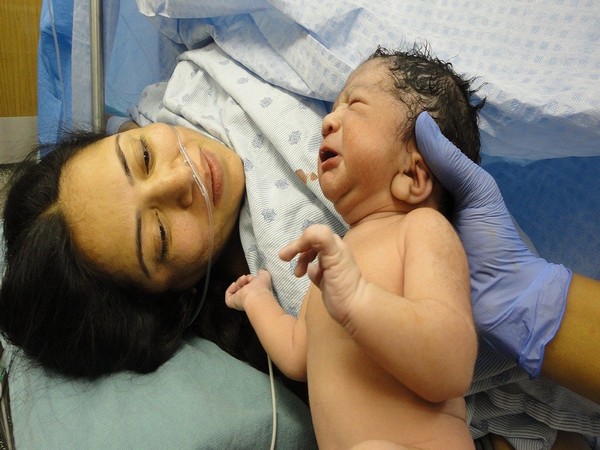
Representative image

Philadelphia [US], January 13 (ANI): A team of researchers has found that infants born through uncomplicated caesarean delivery, without labour or membrane rupture before delivery and no concern for infection, should not need antibiotics at birth.
The research has been published in the 'Pediatrics Journal'.
"Given the risks associated with early-onset sepsis in infants, it isn't surprising that newborns are often administered antibiotics immediately after birth," said first author Dustin D. Flannery, DO, MSCE, an attending neonatologist and clinical researcher at Children's Hospital of Philadelphia.
"However, our study shows that it is safe to withhold antibiotics in infants, including those born preterm, with low-risk delivery characteristics. Such infants are unlikely to be infected at birth, and can be spared the potential complications of systemic antibiotic exposure," he added.
Newborn infants are at risk for early-onset sepsis (EOS), a life-threatening infection that can occur within 72 hours after birth, due to exposure to bacteria during the birthing process. Predicting which infants will develop EOS, however, is challenging.
This has led to an order of magnitude higher rate of antibiotic use compared to the rate of infants with confirmed infection. Prolonged antibiotic use among newborns is associated with serious adverse outcomes among preterm infants and potential longstanding complications among full-term infants, underscoring the need for a better way to assess infection risk.
Since the primary way a newborn is exposed to bacteria is through the delivery process, the researchers decided to analyse delivery characteristics to see if they could help providers identify infants at the lowest risk of EOS. In a retrospective study, they assessed all infants born between 2009 and 2014 at two Philadelphia birth hospitals who had blood or cerebrospinal fluid culture obtained within 72 hours after birth.
They examined medical record data for confirmed infection and for delivery characteristics, defining a "low-risk" delivery as a caesarean section, without rupture of amniotic membranes prior to delivery; an absence of labor or attempts to induce labour; and an absence of suspected or confirmed maternal intraamniotic infection or foetal distress.
The researchers also included infants born across the gestational age spectrum. Prior studies have assessed EOS risk in both extremely preterm (less than 28 weeks gestation) and full-term (37 weeks or more) infants, but few have analysed the risk among late and moderately preterm infants (28-36 weeks' gestation), despite the fact that these infants make up the bulk of neonatal intensive care unit (NICU) admissions.
Overall, 7,549 infants had a culture drawn and were included in the study. Of these, 1,121 (14.8 per cent) were born in a low-risk delivery setting and 6,428 (85.2 per cent) were not. A total of 41 infants had confirmed cases of EOS; none of the infected patients were born in the setting of a low-risk delivery.
Even though no infants born in a low-risk delivery setting developed EOS, 80 per cent of them were empirically treated with antibiotics. There was no difference between the low risk and non-low risk groups in the proportion of infants who received prolonged antibiotics, suggesting that clinicians did not appreciate or account for the lower risk of infection and stop antibiotics in the absence of confirmed infection.
"In the United States, an estimated 400,000 uninfected term infants receive empirical antibiotics at birth every year, and upwards of 90 per cent of extremely preterm infants receive antibiotics," Dr Flannery said.
"Our study shows that a well-defined subset of these infants should not need antibiotics, and clinicians can use delivery characteristics as a guide to prevent unnecessary antibiotic use and avoid potential complications of treatment," Dr Flannery added. (ANI)


Get the App

What to Read Next

Health

The truth about ‘Eating for Two’ explained by doctors

The truth about ‘Eating for Two’ explained by doctors

Health experts warn that interpreting the advice literally can lead to excessive calorie intake, unhealthy weight gain and a higher risk of Gestational Diabetes Mellitus (GDM), a condition that affects blood sugar levels during pregnancy.

Read More
Health

High-fat keto diet may boost exercise benefits

High-fat keto diet may boost exercise benefits

A new study suggests that eating more fat rather than less could help the body gain greater benefits from exercise when blood sugar levels are high, offering an unexpected perspective on how diet and physical activity work together to support metabolic health.

Read More
Health

Pre-workout supplements may cut sleep in half for young users

Pre-workout supplements may cut sleep in half for young users

A popular fitness trend among young people may be quietly undermining their sleep. A new study led by researchers at the University of Toronto has found that teenagers and young adults who use pre-workout supplements are significantly more likely to experience extremely short sleep durations.

Read More
Health

The more you fear aging, the faster your body may age

The more you fear aging, the faster your body may age

Worrying about getting older especially fearing future health problems may actually speed up aging at the cellular level, according to new research from NYU.

Read More
Health

Scientists reveal how exercise protects brain from Alzheimer's

Scientists reveal how exercise protects brain from Alzheimer's

Exercise may sharpen the mind by repairing the brain's protective shield. Researchers found that physical activity prompts the liver to release an enzyme that removes a harmful protein, causing the blood-brain barrier to become leaky with age.

Read More
Health

MRI scans show exercise can make the brain look younger

MRI scans show exercise can make the brain look younger

New research suggests that consistent aerobic exercise can help keep your brain biologically younger. Adults who exercised regularly for a year showed brains that appeared nearly a year younger than those who didn't change their habits.

Read More
Health

Swedish study reveals when fitness and strength begin to fade

Swedish study reveals when fitness and strength begin to fade

A long-running Swedish study has followed adults for nearly five decades, uncovering when physical decline truly begins. Fitness and strength start slipping around age 35, then worsen gradually with age.

Read More
Health

Memory loss can suddenly speed up with age: Study

Memory loss can suddenly speed up with age: Study

A massive international brain study has revealed that memory decline with age isn't driven by a single brain region or gene, but by widespread structural changes across the brain that build up over time.

Read More
Health

Injection turns sleeping tumour immune cells into cancer fighters

Injection turns sleeping tumour immune cells into cancer fighters

The Korea Advanced Institute of Science and Technology (KAIST) researchers have developed a way to reprogram immune cells already inside tumours into cancer-killing machines.

Read More
Health

Eating more vitamin C can physically change your skin

Eating more vitamin C can physically change your skin

Scientists discovered that vitamin C from food travels through the bloodstream into every layer of the skin, boosting collagen and skin renewal.

Read More
Home About Us Our Products Advertise Contact Us Terms & Condition Privacy Policy

Copyright © aninews.in | All Rights Reserved.


