

ADD ANI AS A TRUSTED SOURCE
googleads
ANI Logo
Menu
Health

Antidepressants ineffectual for back pain and osteoarthritis

Canberra [Australia], January 21 (ANI): A study published by the British Medical Journal (BMJ) provides evidence that stimulant medications are generally inadequate for back and osteoarthritis pain, in spite of being broadly utilized for these conditions.

ANI Jan 21, 2021 08:28 IST googleads

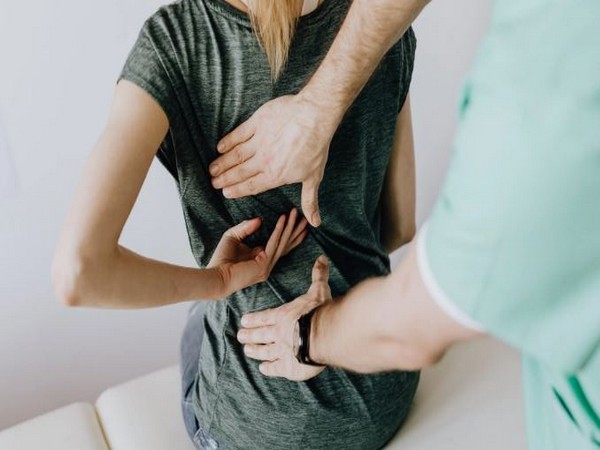
Representative Image

Canberra [Australia], January 21 (ANI): A study published by the British Medical Journal (BMJ) provides evidence that stimulant medications are generally inadequate for back and osteoarthritis pain, in spite of being broadly utilized for these conditions.
The findings, based on moderate certainty evidence, show that for people with back pain the effects were too small to be worthwhile, but for osteoarthritis, a small beneficial effect cannot be ruled out.
Most clinical practice guidelines recommend antidepressants for long term (chronic) back pain and hip and knee osteoarthritis, yet evidence supporting their use is uncertain.
To address this knowledge gap, researchers led by Giovanni Ferreira at the University of Sydney set out to investigate the effectiveness and safety of antidepressants for back and osteoarthritis pain compared with placebo.
Their findings are based on analysis of published data from 33 randomised controlled trials involving more than 5,000 adults with low back or neck pain, sciatica, or hip or knee osteoarthritis.
The trials were designed differently and were of varying quality, but the researchers were able to allow for this in their analysis. Most of the data came from industry-sponsored trials.
The researchers set a difference of 10 points on a 0 to 100 point scale for pain or disability as the smallest worthwhile difference between groups - a threshold commonly used in other studies of chronic pain.
Results showed that serotonin-norepinephrine reuptake inhibitors (SNRIs) reduced back pain after three months. But the effect was small - an average difference of 5.3 points on the pain scale compared with placebo - and unlikely to be considered clinically important by most patients.
For osteoarthritis, they found a slightly stronger effect of SNRIs on pain after three months - an average difference of 9.7 points on the pain scale compared with placebo - meaning that a worthwhile effect could not be excluded.
Low certainty evidence showed that tricyclic antidepressants (TCAs) were ineffective for back pain and related disability.
Tricyclic antidepressants and SNRIs might reduce pain in people with sciatica, but the evidence was not certain enough to draw any firm conclusions.
The researchers acknowledge several limitations, including the possibility of missing trials and being unable to explore a dose-response relation for most antidepressants because of the low number of studies spread across six different classes of antidepressants.
Nevertheless, the review was based on a thorough literature search with a prespecified threshold for clinical importance used in other reviews of treatments for back and osteoarthritis pain.
As such, they say their review updates the evidence for back pain, sciatica, and osteoarthritis, and could help clinicians and their patients decide whether to take antidepressants for chronic pain.
But they conclude: "Large, definitive randomised trials that are free of industry ties are urgently needed to resolve uncertainties about the efficacy of antidepressants for sciatica and osteoarthritis highlighted by this review."
In a linked editorial, researchers at the University of Warwick call for clearer guidance to inform a consistent approach to the use of antidepressants for people with painful disorders.
They acknowledge that some patients might choose to try antidepressants for a small chance of a worthwhile reduction in pain after three months.
Overall, however, they state that drug treatments are largely ineffective for back pain and osteoarthritis and have the potential for serious harm. (ANI)


Get the App

What to Read Next

Health

The truth about ‘Eating for Two’ explained by doctors

The truth about ‘Eating for Two’ explained by doctors

Health experts warn that interpreting the advice literally can lead to excessive calorie intake, unhealthy weight gain and a higher risk of Gestational Diabetes Mellitus (GDM), a condition that affects blood sugar levels during pregnancy.

Read More
Health

High-fat keto diet may boost exercise benefits

High-fat keto diet may boost exercise benefits

A new study suggests that eating more fat rather than less could help the body gain greater benefits from exercise when blood sugar levels are high, offering an unexpected perspective on how diet and physical activity work together to support metabolic health.

Read More
Health

Pre-workout supplements may cut sleep in half for young users

Pre-workout supplements may cut sleep in half for young users

A popular fitness trend among young people may be quietly undermining their sleep. A new study led by researchers at the University of Toronto has found that teenagers and young adults who use pre-workout supplements are significantly more likely to experience extremely short sleep durations.

Read More
Health

The more you fear aging, the faster your body may age

The more you fear aging, the faster your body may age

Worrying about getting older especially fearing future health problems may actually speed up aging at the cellular level, according to new research from NYU.

Read More
Health

Scientists reveal how exercise protects brain from Alzheimer's

Scientists reveal how exercise protects brain from Alzheimer's

Exercise may sharpen the mind by repairing the brain's protective shield. Researchers found that physical activity prompts the liver to release an enzyme that removes a harmful protein, causing the blood-brain barrier to become leaky with age.

Read More
Health

MRI scans show exercise can make the brain look younger

MRI scans show exercise can make the brain look younger

New research suggests that consistent aerobic exercise can help keep your brain biologically younger. Adults who exercised regularly for a year showed brains that appeared nearly a year younger than those who didn't change their habits.

Read More
Health

Swedish study reveals when fitness and strength begin to fade

Swedish study reveals when fitness and strength begin to fade

A long-running Swedish study has followed adults for nearly five decades, uncovering when physical decline truly begins. Fitness and strength start slipping around age 35, then worsen gradually with age.

Read More
Health

Memory loss can suddenly speed up with age: Study

Memory loss can suddenly speed up with age: Study

A massive international brain study has revealed that memory decline with age isn't driven by a single brain region or gene, but by widespread structural changes across the brain that build up over time.

Read More
Health

Injection turns sleeping tumour immune cells into cancer fighters

Injection turns sleeping tumour immune cells into cancer fighters

The Korea Advanced Institute of Science and Technology (KAIST) researchers have developed a way to reprogram immune cells already inside tumours into cancer-killing machines.

Read More
Health

Eating more vitamin C can physically change your skin

Eating more vitamin C can physically change your skin

Scientists discovered that vitamin C from food travels through the bloodstream into every layer of the skin, boosting collagen and skin renewal.

Read More
Home About Us Our Products Advertise Contact Us Terms & Condition Privacy Policy

Copyright © aninews.in | All Rights Reserved.
