

ADD ANI AS A TRUSTED SOURCE
googleads
Menu
Health

Antibodies from patients infected with SARS-CoV in 2003 cross-neutralised SARS-CoV-2 in vitro: Study

Washington [US], October 10 (ANI): Antibodies in serum samples collected from patients infected with SARS-CoV during the 2003 outbreak effectively neutralised SARS-CoV-2 infection in cultured cells, according to a new study.

ANI Oct 10, 2020 08:19 IST googleads

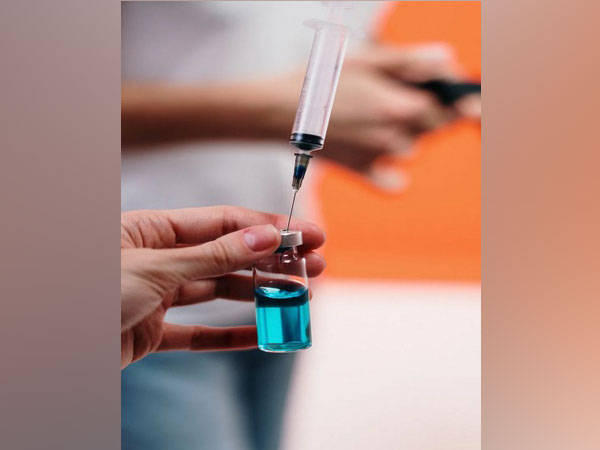
Representative image

Washington [US], October 10 (ANI): Antibodies in serum samples collected from patients infected with SARS-CoV during the 2003 outbreak effectively neutralised SARS-CoV-2 infection in cultured cells, according to a new study.
The study was published in the journal --Science Advances.
The authors also report that, surprisingly, mice and rabbits immunised with a receptor-binding domain (RBD) from a strain of SARS-CoV that infects the Himalayan palm civet elicited stronger antibody responses against SARS-CoV-2 than animals immunised with an RBD from a human SARS-CoV strain.
The authors suggest that their findings may inform strategies to develop universal vaccines against emerging and future coronaviruses. Yuanmei Zhu and colleagues analyzed 20 convalescent serum samples from patients infected with SARS-CoV, determining cross-reactivity for protein antigens derived from four regions of the SARS-CoV-2 spike protein, including the S ectodomain (S), S1 subunit, RBD, and S2 subunit. While all serum samples reacted strongly with the S and S2 proteins, they reacted more weakly with the S1 and RBD proteins. A separate test using a single-cycle infection assay determined that the convalescent SARS-CoV sera efficiently prevented both SARS-CoV and SARS-CoV-2 pseudoviruses (which cannot produce viral surface proteins on their own) from infecting cells, although they inhibited SARS-CoV-2 activity less efficiently.
The researchers verified their findings in animals and specifically characterized the RBD's ability to mediate cross-reactivity in mice since the RBD is the least conserved of the spike protein sites between the two viruses. They found that anti-RBD serum from SARS-CoV cross-reacted well with SARS-CoV-2, suggesting a key antigen component is genetically conserved in the RBD sites of the two viruses.
Zhu et al. note that although antibody-dependent enhancement (when binding a virus to certain antibodies actually eases its entry into host cells) was not observed in this study, the effect should be addressed during vaccine development. (ANI)


Get the App

What to Read Next

Health

This new drug could be first to stop deadly fatty liver disease

This new drug could be first to stop deadly fatty liver disease

The Researchers at the University of California San Diego School of Medicine have identified a new investigational drug that shows promise in treating metabolic dysfunction-associated steatohepatitis (MASH), a serious form of fatty liver disease linked to obesity and type 2 diabetes that can lead to cirrhosis, liver failure, and even liver cancer.

Read More
Health

Scientists find simple tweaks that cut diabetes risk by 31%

Scientists find simple tweaks that cut diabetes risk by 31%

A Mediterranean-style diet, in combination with reduced caloric intake, moderate physical activity, and professional support for weight loss, may cut the risk of type 2 diabetes (T2D) by 31%, according to a new study co-authored by researchers at Harvard T.H. Chan School of Public Health.

Read More
Health

Study reveals hidden heart risks in women with Type 2 Diabetes

Study reveals hidden heart risks in women with Type 2 Diabetes

Women with type 2 diabetes are nearly twice as likely as men to have undetected heart damage, according to a new study by Leicester researchers.

Read More
Health

New mRNA vaccine is more effective, less costly to develop

New mRNA vaccine is more effective, less costly to develop

A new type of mRNA vaccine is more scalable and adaptable to continuously evolving viruses such as SARS-CoV-2 and H5N1, according to a study by researchers at the University of Pittsburgh School of Public Health and the Pennsylvania State University.

Read More
Health

Mitochondria may hold key to curing diabetes: Study

Mitochondria may hold key to curing diabetes: Study

Mitochondria are responsible for creating energy, which fuels cells and keeps them functioning. However, mitochondrial abnormalities have been linked to the development of disorders like type 2 diabetes. Patients with this illness are unable to produce enough insulin or use the insulin produced by their pancreas to maintain normal blood sugar levels.

Read More
Home About Us Our Products Advertise Contact Us Terms & Condition Privacy Policy

Copyright © aninews.in | All Rights Reserved.


