

ADD ANI AS A TRUSTED SOURCE
googleads
ANI Logo
Menu
Health

Analysing patients shortly after stroke can help link brain regions to speech functions: Study

Washington D.C. [USA], Mar 24 (ANI): Analysing the brains of stroke patients just days after the stroke allows researchers to link various speech functions to different parts of the brain according to new research from Rice University and Baylor College of Medicine. This important breakthrough may lead to better treatment and recovery of the stroke patients.

ANI Mar 24, 2020 09:59 IST googleads

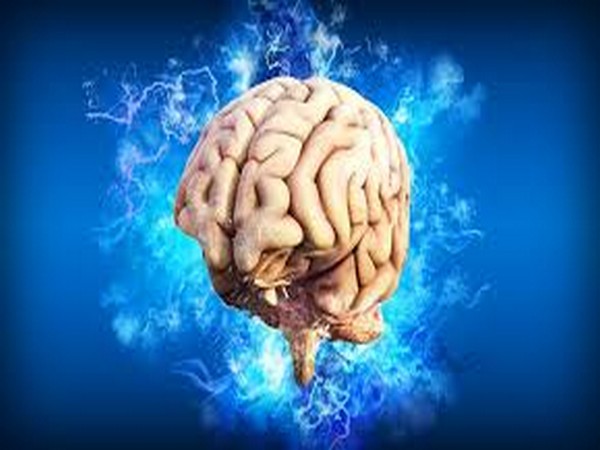
Representative image

Washington D.C. [USA], Mar 24 (ANI): Analysing the brains of stroke patients just days after the stroke allows researchers to link various speech functions to different parts of the brain according to new research from Rice University and Baylor College of Medicine. This important breakthrough may lead to better treatment and recovery of the stroke patients.
The study, 'Dissociation between frontal and temporal-parietal contributions to connected speech in acute stroke' will appear in an upcoming edition of the journal Brain.
Study co-author Randi Martin, the Elma W. Schneider Professor of Psychology at Rice, worked with a team of researchers led by Tatiana Schnur, associate professor of neurosurgery and neuroscience at the Baylor College of Medicine, to evaluate the spontaneous language production of 65 stroke patients by using storytelling. For the experiment, the patients were read the story of Cinderella and were then asked to retell it.
The researchers used a well-established process to score the patients -- the Quantitative Production Analysis method-- and relied on 13 different measures for evaluation, including words per minute, types of words, and sentence length and formation. They found that by evaluating patients between one- and 13-days post-stroke, they were able to identify how different and critical components related to language production linked up with different regions of the brain.
The researchers used cutting-edge techniques to relate the brain areas damaged in each individual to the degree of their impairment on these language-production measures. Specifically, they found that retrieving words and putting them into increasingly complex sentences relied on the left temporal and parietal lobes, while producing grammatical aspects of sentences relied on the left frontal lobe.
Martin noted there are only a few other studies that have looked at stroke patients in the acute stage, but those focused on the ability to produce single words rather than providing a detailed analysis of language production. The majority of studies, she said, look at stroke patients in the chronic stage of recovery, which is at least six months after the stroke. At that time, considerable reorganization of language function in the brain may have occurred.
Also, studying individuals at the acute stage allows for studying those with smaller areas of damage, she said. Those with small lesions are likely to recover and thus not included in studies of chronic stroke, and examining these people allows for a more precise mapping between areas damaged and language abilities.
"Many patients in the chronic stage of stroke have significantly worse brain damage than acute patients and have plateaued with their recovery," she said. "Their brains cannot be evaluated in the same way as acute stroke patients."
Future work will look at these same individuals at different stages during their first year of the recovery process. One important issue will be to determine what areas of brain damage and what language abilities will predict performance a year after stroke. (ANI)
Martin hopes this work will help better understand how different brain regions recover from the stroke. She expects the work will be useful in the design of treatment options for stroke patients, including early interventions that may boost long-term recovery. (ANI)


Get the App

What to Read Next

Health

Scientists reveal how exercise protects brain from Alzheimer's

Scientists reveal how exercise protects brain from Alzheimer's

Exercise may sharpen the mind by repairing the brain's protective shield. Researchers found that physical activity prompts the liver to release an enzyme that removes a harmful protein, causing the blood-brain barrier to become leaky with age.

Read More
Health

Scientists find clue to human brain evolution in finger length

Scientists find clue to human brain evolution in finger length

Human evolution has long been tied to growing brain size, and new research suggests prenatal hormones may have played a surprising role. By studying the relative lengths of the index and ring fingers, a marker of prenatal exposure to oestrogen and testosterone, researchers found that higher prenatal oestrogen exposure was associated with larger head size in newborn boys.

Read More
Health

MRI scans show exercise can make the brain look younger

MRI scans show exercise can make the brain look younger

New research suggests that consistent aerobic exercise can help keep your brain biologically younger. Adults who exercised regularly for a year showed brains that appeared nearly a year younger than those who didn't change their habits.

Read More
Health

Scientists find hidden synapse hotspots in the teen brain: Study

Scientists find hidden synapse hotspots in the teen brain: Study

The scientists have discovered that the adolescent brain does more than prune old connections. During the teen years, it actively builds dense new clusters of synapses in specific parts of neurons.

Read More
Health

Memory loss can suddenly speed up with age: Study

Memory loss can suddenly speed up with age: Study

A massive international brain study has revealed that memory decline with age isn't driven by a single brain region or gene, but by widespread structural changes across the brain that build up over time.

Read More
Health

Collaborating minds think alike in shared task: Study

Collaborating minds think alike in shared task: Study

When two people work on a shared task, they process information alike, a new study revealed.

Read More
Health

This body trait helps keep your brain young: Study

This body trait helps keep your brain young: Study

Scientists discovered that more muscle and less hidden abdominal fat are linked to a younger biological brain age.

Read More
Health

Boosting this protein helps brain protect itself from Alzheimer’s

Boosting this protein helps brain protect itself from Alzheimer’s

Researchers discovered that raising the protein Sox9 can help the brain's astrocytes clear out toxic plaque buildup linked to Alzheimer's.

Read More
Health

Hypertension affects brain much earlier than expected: Study

Hypertension affects brain much earlier than expected: Study

Hypertension may impair the brain far earlier than previously understood -- even before a measurable rise in blood pressure occurs -- according to a new preclinical study from Weill Cornell Medicine. The changes help explain why hypertension is a major risk factor for developing cognitive disorders, such as vascular cognitive impairment and Alzheimer's disease.

Read More
Health

Scientists find brain chemical tied to trauma and depression

Scientists find brain chemical tied to trauma and depression

Researchers identified SGK1 as a key chemical connecting childhood trauma to depression and suicidal behaviour.

Read More
Home About Us Our Products Advertise Contact Us Terms & Condition Privacy Policy

Copyright © aninews.in | All Rights Reserved.


