

ADD ANI AS A TRUSTED SOURCE
googleads
ANI Logo
Menu
Health

Allergy season worsens with changing climate

Washington D.C. [USA], Apr 13 (ANI): You already know that allergy season has arrived when you sneeze your head off frequently. A new study has found that allergy season has worsened because of increased pollen count and changing the climate.

ANI Apr 13, 2019 18:19 IST googleads

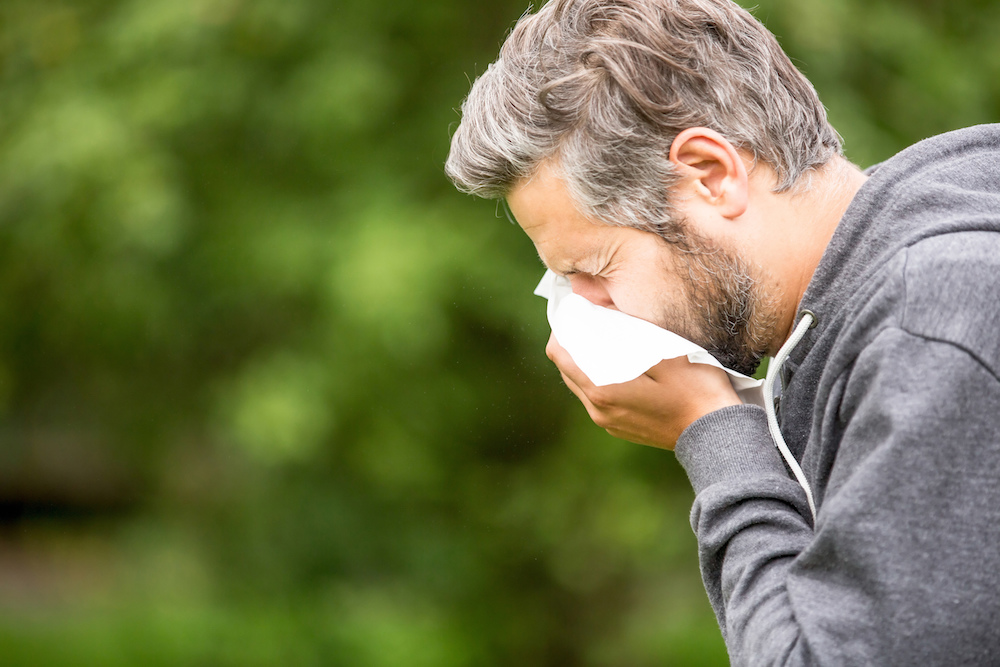
Representative Image

Washington D.C. [USA], Apr 13 (ANI): You already know that allergy season has arrived when you sneeze your head off frequently. A new study has found that allergy season has worsened because of increased pollen count and changing the climate.
As reported by CNN, low-income households and kids tend to be at higher risk of catching diseases like Asthma, because of exposure to pollen

With rising temperature, the situation is likely to get worst for allergies because plants like ragweed will start migrating.
"Warmer temperatures allow the trees to pollinate earlier and for longer times. We didn't used to see our cars covered in pollen before March, but we do now, and we hear from people all the time who are dealing with allergies for a lot longer than they used to when they were little. That's definitely connected to," CNN quoted Angel Waldron, as saying.
If the temperature continues to increase at its current stride, it is expected that by the end of the century, the growing season will be longer by about a month in most part of the world. Places that did not witness the pollen-producing flora will soon see them in plenty, exposing whole new populations to pollen.
It's not just the warmer temperatures adding to our misery. Plants love some carbon dioxide, and when there is more of it in the atmosphere due to the greenhouse gases causing climate change, they flourish. Studies on ragweed show that the amount of pollen the plant produces actually doubles with higher levels of CO2. The pollen becomes more potent too, according to the US Department of Agriculture. There are similar patterns for grass pollen and other plants.

The impact of technology on healthcare has made available plentiful of allergy medications at the pharmacy. The consulted doctor should be able to help identify what triggers the allergies, so one can avoid them.
Spend possibly least duration outside between 10 a.m. and 2 p.m., especially on days when the Environmental Protection Agency’s AQI says the pollen count is high in your neighbourhood.
Use AQI monitoring mobile applications to track the quality of air around. 
To prevent pollen to enter inside, leave your footwear at the door. Change your clothes if you've been outside for a long duration. Tidy the pets who have to go out.
"Hair works a bit like a mop, collecting pollen that's floating in the air," Waldron said. "Since hair is the closest thing to your nasal passages, it can really bother you. If you wash it or brush it out before you go to sleep, or at least cover it, then you won't be sleeping in all that pollen."
Climate Change can also be controlled through simple amendments inside the home like - Turning out the lights while leaving the room, using energy-efficient light bulbs, unplug electronic appliances when not in use, do not use hot water for washing clothes and most important use public transport or carpool to reduce the number of trips you take in the car.  All of these can help to control greenhouse gases emission in the environment. 
Make sure to carry good quality mask to prevent asthma & allergy.
Vacuum cleaners with HEPA filters are helpful to improve indoor air quality. 
Also, make sure it has asthma & allergy friendly certification mark to make sure they will be your best defense against the yellow stuff.

(ANI)

Get the App

What to Read Next

Health

Study shows how allergies differ in urban, rural children

 Study shows how allergies differ in  urban, rural children

Scientists discovered that a previously uncharacterized subset of immune cells may play an important role in the development of allergy illnesses and explain disparities between urban and rural populations.

Read More
Health

Study shows how climate change affects rain and floods

Study shows how climate change affects rain and floods

A new study shows that to understand the details of this relationship, it is important to distinguish between different types of rainfall and flood events -- namely, between short-term events that occur on a time scale of hours, and longer-term events that last several days. In each case, climate change has a different impact.

Read More
Health

Climate initiatives that reduce motor vehicle emissions

Climate initiatives that reduce motor vehicle emissions

According to recent research, limiting carbon dioxide (CO2) emissions from motor vehicles, as well as investing in electric cars and public transport, would reduce air pollution and improve children's health. They'd also save money.

Read More
Health

Research reveals body temperature is linked to depression

Research reveals body temperature is linked to depression

People with depression have higher body temperatures, which suggests that reducing their temperatures may have a mental health advantage, according to a new UC San Francisco research.

Read More
Health

Type of allergy remedy help treat lung cancer

Type of allergy remedy help treat lung cancer

Researchers at Mount Sinai's Icahn School of Medicine have discovered an allergy route that, when inhibited, activates antitumor immunity in animal models of non-small cell lung cancer (NSCLC).

Read More
Health

Research reveals how climate change could affect brain

Research reveals how climate change could affect brain

A new aspect of climate change's destruction is emerging: how global warming affects the human brain.

Read More
Health

Respiratory related mortality is linked to ambient temperature

Respiratory related mortality is linked to ambient temperature

Climate change-induced global warming may increase the burden of inpatient mortality from respiratory disorders throughout the warm season.

Read More
Health

Researchers examine changes in coral microbiome under hypoxia

Researchers examine changes in coral microbiome under hypoxia

A recent study provided the first characterisation of the coral microbiome under hypoxia or low oxygen levels in the water.

Read More
Health

Study finds sense of smell can affect our perception of colours

Study finds sense of smell can affect our perception of colours

We receive constant environmental input through our five senses. Combining information from two or more senses, such as between odours and the smoothness of textures, pitch, colour, and musical dimensions, is one way our brain makes sense of this flood of information. As a result of this sensory integration, we also link certain colours to the flavours of specific meals, such as the flavour of oranges with the colour of the same name, and greater temperatures with warmer colours, lower sound pitches with less elevated places, and so on.

Read More
Health

Healthy guts linked to less allergy-related wheezing

Healthy guts linked to less allergy-related wheezing

According to a study presented at the European Respiratory Society International Congress in Milan, Italy, babies and young children with better-developed populations of gut bacteria are less likely to develop allergy-related wheezing or asthma.

Read More
Home About Us Our Products Advertise Contact Us Terms & Condition Privacy Policy

Copyright © aninews.in | All Rights Reserved.


