

ADD ANI AS A TRUSTED SOURCE
googleads
ANI Logo
Menu
Health

AI with high accuracy increases lung cancer detection: Study

According to a study published in Radiology, a journal of the Radiological Society of North America (RSNA), assistance from an artificial intelligence (AI) algorithm with high diagnostic accuracy improved radiologist performance in detecting lung cancers on chest X-rays and increased human acceptance of AI suggestions.

ANI Jun 27, 2023 22:22 IST googleads

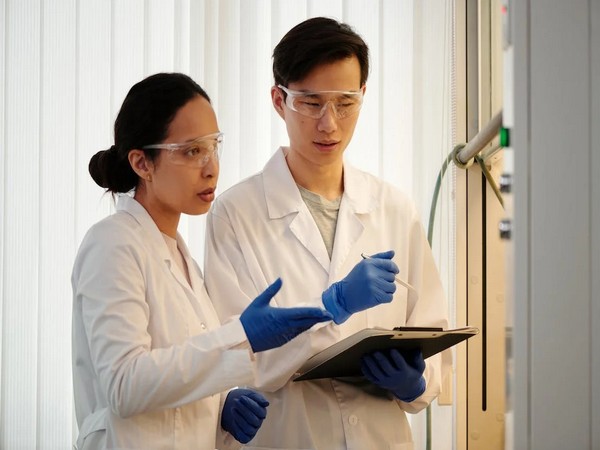
Representative image

Illinois [US], June 27 (ANI): According to a study published in Radiology, a journal of the Radiological Society of North America (RSNA), assistance from an artificial intelligence (AI) algorithm with high diagnostic accuracy improved radiologist performance in detecting lung cancers on chest X-rays and increased human acceptance of AI suggestions.
While AI-based image diagnosis has advanced rapidly in the medical field, the factors affecting radiologists' diagnostic determinations in AI-assisted image reading remain underexplored.
Researchers at Seoul National University looked at how these factors might influence the detection of malignant lung nodules during AI-assisted reading of chest X-rays.
In this retrospective study, 30 readers, including 20 thoracic radiologists with five to 18 years of experience and 10 radiology residents with only two to three years of experience, assessed 120 chest X-rays without AI. Of the 120 chest radiographs assessed, 60 were from lung cancer patients (32 males) and 60 were controls (36 males). Patients had a median age of 67 years. In a second session, each group reinterpreted the X-rays, assisted by either a high- or low-accuracy AI. The readers were blind to the fact that two different AIs were used.
Use of the high accuracy AI improved readers' detection performance to a greater extent than low-accuracy AI. Use of high-accuracy AI also led to more frequent changes in reader determinations--a concept known as susceptibility.
"It is possible that the relatively large sample size in this study bolstered readers' confidence in the AI's suggestions," said study lead author Chang Min Park, M.D., Ph.D., from the Department of Radiology and Institute of Radiation Medicine at Seoul National University College of Medicine in Seoul. "We think this issue of human trust in AI is what we observed in the susceptibility in this study: humans are more susceptible to AI when using high diagnostic performance AI."
Compared to the first reading session, readers assisted by the high diagnostic accuracy AI at the second reading session showed higher per-lesion sensitivity (0.63 versus 0.53), and specificity (0.94 versus 0.88). Alternatively, readers assisted by the low diagnostic accuracy AI at the second reading session did not show improvement between the two reading sessions for any of these measurements.
"Our study suggests that AI can help radiologists, but only when the AI's diagnostic performance meets or exceeds that of the human reader," Dr. Park said.
The results underline the importance of using high diagnostic performance AI. However, Dr. Park noted that the definition of "high diagnostic performance AI" can vary depending on the task and the clinical context in which it will be used. For example, an AI model that can detect all abnormalities on chest X-rays may seem ideal. But in practice, such a model would have limited value in reducing the workload in a pulmonary tuberculosis mass screening setting.
"Therefore, our study suggests that clinically appropriate use of AI requires both the development of high-performance AI models for given tasks and considerations about the relevant clinical setting to which that AI will be applied," Dr. Park said.
In the future, the researchers want to expand their work on human-AI collaboration to other abnormalities on chest X-rays and CT images. (ANI)


Get the App

What to Read Next

Health

The more you fear aging, the faster your body may age

The more you fear aging, the faster your body may age

Worrying about getting older especially fearing future health problems may actually speed up aging at the cellular level, according to new research from NYU.

Read More
Health

Scientists find clue to human brain evolution in finger length

Scientists find clue to human brain evolution in finger length

Human evolution has long been tied to growing brain size, and new research suggests prenatal hormones may have played a surprising role. By studying the relative lengths of the index and ring fingers, a marker of prenatal exposure to oestrogen and testosterone, researchers found that higher prenatal oestrogen exposure was associated with larger head size in newborn boys.

Read More
Health

MRI scans show exercise can make the brain look younger

MRI scans show exercise can make the brain look younger

New research suggests that consistent aerobic exercise can help keep your brain biologically younger. Adults who exercised regularly for a year showed brains that appeared nearly a year younger than those who didn't change their habits.

Read More
Health

Scientists solve a major roadblock in cancer cell therapy: Study 

Scientists solve a major roadblock in cancer cell therapy: Study 

Researchers have found a reliable way to grow helper T cells from stem cells, solving a major challenge in immune-based cancer therapy. Helper T cells act as the immune system's coordinators, helping other immune cells fight longer and harder.

Read More
Health

Injection turns sleeping tumour immune cells into cancer fighters

Injection turns sleeping tumour immune cells into cancer fighters

The Korea Advanced Institute of Science and Technology (KAIST) researchers have developed a way to reprogram immune cells already inside tumours into cancer-killing machines.

Read More
Health

High-fat diets give liver cancer a dangerous head start: Study

High-fat diets give liver cancer a dangerous head start: Study

A high-fat diet does more than overload the liver with fat. New research from MIT shows that prolonged exposure to fatty foods can push liver cells into a survival mode that quietly raises the risk of cancer.

Read More
Health

Researchers have decoded rare cancer fighting plant compound

Researchers have decoded rare cancer fighting plant compound

UBC Okanagan researchers have uncovered how plants create mitraphylline, a rare natural compound linked to anti-cancer effects.

Read More
Health

Scientists reverse Alzheimer’s in mice and restore memory: Study

Scientists reverse Alzheimer’s in mice and restore memory: Study

Alzheimer's has long been considered irreversible, but new research challenges that assumption. Scientists discovered that severe drops in the brain's energy supply help drive the disease, and restoring that balance can reverse damage, even in advanced cases.

Read More
Health

Air pollution may reduce health benefits of exercise: Study

Air pollution may reduce health benefits of exercise: Study

A new study led by researchers at University College London (UCL) shows that chronic exposure to toxic air can significantly diminish the health benefits of regular physical activity.

Read More
Health

Iimmune cells use surprising trick to heal muscle faster: Study

Iimmune cells use surprising trick to heal muscle faster: Study

A research team has found that specific immune cells can connect with muscle fibres in a lightning-fast, neuron-like way to promote healing.

Read More
Home About Us Our Products Advertise Contact Us Terms & Condition Privacy Policy

Copyright © aninews.in | All Rights Reserved.


