

ADD ANI AS A TRUSTED SOURCE
googleads
ANI Logo
Menu
Health

AI algorithm that recognizes anomalies in brain may help treat epilepsy

London [UK], August 12 (ANI): An multinational research team led by UCL has developed an artificial intelligence (AI) programme that can identify minute brain anomalies that lead to epileptic seizures.

ANI Aug 12, 2022 13:50 IST googleads

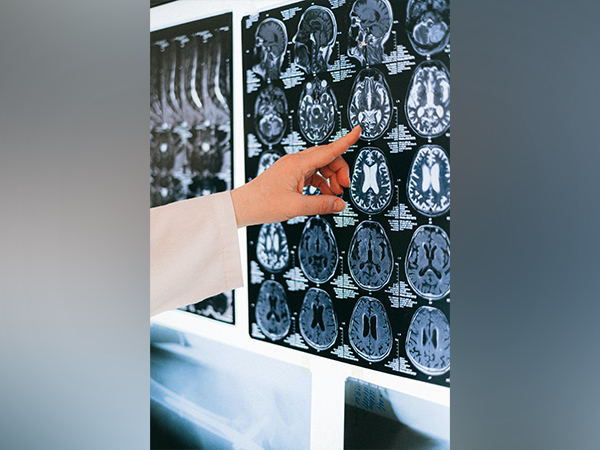
Reprresentative Image

London [UK], August 12 (ANI): An multinational research team led by UCL has developed an artificial intelligence (AI) programme that can identify minute brain anomalies that lead to epileptic seizures.
The algorithm used in the Multicentre Epilepsy Lesion Detection project (MELD), reports the locations of abnormalities in cases of drug-resistant focal cortical dysplasia (FCD), a major cause of epilepsy, was developed using more than 1,000 patient MRI scans from 22 international epilepsy centres.
Brain regions known as FCDs have evolved improperly and frequently lead to drug-resistant epilepsy. Surgery is usually used to treat it, however, finding the lesions on an MRI is a constant problem for doctors because MRI scans for FCDs can appear normal.
The scientists employed about 300,000 places throughout the brain to quantify cortical properties from the MRI scans, such as how thick or folded the cortex/brain surface was.
The system was then trained on cases that experienced radiologists had classified as either having FCD or being a healthy brain based on their patterns and attributes.
In general, the algorithm was successful in identifying the FCD in 67% of instances in the cohort, according to the results, which were published in Brain (538 participants).
Radiologists had previously been unable to uncover the abnormalities in 178 of the patients based on their MRI results; however, the MELD algorithm was able to detect the FCD in 63% of these cases.
This is crucial because, if doctors can identify the anomaly in the brain scan, surgery to remove it could result in a recovery.
Mathilde Ripart, a co-first author from the UCL Great Ormond Street Institute of Child Health, stated: "We focused on developing an AI system that was interpretable and could assist physicians in making decisions. A crucial step in that process was demonstrating to the doctors how the MELD algorithm generated its forecasts.
Dr Konrad Wagstyl, a co-senior author from the UCL Queen Square Institute of Neurology, added: "This algorithm might make it easier to identify these concealed lesions in epileptic children and adults, which would increase the number of patients who could potentially benefit from brain surgery to treat their condition and enhance cognitive function. In England, epilepsy surgery could help about 440 kids a year."
Epilepsy is a severe neurological illness that affects 1% of the world's population and is marked by recurrent seizures.
About 600,000 people in the UK are impacted. The majority of epilepsy patients can be treated with pharmaceuticals, although 20-30% of them do not benefit from them.
FCD is the most frequent cause in children who have had surgery to treat their epilepsy, and it is the third most frequent cause in adults.
Furthermore, FCD is the most frequent reason for epilepsy in people who have a brain anomaly that cannot be seen on an MRI scan.
Dr Hannah Spitzer, a co-first author from Helmholtz Munich, stated: "Our system automatically learns to detect lesions from thousands of patient MRI scans. It is capable of accurately identifying lesions of various sorts, forms, and sizes, including several that radiologists had previously overlooked.
Dr Sophie Adler, a co-senior author from the University College London's Great Ormond Street Institute of Child Health, added: "We believe that this technology may assist to discover abnormalities that are now being missed that cause epilepsy. In the long run, it might make it possible for more epilepsy patients to undergo possibly curative brain surgery.
This FCD detection study makes use of the biggest MRI cohort of FCDs to date, making it capable of identifying all FCD subtypes.
Study limitations
The 22 hospitals involved in the study used various MRI scanners from around the world, making the algorithm more robust but also perhaps affecting its sensitivity and specificity. (ANI)


Get the App

What to Read Next

Health

Pre-workout supplements may cut sleep in half for young users

Pre-workout supplements may cut sleep in half for young users

A popular fitness trend among young people may be quietly undermining their sleep. A new study led by researchers at the University of Toronto has found that teenagers and young adults who use pre-workout supplements are significantly more likely to experience extremely short sleep durations.

Read More
Health

Air pollution may reduce health benefits of exercise: Study

Air pollution may reduce health benefits of exercise: Study

A new study led by researchers at University College London (UCL) shows that chronic exposure to toxic air can significantly diminish the health benefits of regular physical activity.

Read More
Health

Researchers use AI to create first 100-billion-star Milky Way

Researchers use AI to create first 100-billion-star Milky Way

Researchers combined deep learning with high-resolution physics to create the first Milky Way model that tracks over 100 billion stars individually.

Read More
Health

Scientists turn body fat into bone to heal spinal fractures

Scientists turn body fat into bone to heal spinal fractures

Researchers at Osaka Metropolitan University have developed a promising new method for repairing spinal fractures using stem cells extracted from adipose tissue, also known as body fat.

Read More
Health

This high-sugar fruit may actually lower diabetes risk: Study

This high-sugar fruit may actually lower diabetes risk: Study

A George Mason University study found that daily mango eaters showed better blood sugar control and less body fat than those eating a lower-sugar snack.

Read More
Health

Researchers make atoms talk to each other inside silicon chips

Researchers make atoms talk to each other inside silicon chips

Researchers at the University of South Wales (UNSW) have found a way to make atomic nuclei communicate through electrons, allowing them to achieve entanglement at scales used in today's computer chips. This breakthrough brings scalable, silicon-based quantum computing much closer to reality.

Read More
Health

This new drug could be first to stop deadly fatty liver disease

This new drug could be first to stop deadly fatty liver disease

The Researchers at the University of California San Diego School of Medicine have identified a new investigational drug that shows promise in treating metabolic dysfunction-associated steatohepatitis (MASH), a serious form of fatty liver disease linked to obesity and type 2 diabetes that can lead to cirrhosis, liver failure, and even liver cancer.

Read More
Health

Scientists uncover key protein in cellular fat storage: Study

Scientists uncover key protein in cellular fat storage: Study

Research conducted at the University of New South Wales (UNSW) has shed light on how cells in the body manage and store fat, potentially offering new insights into human health.

Read More
Health

Surgery to treat chronic sinus disease more effective

Surgery to treat chronic sinus disease more effective

A comprehensive clinical trial sponsored by University College London (UCL), the University of East Anglia, and Guy's and St Thomas' NHS Foundation Trust found that sinus surgery is more effective than antibiotics at treating chronic rhinosinusitis.

Read More
Health

Scientists finds tools to reprogram immune cells

Scientists finds tools to reprogram immune cells

A team of researchers at Lund University in Sweden has identified the molecular tools that are needed to reprogram ordinary cells into specialised immune cells.

Read More
Home About Us Our Products Advertise Contact Us Terms & Condition Privacy Policy

Copyright © aninews.in | All Rights Reserved.


