 हिंदी खबर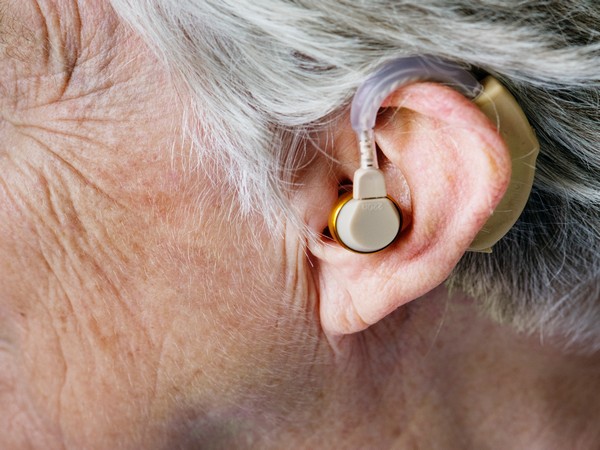

Washington D.C. [USA], Sept 5 (ANI): Hearing aid is not only limited to help adults get a better sound, but researchers have found another big advantage of the device.
A new study has found that old people with a hearing aid who are newly diagnosed for hearing loss are at a reduced risk of being diagnosed with dementia, anxiety or depression for the first time over the next three years.
These adults are also less prone to suffering fall-related injuries, than those who leave their hearing loss uncorrected.
Researchers used data from nearly 115,000 people over age the age of 66 with hearing loss and insurance coverage through a Medicare HMO between 2008 and 2016.
The findings were published in the 'Journal of the American Geriatrics Society'.
"Though hearing aids can't be said to prevent these conditions, a delay in the onset of dementia, depression and anxiety, and the risk of serious falls, could be significant both for the patient and for the costs to the Medicare system," said study lead Elham Mahmoudi, MBA, Ph.D., from the University of Michigan's department of Family Medicine health economist.
Researchers looked at anonymous insurance data to perform the study, and the data for each person with hearing loss one year before their diagnosis, and three years after, so they could see only newly diagnosed dementia, depression, anxiety and fall injuries.
The study shows that men with hearing loss were more likely to receive a hearing aid - 13.3 per cent compared with 11.3 per cent of women. Only 6.5 per cent of people of Latino heritage received a hearing aid for their hearing loss, compared with 9.8 per cent of African-Americans and 13.6 per cent of whites.
When the researchers looked at the path that patients who received hearing aids took over three years, compared with those who didn't get the devices, significant differences emerged.
In all, the relative risk of being diagnosed with dementia, including Alzheimer's disease, within three years of a hearing loss diagnosis was 18 per cent lower for hearing aid users.
The risk of being diagnosed with depression or anxiety by the end of three years was 11 per cent lower for hearing aid users, and the risk of being treated for fall-related injuries was 13 per cent lower.
The reasons for this are complicated and can include loss of social interaction, loss of independence, loss of balance and less stimulation to the brain.
Some researchers also believe that the loss of nerve impulses from the ear to the brain, and loss of cognitive ability leading to dementia, could be part of the same aging process.
"Correcting hearing loss is an intervention that has evidence behind it, and we hope our research will help clinicians and people with hearing loss understand the potential association between getting a hearing aid and other aspects," said Mahmoudi. (ANI)
Adults who get hearing aids less prone to dementia, depression, anxiety
ANI | Updated: Sep 05, 2019 13:00 IST




