

ADD ANI AS A TRUSTED SOURCE
googleads
ANI Logo
Menu
Environment

Survey: More species threatened with extinction than previously thought

Minneapolis [US], July 19 (ANI): Biodiversity is a complex topic, with millions of plants and animal species spread across every biome on the planet. To bring the global challenges to biodiversity into focus, experts from all over the world must communicate across borders. How can researchers share their findings in order to develop a shared understanding of the risks and opportunities for action?

ANI Jul 19, 2022 01:30 IST googleads

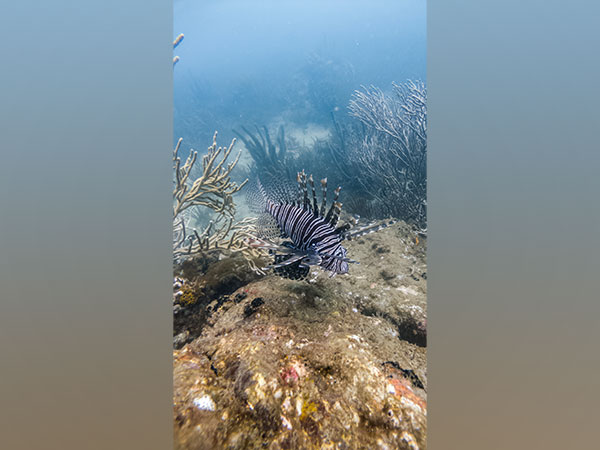
Representative Image

Minneapolis [US], July 19 (ANI): Biodiversity is a complex topic, with millions of plants and animal species spread across every biome on the planet. To bring the global challenges to biodiversity into focus, experts from all over the world must communicate across borders. How can researchers share their findings in order to develop a shared understanding of the risks and opportunities for action?
A new survey led by Forest Isbell, an associate professor at the University of Minnesota, and published in the journal Frontiers in Ecology and the Environment, attempts to fill some of the gaps in understanding by synthesising the perspectives of thousands of biodiversity experts worldwide. The survey received 3,331 responses from scientists researching biodiversity in 187 countries, representing all major groups of species, habitats, and ecosystems.
"Experts estimated that approximately 30% of species have been globally threatened or driven extinct since the year 1500, based on the types of species and ecosystems they are most familiar with." Experts also acknowledged significant uncertainty in their estimates, with as few as 16% or as many as 50% of species threatened or driven extinct during this time," said Isbell.
The research also discovered significant demographic and geographic differences in expert perspectives and estimates.
"This paper incorporates the perspectives of a diverse group of experts, allowing us to assess lesser-known taxa while also giving underrepresented experts a voice in the global literature." "Women-identified experts from the Global South have provided significantly higher estimates for past biodiversity loss and its consequences," said co-author Patricia Balvanera of the University of Mexico. "In addition, experts who identify as women study the taxa that experts believe are most threatened."
The researchers encourage biodiversity experts to use these findings to learn how their own perspectives differ from those of other experts, and to ensure that a diverse range of perspectives is considered when conducting global biodiversity assessments, setting global biodiversity goals and targets, and implementing new policies and other transformative changes to conserve biodiversity.
"Because biodiversity is highly regional in nature, our study's attempt to bring together the perspectives of regional experts from around the world is unprecedented," said co-author Akira Mori of the Japan's University of Tokyo. "From the standpoint of social and cultural diversity and inclusiveness, I believe we have presented some suggestions for future international policy discussions, even if they are not necessarily complete."
According to experts, significantly increasing conservation investments and efforts now could eliminate the threat of extinction for one in every three species that would otherwise be threatened or extinct by 2100. (ANI)


Get the App

What to Read Next

Environment

Method creates window to study distribution of elements in plants

Method creates window to study distribution of elements in plants

Plant roots are crucial in the uptake, selection, enrichment, and retention of a variety of mineral elements, which supply distant plant tissues with nutrients and sequesters excess metals. A variety of ion transporters found at roots mediate the absorption, efflux, and intracellular compartmentalization of various mineral elements to carry out such element-specific tasks.

Read More
Environment

Early warning system based on AI can classify tsunami risk

Early warning system based on AI can classify tsunami risk

In Physics of Fluids, by AIP Publishing, researchers from the University of California, Los Angeles and Cardiff University in the U.K. developed an early warning system that combines state-of-the-art acoustic technology with artificial intelligence to immediately classify earthquakes and determine potential tsunami risk.

Read More
Environment

New ways discovered to estimate long-term coastal cliff loss

New ways discovered to estimate long-term coastal cliff loss

The work was conducted in Del Mar, California, a beach town in San Diego County with infrastructure atop its coastal bluffs.

Read More
Environment

Temperature dominant factor in dissolved oxygen in U.S. Rivers

Temperature dominant factor in dissolved oxygen in U.S. Rivers

Oxygen concentration is an important measure of water quality because fish and other aquatic organisms require dissolved oxygen to breathe, according to Wei Zhi, assistant research professor of civil and environmental engineering and first author of the study, recently published in Nature Water.

Read More
Environment

Ocean warming can trigger viral outbreaks within corals

Ocean warming can trigger viral outbreaks within corals

The breathtaking colours of reef-building corals come from photosynthetic algae that live inside the corals. A groundbreaking three-year study has found that viruses may increase their attacks on these symbiotic algae during marine heat waves.

Read More
Environment

Housing plays key role in disaster preparedness: Study

Housing plays key role in disaster preparedness: Study

But a new national study found that housing is also important before disasters happen: People with homes not meeting federal quality classifications and those who are housing insecure tend to be less prepared to face natural calamities.

Read More
Environment

Change in temperature risks bees prone to pesticides: Study

Change in temperature risks bees prone to pesticides: Study

Certain pesticides, particularly a class called neonicotinoids, are known to impact bees and other important insects, and are thought to be contributing to population declines. However, bees' reported responses to this threat across the world often seem to vary, suggesting other interacting factors are at play.

Read More
Environment

Activity deep inside earth has an impact on global magnetic field

Activity deep inside earth has an impact on global magnetic field

New research from geophysicists at the University of Leeds suggests that the way this super-hot core is cooled is key to understanding the causes of the peculiarities -- or anomalies, as scientists call them -- of the Earth's magnetic field.

Read More
Environment

Satellites observe speed-up of glaciers on Antarctic Peninsulal

Satellites observe speed-up of glaciers on Antarctic Peninsulal

A team of researchers, led by scientists at the University of Leeds, has used more than 10,000 satellite images, taken above the Antarctic Peninsula between 2014 and 2021, to understand how the flow of glaciers into the waters around the Antarctic alters during colder and warmer periods.

Read More
Environment

Endangered Bahamas bird may be lost from island

Endangered Bahamas bird may be lost from island

The endangered Bahama Warbler may be surviving on just one island following Hurricane Dorian's devastation in 2019, according to researchers at the University of East Anglia. A new study shows the bird's distribution and ecology in Grand Bahama before the hurricane struck.

Read More
Home About Us Our Products Advertise Contact Us Terms & Condition Privacy Policy

Copyright © aninews.in | All Rights Reserved.


