 हिंदी खबर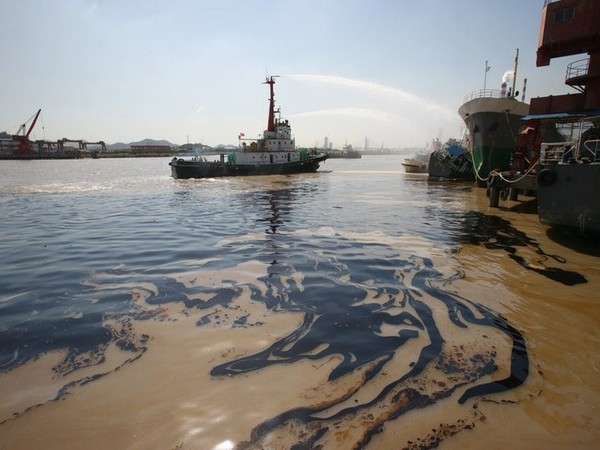

Florida [US], June 17 (ANI): A team of scientists from China and the United States created the first world map of chronic oil slicks in the world's oceans, with more than 90% coming from human resources, far more than previously reported.
The results, published in Science, provide a major update from previous investigations that estimated that about half of the oil pollution in the ocean came from human sources - including river runoff, ships, and oil and gas pipelines and platforms - and a half from natural sources, such as seeps on the seafloor.
"Most of these oil slicks are microscopically thin, widely observed, and different from major oil spills," said Chuanmin Hu, study co-author and professor at the University of South Florida's College of Marine Science, where he runs an Optical Oceanography Laboratory. "They are a source of chronic pollution and have traditionally been hard to track because they are short-lived and move with the winds, tides, and currents."
For this study, the team used machine learning and other techniques to examine more than a half-million satellite radar images collected from 2014 to 2019 to determine the location, extent and probable sources of chronic oil pollution.
"Satellite imagery offers an efficient way to monitor oil pollution in the ocean, especially in areas that are difficult for humans to get to," Hu said.
"What's compelling about these results is just how frequently we detected these floating oil slicks -- from small releases, from ships, from natural sources, from pipelines and then also from areas where industry or populations are producing runoff that contains floating oil," said Ian MacDonald, another co-author and professor in the Department of Earth, Ocean and Atmospheric Science at Florida State University.
Even a miniscule amount of oil can have a big impact on plankton that make up the base of the ocean food system. Larval fishes are particularly vulnerable. Other marine animals, such as whales and sea turtles, are harmed when they contact oil as they surface to breathe.
Researchers found most oil slicks occurred near the coast. About half were within 25 miles of the coast, and 90 per cent were within 100 miles. The researchers found relatively fewer slicks near oil platforms in the Gulf of Mexico compared to elsewhere on the globe, suggesting that regulation, enforcement and compliance from oil platform operators in U.S. waters reduces leakage.
Offshore oil production accounted for less than two per cent of the chronic oiling, but 21 distinct high-density belts of oil slicks were found to coincide with shipping routes.
"A global picture can help focus regulation and enforcement to reduce oil pollution," said Yongxue Liu, corresponding author of the study and professor at Nanjing University's School of Geography and Ocean Science. (ANI)




