 हिंदी खबर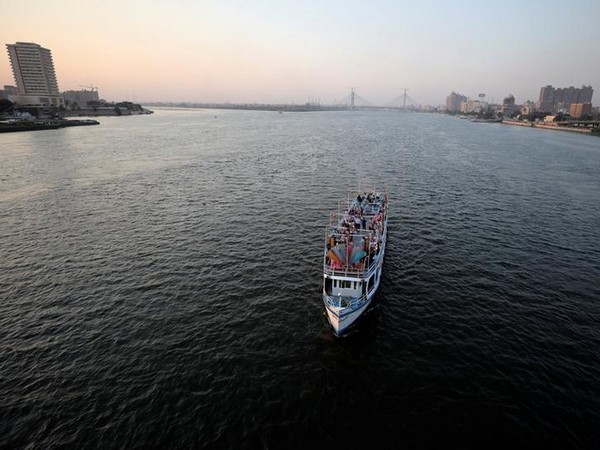

New Delhi [India], Aug 31 (ANI): Extreme hot and dry climate conditions coupled with population explosion is likely to cause water and food scarcity for up to 250 million people residing near the Nile, the world's longest river, according to a study published in Earth's Future, a journal of the American Geophysical Union.
Notably, this water body has been an oasis of transportation, energy, food and water. But, the region has been frequently facing a hot and dry climate from the past four decades. This frequency is projected to increase from 10 per cent to 15 per cent, even if emissions are curbed as per Paris climate Agreement, the study showed.
It can lead to poor crop yields and cause food scarcity in the region, the researchers believe.
"Despite some uncertainties in the models, this trend is projected to continue throughout the century with the frequency of hot and dry years as much as tripling even if warming is limited to only 2 degrees Celsius," the researchers stated in the journal.
The study also found that the Upper Nile Basin is a chronically water-scarce region which includes - western Ethiopia, South Sudan and Uganda. The rainfall mostly occurs over the Nile's northward region- Egypt and the Mediterranean Sea, which is a home to as many as 200 million people. This number is expected to nearly double by 2080, according to researchers.
As a result of the additional demands on water resources about 65 per cent of the regional population -- 250 million people -- could face chronic water scarcity by 2080, the study said.
Furthermore, a couple of climate models have also indicated that the rise in the global warming will also lead to in the atmospheric moisture which can result in the Upper Nile Basin. However, the trend of increased precipitation will be too slow to result in significant changes in runoff demand, the researchers added.
"At first glance, you would expect more rain to reduce scarcity, but not on the Nile. The dice are loaded for additional hot and dry years in the future, meaning increasing shocks to households because of crop yield declines and less water available for households to be resilient against warming temperatures," said Justin Mankin, an assistant professor of geography at Dartmouth and senior researcher on the study.
The researchers also believe that water demand of around 25 million people will be unmet by 2020 while around 170 million people on average could be affected by water scarcity annually by the end of the century.
"The Nile Basin is one of several fast-growing, predominantly agricultural regions that is really on the brink of severe water scarcity. Climate change coupled with population growth will make it much harder to provide food and water for everyone in these areas. Those environmental stresses could easily contribute to migration and even conflict," stated Ethan Coffel, a fellow at Dartmouth's Neukom Institute for Computational Science and lead author of the study. (ANI)
Extreme weather, population growth to cause water, food scarcity in Upper Nile: Study
ANI | Updated: Aug 31, 2019 09:42 IST




