

ADD ANI AS A TRUSTED SOURCE
googleads
Menu
Environment

Bad water conditions may drive snakeheads onto land: Study

Washington D.C. [USA], Oct 23 (ANI): Northern snakehead fish, which can survive on land, may flee water if it turns too acidic, salty or high in carbon dioxide, according to a new study.

ANI Oct 23, 2019 23:00 IST googleads

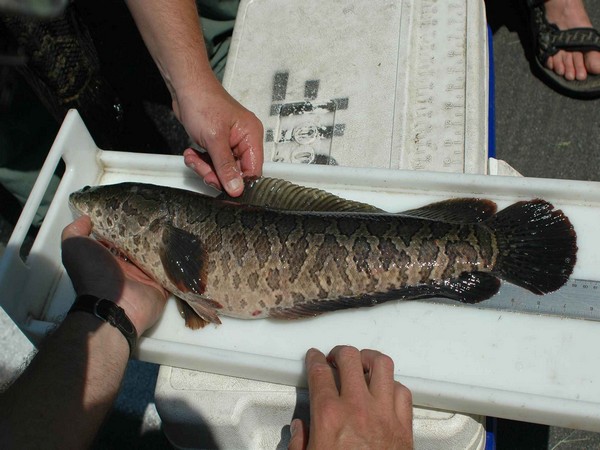
Representative image

Washington D.C. [USA], Oct 23 (ANI): Northern snakehead fish">fish, which can survive on land, may flee water if it turns too acidic, salty or high in carbon dioxide, according to a new study.
Snakeheads which can eat native species of fish">fish, frogs and crayfish">fish, destroying the food web in some habitats have the ability to survive on land for up to 20 hours if conditions are moist.
In a new study published in the peer-reviewed journal -- Integrative Organismal Biology -- wake forest researcher Noah Bressman reported for the first time the water conditions that could drive snakeheads onto land.
Earlier this month, wildlife resources officials in Georgia advised anglers to kill the fish">fish on sight after one was caught in a Gwinnett County pond, and the Pennsylvania Fish and Boat Commission confirmed that a 28-inch northern snakehead was caught in the Monongahela River in Pittsburgh.
Bressman also observed the fish">fish moving in a way no other amphibious fish">fish do. It makes near-simultaneous rowing movements with its pectoral fins while wriggling its axial fin back and forth. These combined motions could help the snakehead travel across uneven surfaces such as grass.
"Snakeheads move more quickly and erratically than once believed," said Bressman, a Ph.D. candidate and the corresponding author of Emersion and terrestrial locomotion of the northern snakehead on multiple substrates.
"The fish">fish we studied moved super quickly on rough surfaces such as grass, and we think they use their pectoral fins to push off these three-dimensional surfaces," Bressman added.
Bressman studied snakehead populations in Maryland, where the fish">fish is considered a threat to the Chesapeake Bay watershed. The Maryland Department of Natural Resources collected snakeheads by electrofish">fishing in tributaries of the Potomac River and adjacent drainage ditches.
The fish">fish tolerated all conditions but high salinity and acidity, and stagnant water with too much carbon dioxide.
Although it is unclear how often snakeheads leave water voluntarily and cross overland to invade other waterways, Bressman said these findings can inform how natural resources agencies plan to contain the fish">fish.
"When snakeheads were discovered on land, it caused a lot of fear because not much was known about them," he said. "Sure, they can move fairly quickly on land, and they have sharp teeth. But you can easily outrun them, and they won't hurt you, your children or your pets. (ANI)

Get the App

What to Read Next

Environment

Temperature dominant factor in dissolved oxygen in U.S. Rivers

Temperature dominant factor in dissolved oxygen in U.S. Rivers

Oxygen concentration is an important measure of water quality because fish and other aquatic organisms require dissolved oxygen to breathe, according to Wei Zhi, assistant research professor of civil and environmental engineering and first author of the study, recently published in Nature Water.

Read More
Environment

Satellites observe speed-up of glaciers on Antarctic Peninsulal

Satellites observe speed-up of glaciers on Antarctic Peninsulal

A team of researchers, led by scientists at the University of Leeds, has used more than 10,000 satellite images, taken above the Antarctic Peninsula between 2014 and 2021, to understand how the flow of glaciers into the waters around the Antarctic alters during colder and warmer periods.

Read More
Environment

Climate 'spiral' threatens land carbon stores: Study

Climate 'spiral' threatens land carbon stores: Study

Dramatic changes to forests, and other habitats that store carbon in plants and soils, are becoming more likely in some regions across Earth, with less carbon consistently absorbed by the 'land carbon sink' provided by trees, soil and plants, according to scientists writing in Nature

Read More
Environment

Coral bleaching makes it harder for fish to locate competitors

Coral bleaching makes it harder for fish to locate competitors

According to research published in the journal 'Proceedings of the Royal Society B Biological Sciences', coral bleaching has tremendous impact on the rival-identification ability of certain fish species.

Read More
Environment

Climate change increasing frequency of fish mass extinctions

Climate change increasing frequency of fish mass extinctions

Arkansas [US], August 27 (ANI): The frequency of fish die-offs, or mass mortality events, has increased as the planet's climate has warmed. These die-offs can have serious consequences for ecosystem function, endanger existing fish populations, and reduce global food supply. And the frequency of these events appears to be increasing, with potentially disastrous consequences for the world if global carbon emissions are not significantly reduced by the end of the twenty-first century.

Read More
Home About Us Our Products Advertise Contact Us Terms & Condition Privacy Policy

Copyright © aninews.in | All Rights Reserved.


