WPU GŌA Introduces New Transdisciplinary Framework for Higher Education
Goa [India], June 5: Drawing on insights from more than 1,000 academic, industry, and policy leaders across India and internationally, WPU GŌA has placed transdisciplinary learning at the core of its academic model, responding to a growing recognition that complex real-world challenges cannot be solved through isolated disciplines alone.
ANI
Jun 05, 2026 17:39 IST

BusinessWire India
Goa [India], June 5: Drawing on insights from more than 1,000 academic, industry, and policy leaders across India and internationally, WPU GŌA has placed transdisciplinary learning at the core of its academic model, responding to a growing recognition that complex real-world challenges cannot be solved through isolated disciplines alone.
For over a century, modern universities were designed around a relatively stable idea of knowledge and work. Disciplines evolved within clearly defined boundaries, reflecting an industrial-age logic that valued specialization and structured expertise.
That model worked well for a world that changed gradually. But the twenty-first century operates very differently. Today's defining challenges no longer fit neatly within disciplinary silos. Artificial Intelligence raises questions of ethics, economics, psychology, governance, law, and design. Climate change involves sustainability, public policy, behavioural science, and energy systems. Public health crises demand expertise spanning medicine, communication, sociology, logistics, and data science.
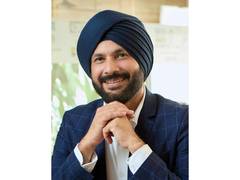
Dr. Ashish Bharadwaj, Pro Vice Chancellor, WPU GŌA said, "Increasingly, the world's most important challenges are transdisciplinary challenges that demand the integration of multiple forms of knowledge. It is this reality that is prompting institutions such as WPU GŌA to rethink the architecture of higher education. If the challenges students will face are increasingly interconnected, learning too must move beyond rigid disciplinary boundaries."
Thinkers such as Edgar Morin, Scott E. Page, and Yuval Noah Harari have highlighted different dimensions of this challenge. Morin warned against fragmented knowledge that prevents societies from understanding complex realities. Page demonstrated how cognitively diverse groups often outperform homogeneous expertise when solving difficult problems. Harari has argued that in an age of rapid technological disruption, adaptability may become more valuable than static mastery of information. Together, they point toward a common conclusion: complex problems rarely yield to a single way of thinking.
Dr. Ashish Bharadwaj, Pro Vice Chancellor, WPU GŌA, added, "The challenge is not that specialization has become irrelevant. Deep expertise remains essential. The deeper problem is that reality itself no longer behaves in isolated compartments."
Business leaders have often arrived at similar conclusions. Many of the defining innovations of the modern era have emerged not within disciplines, but at their intersections.
Yet much of higher education remains structurally fragmented. Students are often trained within narrow silos while the challenges they eventually encounter refuse to remain inside those silos. This growing mismatch between the architecture of education and the architecture of reality may become one of the defining educational questions of our time.
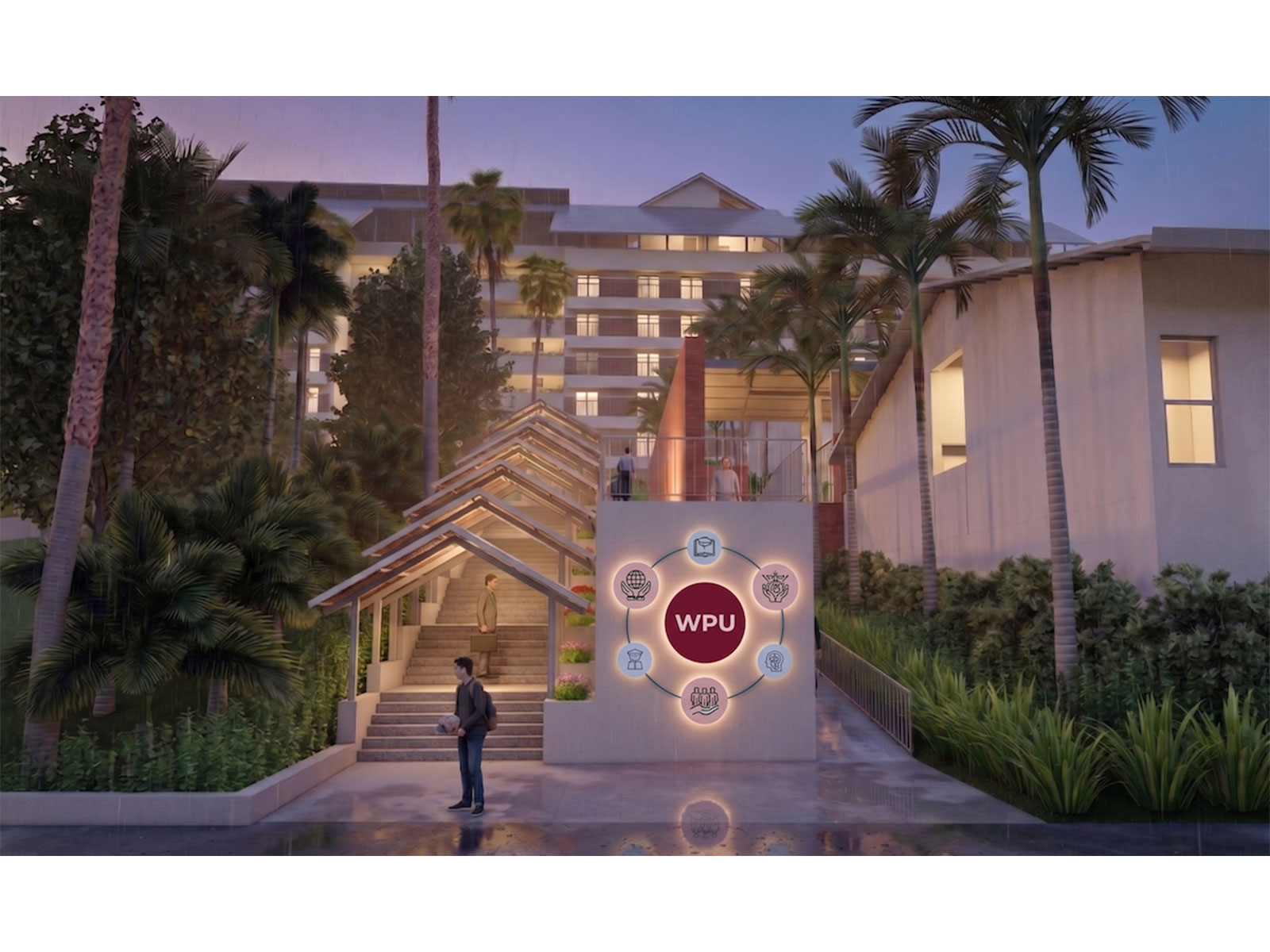
It is within this context that institutions such as WPU GŌA are rethinking learning itself. Its platform-based academic model moves beyond traditional departmental boundaries toward a more flexible and outcomes-driven ecosystem.
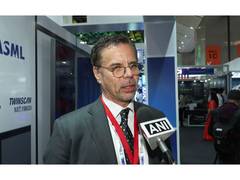
"Rather than treating disciplines as isolated destinations, the model views them as starting points for deeper intellectual connections. Students develop depth through a Within-Domain Specialisation while also pursuing Cross-Domain Specialisations across Engineering, Design, Business, and Humanities. The objective is to combine disciplinary rigor with the ability to connect ideas across domains," said Prof. Walter Leal Filho, Vice Chancellor, WPU GŌA.
The model is strengthened through a Common Core that develops systems thinking, communication, data literacy, AI and responsible technology, ethical reasoning, leadership, and collaborative problem-solving.
Ironically, the rise of Artificial Intelligence may make integrative human thinking more valuable rather than less. As machines assume routine analytical tasks, human capabilities such as contextual judgment, ethical reasoning, creativity, empathy, and synthesis become increasingly important.
The future advantage of human beings may increasingly lie not in competing with machines on narrow specialization, but in cultivating adaptive intelligence. In a world where technologies and professions evolve continuously, the capacity to learn, unlearn, and relearn becomes a critical form of resilience.
WPU Goa's educational structure reflects this reality not only through curriculum design, but through pedagogy itself. Studio-based projects, Grand Challenge Studios, interdisciplinary collaboration, immersive field experiences, Independent Inquiry Periods, and real-world engagements ensure that students repeatedly encounter complexity rather than merely studying abstraction.
This approach echoes educational thinkers such as John Dewey and Donald Schon, both of whom argued that meaningful learning emerges through experience, reflection, and engagement with real-world situations.
As careers become increasingly nonlinear and industries continue to transform, universities can no longer function merely as repositories of information. Their deeper responsibility is cultivating individuals capable of thinking across complexity, collaborating across disciplines, and adapting intelligently to change.
The defining educational challenge of the twenty-first century is no longer merely producing specialists. It is developing people who can integrate perspectives, navigate uncertainty, and solve problems that do not fit neatly within disciplinary boundaries. In many ways, WPU GŌA's transdisciplinary model represents an attempt to align education with that emerging reality.
(ADVERTORIAL DISCLAIMER: The above press release has been provided by BusinessWire India. ANI will not be responsible in any way for the content of the same)
Tags:
Get the App