When Rest Stops Working: What classical Ayurveda understands about professional exhaustion?
New Delhi [India], June 26: The alarm goes off. Eight hours have passed, give or take. You lie there for a moment, not reluctant exactly, just taking stock, and realise with the quiet resignation of someone who has done this many mornings in a row that the sleep did not reach wherever the tiredness lives.
ANI
Jun 26, 2026 13:22 IST

India PR Distribution
New Delhi [India], June 26: The alarm goes off. Eight hours have passed, give or take. You lie there for a moment, not reluctant exactly, just taking stock, and realise with the quiet resignation of someone who has done this many mornings in a row that the sleep did not reach wherever the tiredness lives.
This is not burnout in the dramatic sense. No emergency meetings, no sudden breakdown at the desk. It is something flatter and harder to name: a steady attrition of fuel. Sunday evenings feel like Monday mornings now. The two-week holiday helped for exactly as long as it lasted, and then quietly didn't.
Most people reading this have tried things. The sleep tracker. The supplements on the kitchen counter. The structured morning routine that lasted six weeks. The problem is not motivation or discipline. Something more fundamental has gone thin.
What if the issue is not what you are doing, but what has quietly run out?
Classical Ayurveda has a word for what is missing. It is called Ojas, not a vitamin, not a hormone, though it relates to both. Ojas is described in the foundational Ayurvedic texts as the body's most refined biological product: the concentrated essence produced after food has been fully transformed through every layer of human tissue. It is what the body is understood to generate when metabolic function is working as it should. Think of it as the body's savings account. When the system is functioning well, it earns a small daily deposit. When it isn't, every demand becomes a withdrawal.
The mechanism of depletion, as Ayurveda maps it, is precise. Five hours of sleep does not give the body a night off from its tissue maintenance work. It attempts to complete that cycle anyway, on shorter time, with fewer resources. A high-stakes deadline triggers the same physiological stress response as a physical threat. The nervous system responds to both in kind. Skipped meals, late-night screens, sustained cognitive pressure, trivial in isolation. The compounding, over months and years, is not.
Under sustained pressure, Vata, the governing nervous energy in Ayurvedic physiology, is understood to become aggravated. Aggravated Vata is said to destabilise Agni, the metabolic function that drives tissue transformation. When Agni is disrupted, the body cannot complete its processing cycle fully. Instead it may produce Ama: untransformed metabolic residue that is understood to accumulate in the body's channels, impede the flow of nutrients, and contribute to a systemic heaviness that rest alone may not resolve.
"Comfort is not medicine. Understanding what has broken down and supporting the body's own capacity to restore it, that is something else entirely." - Dr. E. Shaji Raj, Chief Physician, Aearath Ayurveda
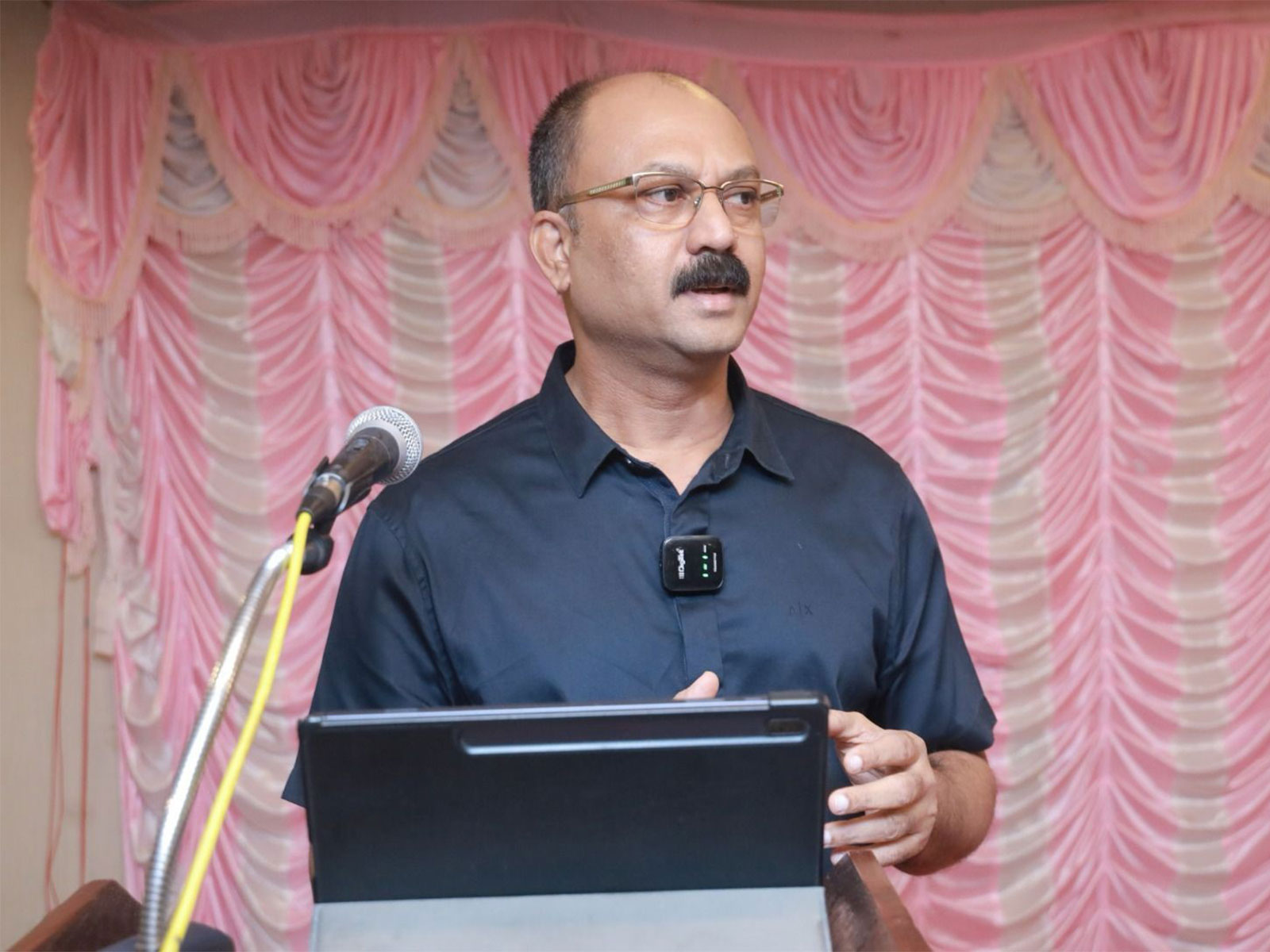
Most people who arrive at Aearath Ayurveda have already tried the available options. They are not looking for wellness. They are looking for answers. What they encounter is a clinical method refined across four generations of physician practice, beginning in 1869, carried forward today by Dr. E. Shaji Raj in his thirty-third year of practice.
Assessment begins with Nadi Pariksha, pulse diagnosis. Not an algorithm. A physician's fingers on the wrist, reading the constitutional and metabolic state of the body through a sensitivity developed over three decades of daily practice. What most people do not realise is the depth of what Nadi Pariksha may reveal in trained hands. Classical Ayurvedic texts describe it as organ-specific: capable of indicating not just systemic imbalance but which organ may be under strain, how it is functioning, and at what stage a disruption has developed. The pulse is understood to carry this information. Reading it accurately takes years to develop and a lifetime to refine. It is the diagnostic foundation on which assessment at Aearath Ayurveda is built.
Swaasthya, a classical approach to metabolic restoration, is focused on supporting the body's own restoration processes: assisting the clearance of metabolic residue, supporting nervous system resilience, and working toward the stabilisation of Agni. Every formulation is prepared in-house, under direct physician oversight, from plant to patient.
The usual approaches to exhaustion address what is visible. Sleep hygiene, nutrition, movement, all genuinely worthwhile, but they are inputs going into a system that, if depletion has gone deep enough, may have reduced capacity to fully process them. This is why the morning routine works until it doesn't. Why the holiday fades. Why you can do everything right on paper and still feel, somewhere below the surface, that something has not quite returned.
A person operating from a depleted physiological baseline is not operating at their actual capacity. Every decision, every sustained effort, shaped by what remains after the deficit. What Aearath works toward is not enhancement. It is support for the restoration of a foundation that, in classical Ayurvedic understanding, was always there, before the account ran dry.
This is educational writing about a traditional system of medicine, not medical advice. Please continue any existing treatment under the care of your physician.
Aearath Ayurveda | Chennai, Tamil Nadu | +91 95000 01177 | aearathayurveda.com
(ADVERTORIAL DISCLAIMER: The above press release has been provided by India PR Distribution. ANI will not be responsible in any way for the content of the same.)
Tags:
Get the App