 हिंदी खबर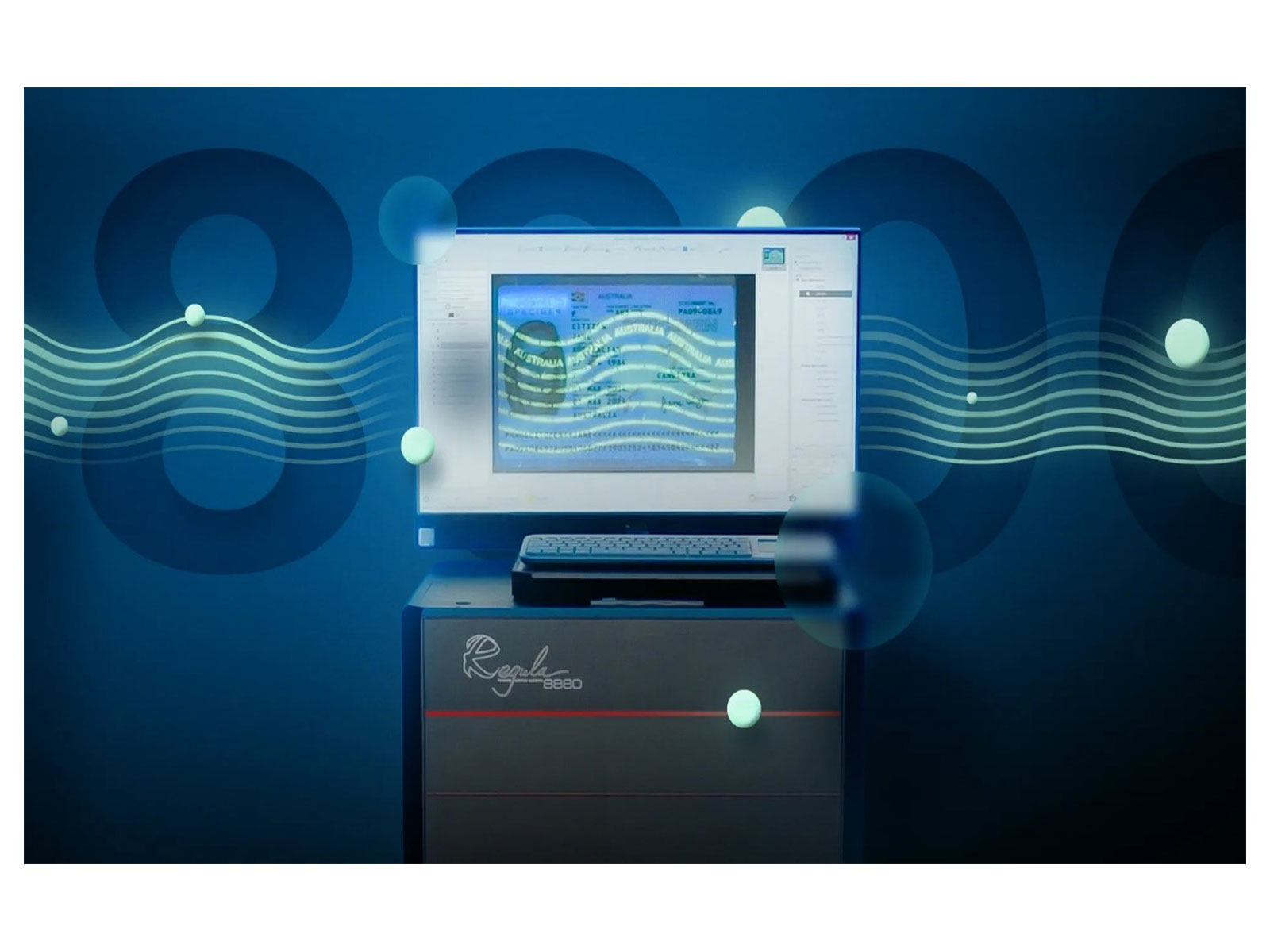

VMPL
New Delhi [India], January 16: One extra zero added to a bank check can mean the difference between losing $100 and losing $1,000. In many cases, such alterations are nearly impossible to detect with the naked eye, especially when the document appears perfectly authentic. Fortunately, forensic experts have access to advanced techniques that make it possible to uncover even the most subtle manipulations. One of the most effective methods is hyperspectral image analysis.
What is hyperspectral image analysis?
Hyperspectral image analysis is a specialized form of spectral analysis that examines the physical and chemical properties of objects by analyzing how they reflect light across different wavelengths. Every material has a unique spectral signature, a pattern of reflected light that depends on its composition and structure. For example, a fresh apple reflects light differently from a rotten one. The same principle applies to inks used in documents, even when they look identical to the human eye.
Hyperspectral analysis is performed using hyperspectral imaging (HSI) systems. These systems capture an object and record detailed information about how it reflects light at many narrow wavelength bands. As a result, each pixel in the image contains a full spectral profile rather than just color information.
A standard digital camera captures images using three broad color channels: red, green, and blue, within the visible light range of approximately 400-700 nm. A hyperspectral camera, by contrast, can capture data across much broader portions of the electromagnetic spectrum, including ultraviolet (UV), visible (VIS), near-infrared (NIR), mid-infrared (MIR), and thermal infrared ranges.
Most hyperspectral imaging solutions operate in the visible to near-infrared range (roughly 700-1,000 nm). However, the exact wavelength range depends on the application. For example, pharmaceutical analysis often requires deeper NIR coverage (up to 2,400 nm), forensic applications typically operate from UV to NIR (about 254-1,000 nm), and some medical diagnostic techniques use the MIR spectrum.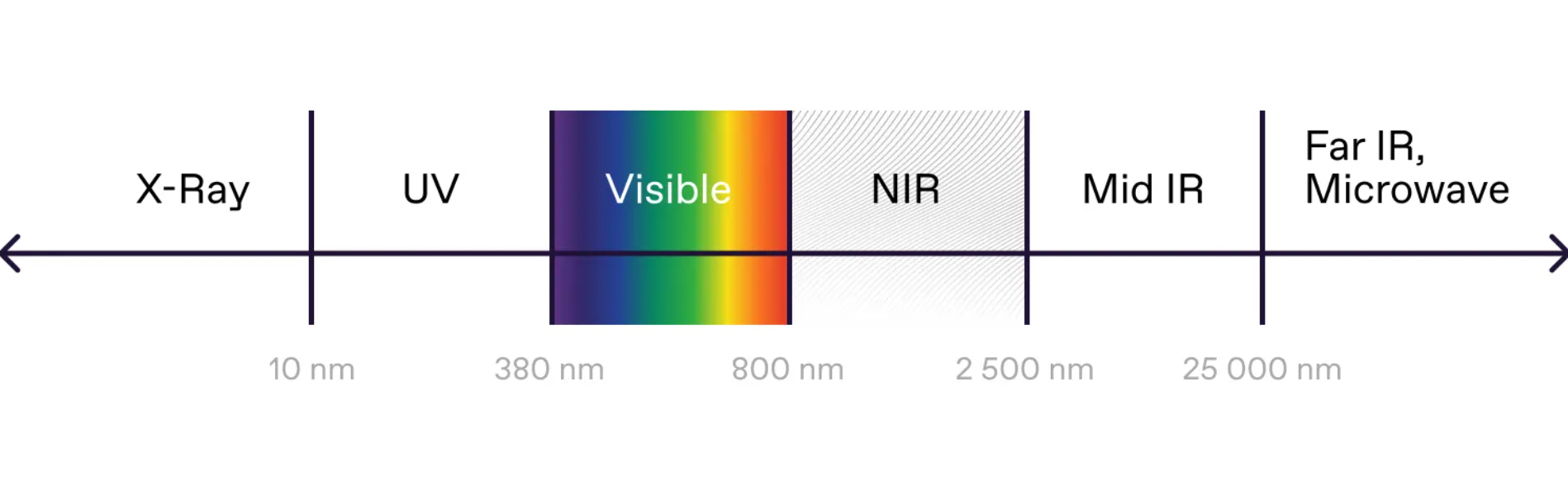
Once the data is captured, the system processes it and produces a visual, often color-coded, representation of spectral information. This allows experts to identify subtle differences in material properties that would otherwise remain invisible.
Hyperspectral image analysis is widely used in medicine, food quality control, and environmental monitoring. In forensic science, its primary applications fall into two categories:
* Crime scene investigation, such as analyzing bloodstains, fingerprints, paint, or fibers
* Forgery detection, including the examination of inks, printing methods, and document alterations
Below, the focus is on how hyperspectral analysis supports document examination and forgery detection.
How hyperspectral image analysis works for forgery detection
Document fraud often involves altering legitimate documents or misusing blank originals. Hyperspectral analysis allows forensic experts to examine inks and colors at the pixel level and assess their optical properties. This makes it possible to identify alterations or compare a questioned document with a known genuine one.
The underlying principle is simple: different inks respond differently to different wavelengths of light.
Consider a personal check written with a blue pen. If someone later adds an extra zero using another blue pen, the alteration may be invisible under normal lighting conditions and even under conventional UV or IR examination. However, hyperspectral analysis reveals differences in how the inks reflect light across specific wavelengths. Even small variations in ink composition result in measurable differences in reflected signal strength.
The results of hyperspectral analysis are presented visually. The system produces a series of images captured under different wavelengths, making inconsistencies and signs of tampering clearly visible to the expert.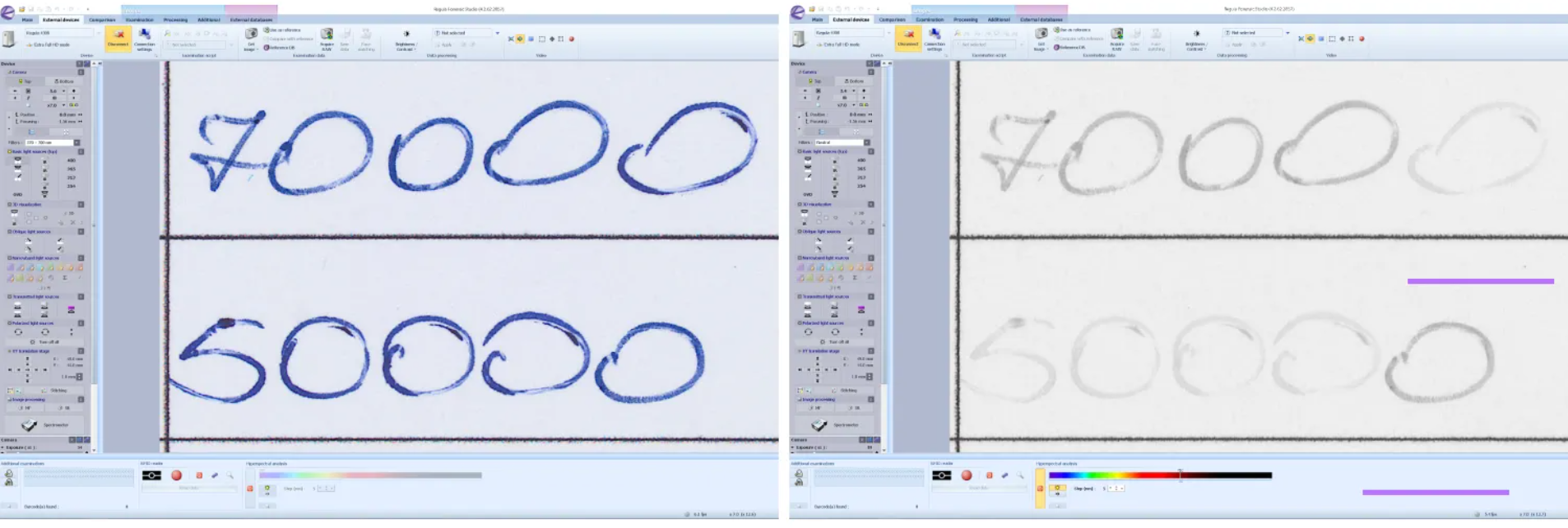
Left: The document looks normal in white light. Right: The alteration becomes visible during hyperspectral image analysis.
Equipment and examination workflow
To perform hyperspectral analysis, forensic laboratories and police departments use video spectral comparators equipped with hyperspectral imaging capabilities, such as the Regula 4308. These systems combine high-resolution cameras, precision zoom lenses, multiple light sources ranging from UV to IR, optical filters, and dedicated hyperspectral analysis software.
A typical examination follows these steps:
First, the questioned object is placed inside the comparator. This may be an identity document, bank statement, receipt, handwritten note, or any other paper-based evidence.
Next, the expert selects the wavelength range for analysis and defines the step size. For example, with a step of 1 nm, the system captures images at 395 nm, 396 nm, 397 nm, and so on.
The document is then illuminated sequentially using narrow-band light sources. The expert can observe in real time how different inks and materials behave under each wavelength.
The camera records the reflected light at each step. Once all images are captured, the system compiles them into a hyperspectral data file.
Finally, the expert analyzes the results. Specific areas of interest, such as handwritten digits, printed text, stamps, or signatures, are selected, and graphs are generated to show how much light is reflected at each wavelength.
For example, if the digits in "1,000" are analyzed separately, the graph for the last zero may differ from the others. This difference indicates that the digit was added later, confirming that the original amount was altered.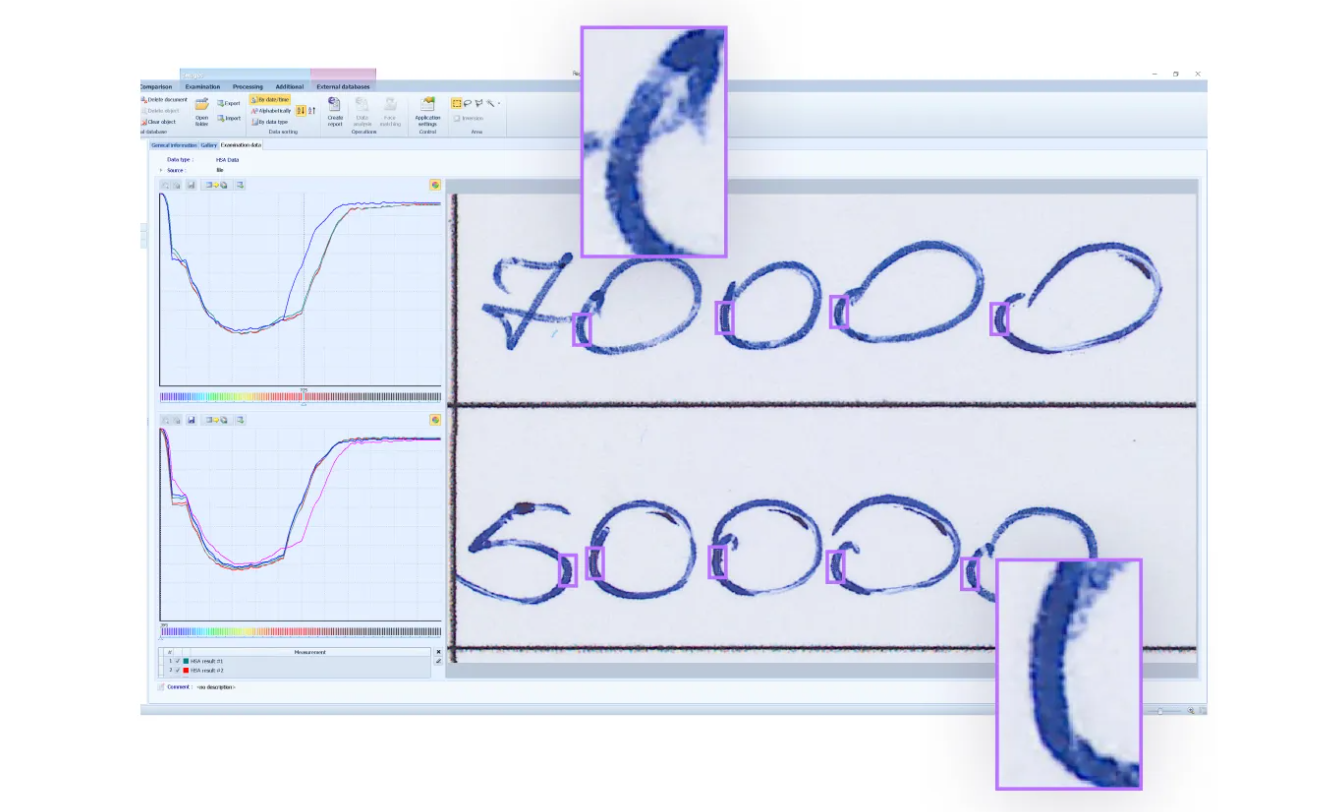
These graphs of hyperspectral analysis demonstrate the difference in the strength of the reflected signal of inks used for the last digits (in the ranges from 420 to 450 nm and from 660 to 800 nm) compared to the rest.
Use cases for hyperspectral analysis in forensics
Hyperspectral analysis supports a wide range of forensic tasks related to document examination and fraud detection, including:
* Identifying whether counterfeit banknotes originate from a single source or multiple production facilities
* Detecting alterations in handwritten or printed records, such as modified dates, amounts, or names
* Recovering original content from altered elements, including overwritten or erased text
* Revealing text that has been crossed out, blurred, or intentionally obscured
* Estimating the age of a document by comparing inks, stamps, and printing traces with archival samples
* Supporting the development and validation of internal standards, ensuring that inks and security elements behave consistently across genuine documents
Advantages of hyperspectral analysis
One of the key advantages of hyperspectral analysis is speed. The imaging process requires no sample preparation: the document is placed in the device, the scan is started, and within minutes, the data is ready for analysis.
Once the hyperspectral file is created, the physical document is no longer required for further examination. This is particularly useful when the same object must undergo multiple types of analysis or needs to be returned promptly to its owner.
Another major benefit is that hyperspectral analysis is non-destructive. Unlike chemical or physical testing methods, it does not damage the document or compromise trace evidence. This is especially important for sensitive materials such as historical documents or artworks.
Limitations and considerations
From a technical standpoint, hyperspectral analysis has few drawbacks. However, interpreting the results requires expertise.
While the system accurately captures and visualizes spectral data, the conclusions depend on the forensic expert's experience. Variations in reflected signal strength do not always indicate forgery. For example, printed inks may appear uneven due to printing techniques, and handwritten strokes, especially from ballpoint pens, often contain areas with more or less ink.
Factors such as writing pressure, pen angle, and hand movement can all affect the spectral response. As a result, proper interpretation requires a trained and experienced forensic analyst who understands these nuances.
The bottom line
Hyperspectral image analysis is a powerful, expert-level technique for detecting document forgery. As falsification methods become increasingly sophisticated, forensic professionals need advanced tools that provide objective, data-driven evidence. Hyperspectral analysis allows experts to support their conclusions with measurable facts rather than assumptions.
Regula has extensive experience in applying hyperspectral analysis and supporting law enforcement and national security agencies in document examination. The company's hyperspectral analysis solutions have received positive feedback from leading forensic institutions, including the Office of the Attorney General of Colombia.
(ADVERTORIAL DISCLAIMER: The above press release has been provided by VMPL. ANI will not be responsible in any way for the content of the same.)
What Is Hyperspectral Analysis & How Is It Used to Bust False Documents?
ANI | Updated: Jan 16, 2026 16:09 IST




