 हिंदी खबर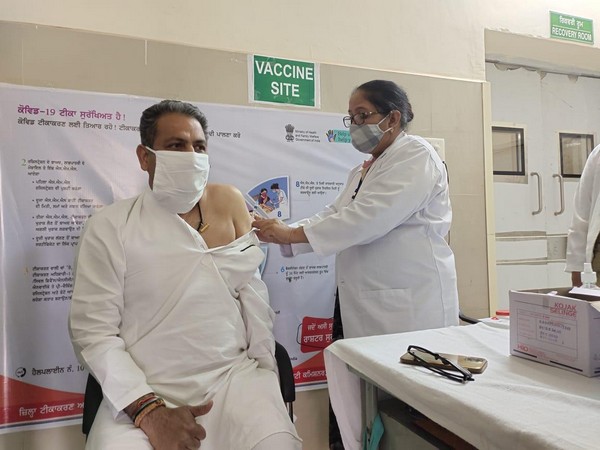

Mumbai (Maharashtra) [India], April 23 (ANI): The cost of vaccinating the entire population above 18 years of age will be only 0.36 per cent of the gross domestic product (GDP), according to India Ratings and Research (Ind-Ra).
As the second wave of Covid-19 sweeps the country with alarming speed and severity, the Central government has announced a liberalised and accelerated phase three strategy of vaccination.
Under this scheme, all persons above 18 years of age will be eligible to get Covid-19 vaccine doses from May 1. This means that the total size of the population that will now be eligible for vaccination will be 84.2 crore out of the total population of 133.3 crore.
Ind-Ra said this may cost Rs 67,193 crore of which the Central government will incur Rs 20,870 crore and state governments together will incur Rs 46,323 crore.
The Central government has said that under the scheme, pricing, procurement, eligibility and administration of coronavirus vaccines will be made flexible.
While the vaccination drive will continue as before, providing free vaccination to priority populations like healthcare workers, frontline workers and population above 45 years of age, states and union territories have been allowed to procure additional Covid-19 vaccine doses directly from the manufacturers and open-up vaccination to people above the age of 18 years.
As a result, vaccine manufacturers will now be supplying 50 per cent of their production to the government and the balance 50 per cent will available for procurement by state governments and open market.
Of the total requirement of vaccines, a sum of Rs 5,090 crore has already been spent for procuring 21.4 crore doses. Thus the remaining amount required to be spent for procuring 155.4 crore doses will be Rs 62,103 crore.
"This is not a big amount as Rs 67,193 crore works out to be just 0.36 per cent of GDP. If we split it between the union government and state governments, then the fiscal impact on Union Budget will be 0.12 per cent of GDP and on the state budgets will be 0.24 per cent of GDP," said Ind-Ra.
The maximum impact is likely to be on Bihar (0.60 per cent of GSDP), followed by Uttar Pradesh (0.47per cent), Jharkhand (0.37 per cent), Manipur (0.36 per cent), Assam (0.35 per cent), Madhya Pradesh (0.3 per cent) and Odisha (0.3 per cent).
Since the antibodies generated by these vaccines are likely to last for 12 to 18 months, this expenditure will be a recurring expenditure on Union and state budgets.
However, many states like Kerala, Chhattisgarh, Bihar and Madhya Pradesh have already announced that the government will bear the cost of vaccination. Vaccinations by large corporate groups will reduce pressure on state and central budgets.
Ind-Ra said given the magnitude of problem and economic cost second wave of Covid-19 pandemic is likely to inflict on the economy, it is too small an amount. However, more than the money spent, the critical factor will be how soon the desired level of vaccination can be achieved.
Therefore, the decision to allow the restricted emergency use of Russian vaccine Sputnik-V and other vaccines approved by the US, EU and WHO is another step in the right direction. "This will only accelerate the vaccination effort in the country."
The first batch of Sputnik V is expected to be delivered to India by April-end. (ANI)


