 हिंदी खबर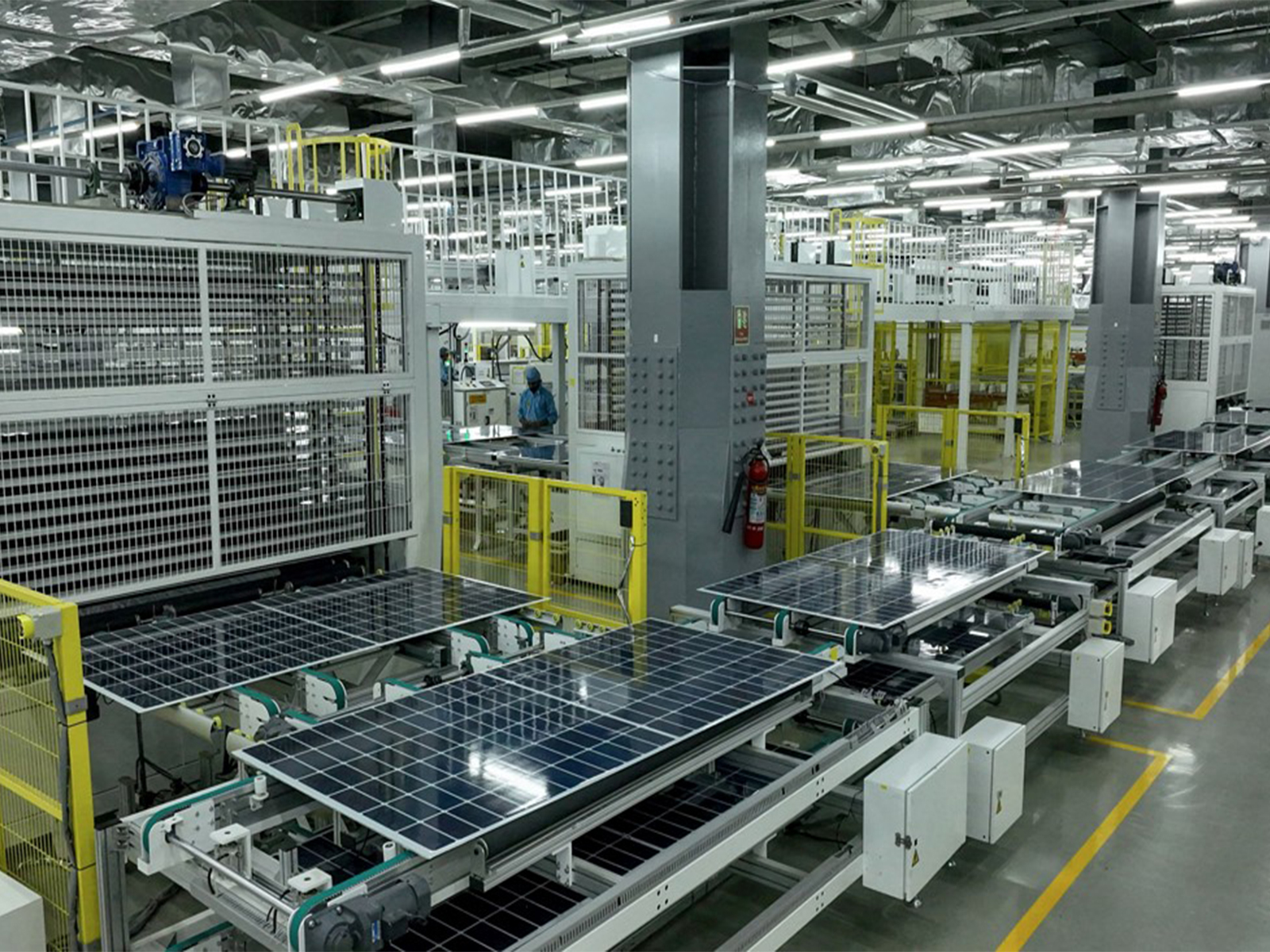

New Delhi [India] November 6 (ANI): Tariffs by the United States on solar imports have dealt a heavy blow to Indian solar module exporters, forcing manufacturers to redirect volumes back into the domestic market, according to a report by ICRA.
The development has aggravated the existing oversupply situation in India's solar module industry and is expected to squeeze margins and accelerate consolidation among smaller players.
ICRA estimates India's solar photovoltaic (PV) module manufacturing capacity to rise sharply to over 165 gigawatts (GW) by March 2027 from around 109 GW at present. Mainly driven by policy measures such as the Approved List of Models and Manufacturers (ALMM), basic customs duty (BCD) on imported modules and cells, and the production-linked incentive (PLI) scheme. However, with domestic annual solar installations expected to hover around 45-50 GW direct current (GWdc), the country's production capacity is projected to far exceed demand.
"The recent imposition of tariffs by the USA and growing regulatory uncertainty are likely to dampen export volumes, putting pricing pressure on domestic OEMs," said Ankit Jain, Vice President and Co-Group Head, Corporate Ratings, ICRA. "Operating profitability for ICRA's sample set of Indian solar OEMs, which remained elevated at around 25 per cent in FY2025, is expected to moderate due to competitive pressures and capacity overhang."
The diversion of modules initially meant for export to the domestic market has intensified the supply glut, pushing down prices and challenging the sustainability of smaller or pure-play module manufacturers. ICRA anticipates a wave of industry consolidation, with vertically integrated companies.
ICRA also noted that while India is rapidly expanding its domestic manufacturing ecosystem, the global supply chain remains dominated by China, which accounts for over 90 per cent of global polysilicon and wafer production and about 80-85 per cent of cell and module capacity. This dependency poses long-term strategic and geopolitical risks for Indian manufacturers seeking backward integration.
On the policy front, the implementation of ALMM List-II for solar PV cells from June 2026 is expected to drive a surge in domestic cell manufacturing, with capacity likely to jump from 17.9 GW currently to around 100 GW by December 2027.
ICRA cautioned that stabilising this expanded capacity will be critical, especially since modules made with Indian cells could cost 3-4 cents per watt more than those using imported cells.
However, despite near-term headwinds, ICRA believes vertically integrated players could gain long-term advantages from greater supply chain control and reduced import reliance. For now, though, the combination of global trade barriers, rapid domestic capacity additions, and weakening exports is expected to keep the pressure on margins and trigger a realignment within India's solar manufacturing sector. (ANI)




