Transport, housing key for Asian cities to continue booming: ADB
Tokyo [Japan], Sep 27 (ANI): To remain engines of economic growth and jobs, developing Asia's burgeoning cities need efficient transport networks and affordable housing backed by effective and coordinated land and economic planning, according to the theme chapter of recent Asian Development Outlook (ADO) 2019 Update released by the Asian Development Bank (ADB).
ANI
Sep 27, 2019 12:43 IST

Tokyo [Japan], Sep 27 (ANI): To remain engines of economic growth and jobs, developing Asia's burgeoning cities need efficient transport networks and affordable housing backed by effective and coordinated land and economic planning, according to the theme chapter of recent Asian Development Outlook (ADO) 2019 Update released by the Asian Development Bank (ADB).
"Asia's cities have been important contributors to economic growth, job creation, and innovation, but this is not a foregone conclusion for future decades," said ADB Chief Economist Yasuyuki Sawada. "Addressing weak infrastructure, congestion, housing, and education and health care services is critical if cities -- and their host countries -- are to remain dynamic."
The number of urban inhabitants in developing Asia increased by five times from 375 million in 1970 to 1.84 billion in 2017. By 2050, it is expected to reach about three billion people or around 64 per cent of the region's population. Cities are also growing geographically, often beyond pre-defined administrative boundaries, and connecting with surrounding areas to form city clusters.
Cities are defined differently in different countries. Using night-time satellite imagery and grid population data that can assess where people actually live and work, ADB estimates that developing Asia in 2016 had 1,459 so-called natural cities. These natural cities are estimated to house 34.7 per cent of developing Asia's population on 2.3 per cent of its land area.
China had the most with 680 followed by India with 320, Indonesia with 93 and Pakistan with 63. Together, these four countries accounted for about 80 per cent of the natural cities in developing Asia.
Over time, many of these natural cities have grown interconnected so that by 2016, there were 124 city clusters, 28 of which are home to more than 10 million people. Of those, eight were in China, seven in India, three in Indonesia, two each in South Korea and Vietnam, and one each in Bangladesh, Malaysia, Pakistan, the Philippines, Taiwan and Thailand.
The largest city cluster surrounds Shanghai in China, connecting 53 natural cities that belong to four province-level administrative regions.
To function as a vibrant jobs market, cities need affordable and efficient public transport that combines trains, buses, ride sharing, and more informal services -- like jeepneys and auto rickshaws -- that are well regulated. This will cut the congestion already prevalent in cities like Manila, Kuala Lumpur, and Yangon.
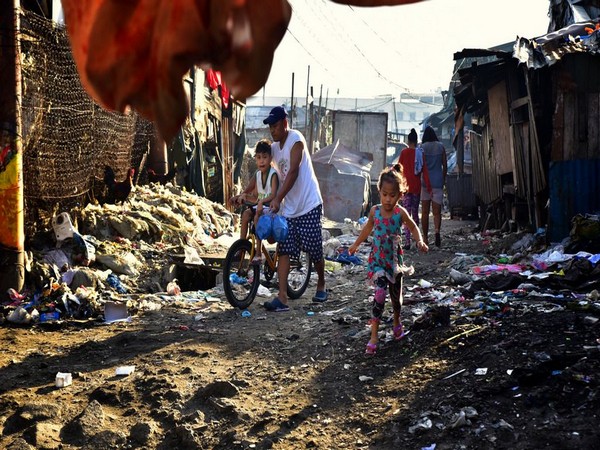
Governments should ensure ample land is available to build reasonably priced homes, public amenities and public transport networks. The report studied 211 cities in 27 countries and found 90 per cent of them suffered from home prices that were severely unaffordable for average-income households. (ANI)
Tags:
Get the App