The Indian E-Commerce Bet Nobody Made: Letting People Bargain | Gajab.com
New Delhi [India], June 11: Walk through any market in India (the wholesale gullies of Surat, the morning mandis of Pune, the kirana lanes of Lucknow, the crowded electronics markets of Chennai) and you will hear the same low hum of commerce. Prices being named. Countered. Pushed back on. Adjusted. And finally, with some performance of reluctant agreement on both sides, landed on. The transaction completes. Everyone moves on.
ANI
Jun 11, 2026 13:47 IST

VMPL
New Delhi [India], June 11: Walk through any market in India (the wholesale gullies of Surat, the morning mandis of Pune, the kirana lanes of Lucknow, the crowded electronics markets of Chennai) and you will hear the same low hum of commerce. Prices being named. Countered. Pushed back on. Adjusted. And finally, with some performance of reluctant agreement on both sides, landed on. The transaction completes. Everyone moves on.
This is not a habit that is fading. According to a joint report by Boston Consulting Group and the Retailers Association of India, more than 80% of India's $940 billion retail market is still unorganised: the local stores, street markets and neighbourhood vendors where bargaining is simply how things work. The same report confirms that over 58% of all Indian retail purchases still happen offline, even as India has become the world's third-largest market for online shoppers.
A separate PwC Global Consumer Insights Pulse Survey, India perspective (June 2023) finds that around 66% of Indian consumers, well above the global figure of 56%, almost always or frequently use their smartphone to research products for competitive prices, special offers and availability before purchasing. India is not price-passive online. It is actively searching for a better deal. It just cannot ask for one.
India's e-commerce industry, valued at $125 billion in 2024 and among the fastest-growing in the world, has not found a way to include any of it.
That is the gap a new platform called Gajab.com is now attempting to close.
What E-Commerce Took Away
The story of Indian e-commerce is largely a story of convenience. Faster delivery, cleaner interfaces, one-click payments, next-day fulfilment; every major improvement has been about removing friction from the path between buyer and product.
What did not survive this process was the buyer's voice in setting the price.
In traditional Indian retail, pricing is not a finished statement; it is the opening of a conversation. The seller names a number. The buyer reacts. Something happens in between that gives both sides a sense of having arrived at a fair outcome together. This is what Indian shoppers mean when they talk about a bargain. Not the discount. The process.
"The buyer can accept or leave, but they cannot participate. That layer of the transaction has been designed out of existence."
Indian e-commerce replaced this process entirely. Discounts are real, but they are the platform's decisions. Coupons exist, but they appear when the platform decides. Flash sales create urgency, but not agency. The power to influence the final price has never passed to the buyer's side of the screen.
What makes this more notable is that it was not inevitable. International platforms like eBay had built pricing flexibility into their models through bidding and offer mechanisms long before Indian e-commerce scaled. A buyer in Germany or Singapore could submit an offer on a listing and bargain toward a price. That feature never made it into the Indian shopping experience, despite India being, by most measures, the world's most price-sensitive large consumer market.
The Founder
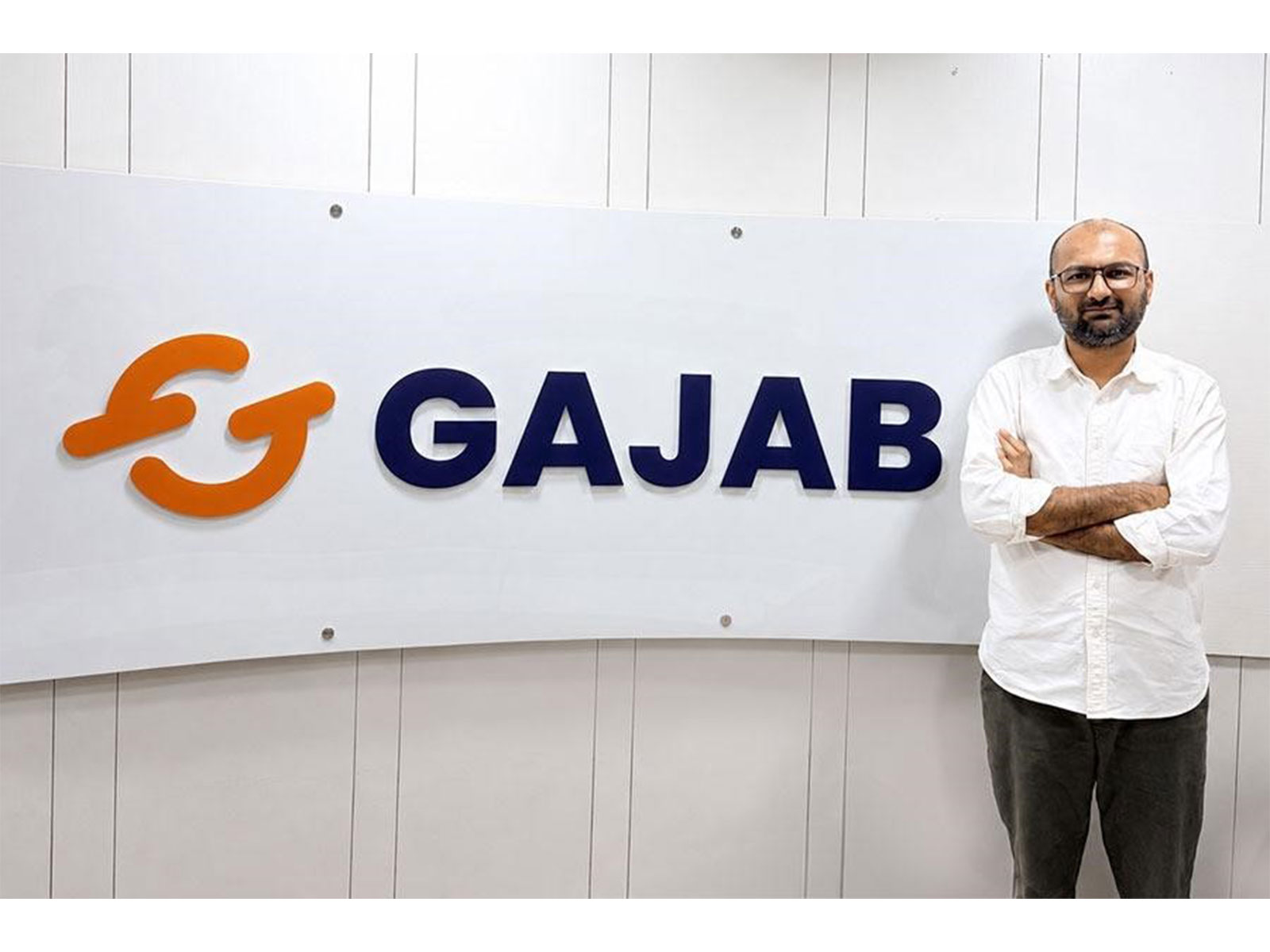
Shahnawaz Merchant, who founded Gajab, spent years as a seller on international e-commerce platforms including eBay, trading with buyers across Singapore, the United States, the Middle East and Germany. The contrast he observed there was direct. International buyers on those platforms could make offers. They could submit a number and wait to see what happened. That back-and-forth (the digital equivalent of the bazaar exchange) was built into the experience as a standard feature.
Indian e-commerce offered none of this. The platforms had chosen speed and scale over participation. Merchant watched the industry move further in that direction, more automated, more frictionless, more fixed, while the country's actual retail behaviour stayed stubbornly unchanged in its preference for the bargain.
The Platform
Gajab, available on Android, iOS and at gajab.com, is built on a single premise: give the buyer a say in the price.
The platform lets buyers submit what they consider a fair price for any listed product (what Gajab calls the buyer's "Mera Right Price"), a deliberate play on MRP (Maximum Retail Price), the printed figure that has always told Indian consumers what a product costs, without ever asking what they think it should.
An automated bargaining engine evaluates each offer against the seller's pre-set floor price and parameters and responds, without any direct interaction between buyer and seller being required. Sellers define their floor and their bargaining range at the time of listing. Buyers submit an offer. The platform handles the exchange. The average bargain completes in under 30 seconds, faster than checking prices across two competing apps.
Gajab has launched in beta across India with 5,000 SKUs across three categories: toys and games, home and kitchen, and stationery. The company is targeting 25,000 SKUs before the end of the current quarter, more than doubling its opening catalogue within 90 days of going live.
The category choices carry a logic. Toys and games are bought for occasions (birthdays, festivals, gifts), making buyers particularly price-conscious and motivated to seek a better deal. Home and kitchen and stationery are repeat-purchase categories where comparison shopping is already standard behaviour. These are buyers who are, in effect, already looking for their right price. Gajab is the first platform to let them say it.
What Early Users Found
Among buyers who tried the beta, Goutham from Bangalore described his first experience plainly. "Finding a bargain feature like this online was a complete surprise," he said. "I loved my first bargain and placed my order right away."
On the seller's side, Sagar Navapara, Proprietor of Unique International, said the speed of his first conversion stood out. "I got my first order within three days of going live on Gajab. It is the easiest marketplace I have listed on."
The Larger Bet
The problem Gajab is attempting to solve is hard to dismiss. Deloitte and FICCI data shows that Tier 2 and Tier 3 cities now account for over 60% of e-commerce transactions in India. These are markets where bargaining has not retreated into nostalgia. It is a current behaviour, practised daily in physical retail. As digital commerce expands deeper into Bharat, the gap between how those consumers shop offline and what online platforms offer them is not closing. It may, in fact, be widening.
Indian e-commerce has spent a decade asking India to shop differently.
"Gajab is asking India to shop like itself."
(ADVERTORIAL DISCLAIMER: The above press release has been provided by VMPL. ANI will not be responsible in any way for the content of the same.)
Get the App