Scaling E85 and E100 ethanol requires shift from food-based to 2nd-generation feedstock: TPCI's Ahuja
He said the current reliance on sugarcane, maize and rice, which require significant inputs such as water, fertiliser and electricity, cannot be the long-term pathway for scaling higher ethanol blending targets.
ANI
Jun 12, 2026 19:31 IST

New Delhi [India], June 12 (ANI): To scale the use of E85 and E100 ethanol blends in India sustainably, an industry expert on Friday emphasised a strategic pivot away from food-based feedstocks toward second-generation (2G) ethanol and waste-based ethanol production.
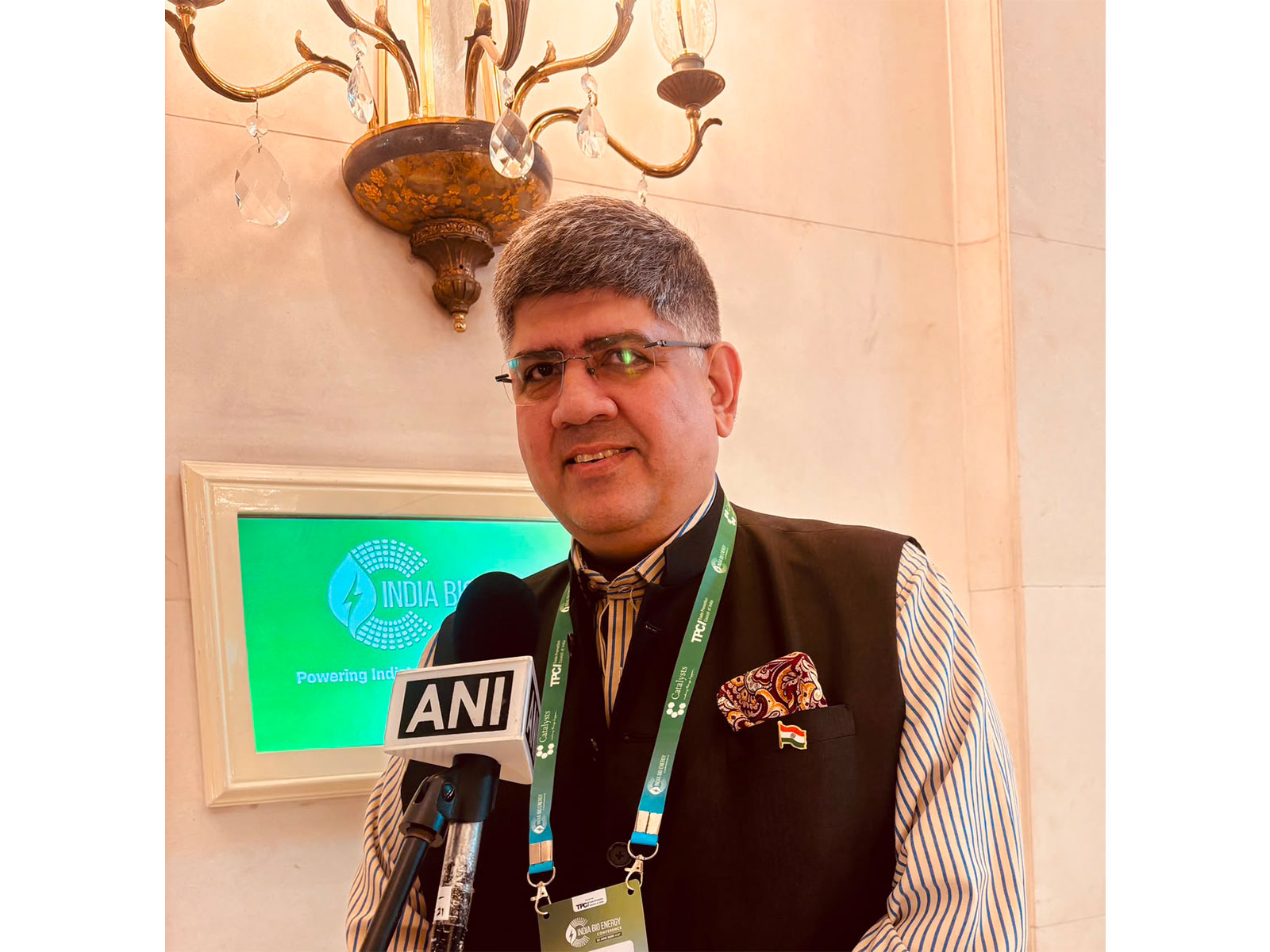
Speaking to ANI, Lt Col Monish Ahuja (Retd), Co-Chair, National Committee on Bio Energy, Trade Promotion Council of India (TPCI) said, "E85 and E100 have to be done. Secondly, food for energy or food for ethanol should not be done," on the sidelines of a bioenergy event.
While India has made significant strides with its E20 blending program, transitioning to higher blends like E85 (85% ethanol) and E100 (pure ethanol) creates a substantial surge in demand, estimated to be three to five times higher than current requirements. Relying solely on conventional crops like sugarcane and paddy to meet this volume risks intensifying the "food versus fuel" debate and placing further strain on water-intensive agricultural regions.
He said the current reliance on sugarcane, maize and rice, which require significant inputs such as water, fertiliser and electricity, cannot be the long-term pathway for scaling higher ethanol blending targets.
"When we are saying maize, sugarcane, rice, water, fertiliser, free electricity and after that we convert it to ethanol, that would not be the way ahead," he said.
Ahuja stressed that second-generation (2G) ethanol from agricultural residue and third-generation ethanol from waste gases must become the primary route for achieving higher blending mandates such as E85 and E100.
"We need to do second-generation ethanol from the agricultural residue stream. We need to do third-generation ethanol from the waste gas stream. These are the technologies for the E85, E100 mandate," he said.
2G ethanol is produced from non-food sources, such as agricultural residues, forestry wastes, and secondary biomass, which helps avoid competition with human and animal food chains.
He noted that while India has already made significant progress in ethanol blending through the rollout of E20 petrol, future expansion must be carefully designed to ensure sustainability and food security.
"The government has done fantastically well to get the E20 number. We are all proud of it," he said.
However, Ahuja cautioned that a portion of the current ethanol programme is linked to food-based feedstocks.
"Almost 14 per cent of that E20 number comes from the food stream. Sugarcane, corn and rice," he said.
He argued that achieving E85 and E100 entirely through food-based sources would be difficult and could create pressure on food resources.
"Are we saying that we are going to do E85, E100 from the food stream? Very difficult. Food security will be over energy security," he said.
According to Ahuja, alternative pathways such as sustainable aviation fuel (SAF), e-methanol and advanced biofuels derived from agricultural residues and waste streams will be essential for India's long-term energy transition and energy security goals.
He said the required technologies are already available both globally and within India, but large-scale deployment will depend on supportive pricing frameworks and policy measures.
"There is, yes, global technology available; within India, technology is available. It is a question of pricing and deployment," he said.
Drawing a comparison with India's solar energy journey, Ahuja said early policy support and investments helped create a viable market that eventually drove down costs and attracted capital.
He said a similar approach is required for ethanol and compressed biogas (CBG), where long-term policy certainty, market creation and competitive bidding mechanisms can encourage investment and accelerate adoption.
Ahuja expressed confidence that India has sufficient agricultural residue resources to support the growth of advanced biofuels if the right ecosystem is developed.
During the event, industry stakeholders also highlighted the need for a diversified fuel mix to support India's evolving energy landscape.
On the sidelines of the same event, Ranjith Kumar, Chief Manager (RLNG/Gas Marketing), Indian Oil Corporation Limited (IOCL), told ANI that India's energy transition is unlikely to be centred around a single fuel and will instead involve multiple energy sources operating simultaneously.
"The energy transition in India will be gradual, with EVs, petrol, diesel, CNG and CBG co-existing in the overall fuel mix," Kumar told ANI in an exclusive interview.
He said India is unlikely to move away from fossil fuels in a single step and will instead adopt a diversified energy portfolio in which conventional fuels and cleaner alternatives complement each other. Given the scale and diversity of India's energy demand, no single fuel is expected to dominate the transition process, he added.
Kumar further said established energy companies are well-positioned to adapt to the changing landscape because of their extensive infrastructure and retail networks. According to him, these strengths will help facilitate the gradual integration of bioenergy and other alternative fuels into the mainstream energy market while supporting the country's broader energy security objectives. (ANI)
Get the App