 हिंदी खबर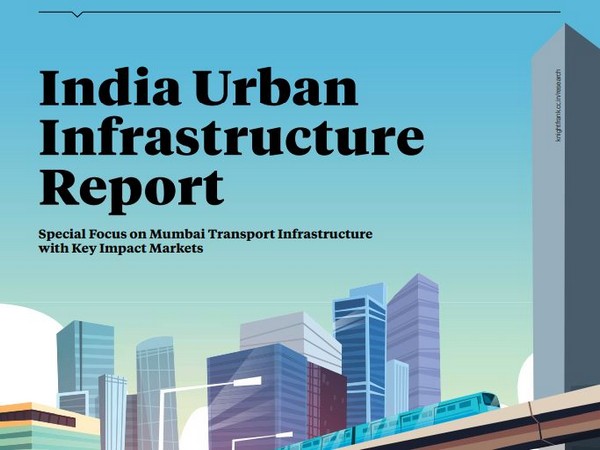

Mumbai (Maharashtra) [India], Jan 29 (ANI): The future of urban centres in India lies in creating long-term and sustainable transport infrastructure, global consultancy Knight Frank said in its latest report released on Wednesday.
The report titled 'India Urban Infrastructure Report' traces the current impact of rapid urbanisation and says that proper planning and infrastructure development is the mantra to ensure that cities sustain their growing population without exacting too great a toll from the environment.
Urbanisation is widely recognised as the best solution to deal with the world's population growth as infrastructure can be focused and optimised, to deal with the requirements of a dense population.
Urban planning is critical to plan appropriate infrastructure that is sufficient for the population and minimises the impact of urban development on the environment. It also dictates the quality of life that the residents will enjoy or must endure in a city.
Urban centres essentially concentrate economic activity and enable the resident population to participate in the country's growth story, said Shishir Baijal, Chairman and Managing Director of Knight Frank India. While urban planning has evolved as a discipline globally, it has generally not kept pace with the rate of urbanisation.
"The current model of urbanisation is more reactive rather than proactive, especially in the developing countries, and results in urban sprawl and low-density suburbanisation that substantially increases the cost of delivering infrastructure to a more dispersed population," he said.
"This has a negative impact on the environment as it is energy-intensive and consequently contributes dangerously to climate change."
The report said investments in infrastructure often occur once the population has already moved into a large extent and the authorities do not have enough time to plan future capacity or execute projects to adequately address existing concerns.
The current issues faced by almost all urban centres in India include poor quality of air, lack of potable water, lack of sanitation, insufficient solid waste management and limited transport infrastructure.
India has long been counted among the fastest growing economies of its size, said the report, but the recent slowdown has cast a shadow on our GDP target of five trillion dollars by 2025.
Shishir said creation and sustenance of urban centres are critical to ensure that India's economic goals are reached in the correct and planned manner. It will be imperative for Indian cities to work on decluttering the city by creating auxiliary centres to its existing economic nodes.
"We feel that this can be done with the help of creating a robust transport system that will allow locations to grow as alternative economic centres pulling settlers away from the existing locations. The growth has to be planned and incentivised for companies to take space in locations other than established commercial areas," he added.
(ANI)
'Reactive' model for urbanisation unsustainable, leading to urban sprawl: Knight Frank India
ANI | Updated: Jan 29, 2020 13:04 IST




