 हिंदी खबर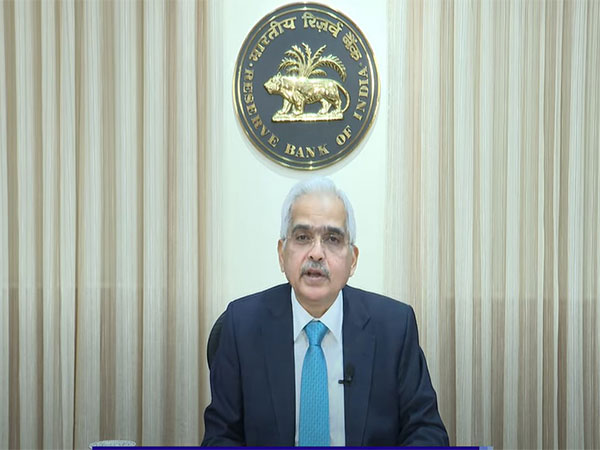

Mumbai (Maharashtra) [India], June 7 (ANI): In a bid to bolster the safety and security of digital payments and enhance regulatory frameworks, the Reserve Bank of India (RBI) unveiled a series of proposals aimed at fostering innovation, inclusivity, and efficiency in the financial ecosystem.
These initiatives, announced by RBI Governor Shaktikanta Das, signify the central bank's commitment to fortifying India's digital infrastructure and promoting a conducive environment for financial transactions.
One of the key announcements made by Governor Das pertained to the establishment of a Digital Payments Intelligence Platform.
This platform, leveraging advanced technologies, aims to mitigate payment fraud risks and enhance the safety of digital transactions.
According to the annual report released by the Reserve Bank of India (RBI) on May 30, there was a significant surge in the number of financial frauds reported by banks, increasing by 166 per cent year-on-year in the financial year 2023-24 to reach 36,075 cases.
This figure starkly contrasts with the 13,564 cases reported in the previous fiscal year, FY23.
Despite the notable rise in the number of fraud cases, there was a substantial decrease in the total amount involved in these incidents.
The amount of money associated with total bank frauds plummeted by 46.7 per cent year-on-year in the financial year 2023-24, totaling Rs 13,930 crore.
In comparison, the amount recorded in FY23 stood at Rs 26,127 crore.
RBI has proposed a revision of the limit of bulk deposits for Scheduled Commercial Banks (SCBs) and Small Finance Banks (SFBs). This move, aimed at enhancing flexibility and aligning with evolving market dynamics, underscores the RBI's commitment to fostering a conducive environment for the banking sector.
Currently, banks have the discretion to offer differential rates of interest on bulk deposits based on their requirements and Asset-Liability Management (ALM) projections. The existing bulk deposit limit for SCBs (excluding Regional Rural Banks) and SFBs, set at 'Single Rupee term deposits of Rs 2 crore and above,' was established in 2019.
However, following a comprehensive review, the RBI has proposed to revise this definition to 'Single Rupee term deposits of Rs 3 crore and above' for SCBs and SFBs.
In addition to the proposed revision for SCBs and SFBs, the RBI has also suggested defining the bulk deposit limit for Local Area Banks (LABs) as 'Single Rupee term deposits of Rs 1 crore and above,' mirroring the criteria applicable to Regional Rural Banks (RRBs).
RBI has also unveiled plans to rationalize export and import regulations under the Foreign Exchange Management Act (FEMA), 1999. This initiative, driven by the imperative of progressive liberalization and operational flexibility, underscores the RBI's commitment to fostering a conducive environment for international trade and investment.
By eliminating redundancies, enhancing clarity, and reducing procedural complexities, the RBI aims to promote ease of doing business for all stakeholders involved in cross-border trade.
The RBI aims to streamline and simplify operational procedures related to export and import transactions, thereby reducing administrative burdens and enhancing efficiency for businesses and authorized dealer banks.
By aligning regulations with international best practices and market realities, the RBI seeks to create a business-friendly environment conducive to fostering trade and investment growth. Simplified regulations will facilitate smoother trade transactions, encouraging businesses to explore new markets and expand their global footprint.
While promoting ease of doing business, the RBI remains committed to ensuring compliance with regulatory requirements and safeguarding the integrity of the financial system. The proposed rationalization will uphold the principles of transparency, accountability, and risk management in cross-border transactions.
As part of the process, the RBI plans to publish draft regulations and directions on its official website by the end of June 2024.
In a bid to enhance the convenience and efficiency of digital payments, RBI has unveiled plans to expand the e-mandate framework to include recurring payments for Fastag, National Common Mobility Card (NCMC), and similar services.
This initiative, aimed at modernizing payment systems and promoting financial inclusion, underscores the RBI's commitment to fostering innovation and leveraging technology to meet evolving consumer needs.
The current UPI Lite service permits customers to load their UPI Lite wallets with up to Rs 2000/- and conduct transactions of up to Rs 500 from the wallet.
To enhance the seamless usage of UPI Lite for customers, and in response to feedback from various stakeholders, it is suggested to integrate UPI Lite into the e-mandate framework.
This integration would introduce an auto-replenishment feature for UPI Lite wallets, automatically refilling the wallet balance when it falls below a predetermined threshold set by the customer.
Since the funds remain under the customer's control (transferring from their account to the wallet), it is proposed to eliminate the need for additional authentication or pre-debit notifications. Relevant guidelines pertaining to this proposal will be issued shortly.
RBI has embarked on a mission to foster innovation and transformation in the financial sector with the launch of its third edition of the global hackathon, "HARBINGER 2024 - Innovation for Transformation."
It would feature two primary themes: 'Zero Financial Frauds' and 'Being Divyang Friendly.' Solutions aimed at bolstering the safety and security of digital transactions, with a specific emphasis on identifying, preventing, and combating financial frauds, will be solicited.
Additionally, there will be a focus on fostering inclusivity for individuals with physical disabilities. Further details regarding the hackathon will be unveiled shortly. (ANI)
RBI announces digital payments intelligence platform to check online frauds
ANI | Updated: Jun 07, 2024 12:53 IST


