 हिंदी खबर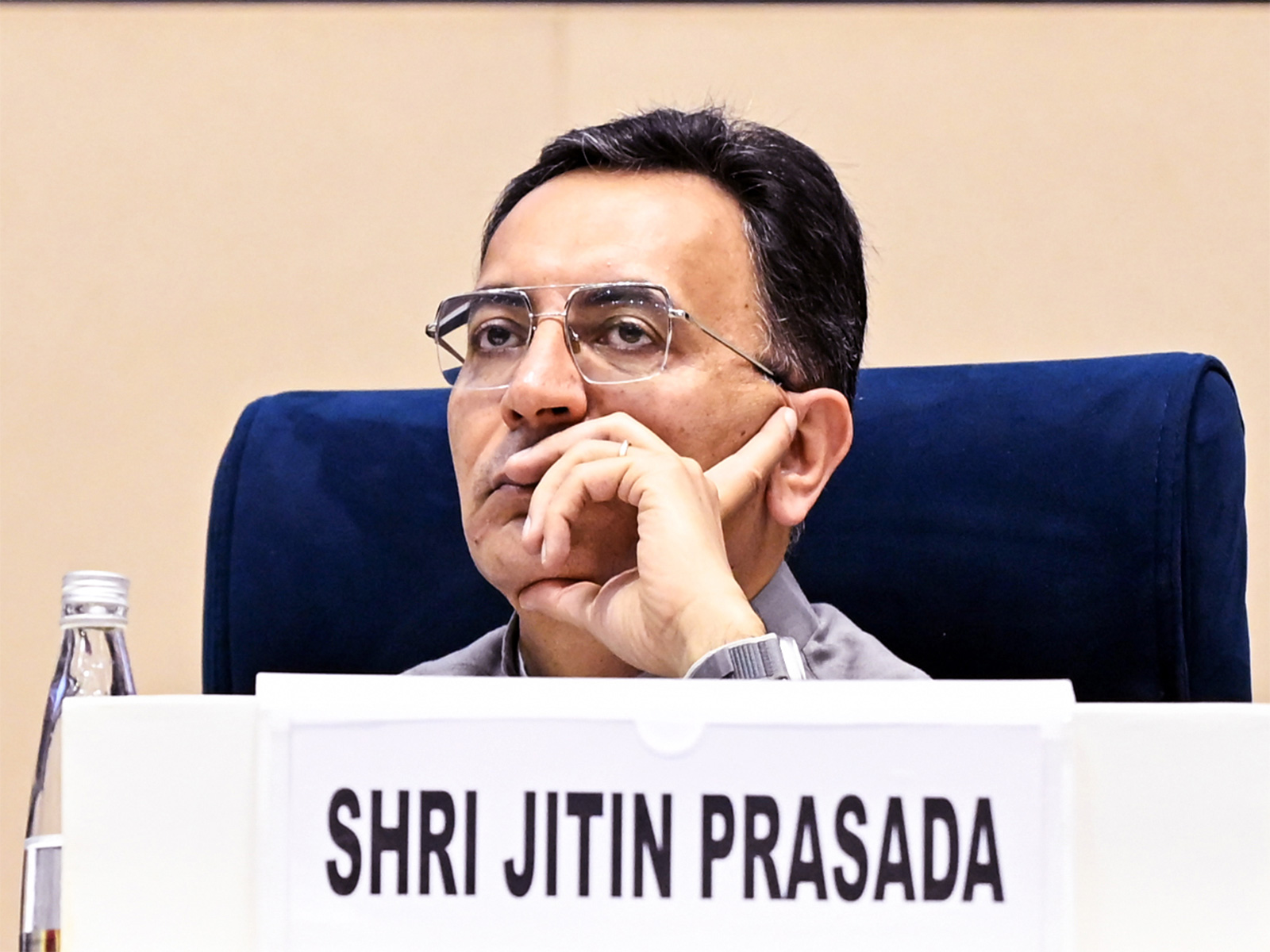

New Delhi [India], December 12 (ANI): The Production Linked Incentive (PLI) programme, rolled out across multiple priority sectors, has materially improved domestic manufacturing capacities, attracted large-scale investments and supported export growth in participating sectors, Jitin Prasada, Minister of State for the Ministry of Commerce & Industry, said in a written reply in the Rajya Sabha today.
As on September 2025, PLI schemes across approved sectors have resulted in realised investments and measurable increases in production/sales and employment -- figures monitored and reported in periodic reviews, the reply added.
According to the MoS, the actual investment of Rs 02 lakh crore have been realized till September 2025 across 14 sectors, which has resulted in incremental production/sales of over Rs. 18.7 lakh crore and employment generation of over 12.6 lakhs (direct and indirect).
The impact of PLI Schemes has been significant across various sectors in India. It has also resulted in significant reduction in gap between the domestic manufacturing capacity and demand of critical drugs.
Under the PLI Scheme for medical devices, 21 projects have started manufacturing of 54 unique medical devices, which include high end devices such as Linear Accelerator (LINAC), MRI, CT-Scan, Heart Valve, Stent, Dialyzer Machine, C-Arm, Cath Lab, Mammograph, MRI Coils, etc.
India's position in the global pharmaceuticals market has expanded and it is the third-largest player by volume. Exports now account for 50 per cent of production, and the country has reduced reliance on imports by manufacturing key bulk drugs like Penicillin G.
Domestic production of Mobile phones increased from Rs 18,000 crore in 2014-15 to Rs 5.45 lakh crore in 2024-25, a 28-fold rise. Import substitution of 60 per cent has been achieved in the Telecom sector and India has become almost self-reliant in Antennae, GPON (Gigabit Passive Optical Network) & CPE (Customer Premises Equipment. Global tech companies have set up manufacturing units, turning India into a major exporter of 4G and 5G telecom equipment.
The written reply further added that 84 companies under the PLI Scheme for White Goods (ACs and LED Lights) are set to bring investments of Rs 10,478 crore, strengthening domestic capacity in AC and LED segment.
Cumulative incentive amount of Rs 23,946 crore have been disbursed as on 30.09.2025 under PLI Scheme for 12 sectors, namely Large Scale Electronics Manufacturing (LSEM), IT Hardware, Bulk Drugs, Medical Devices, Pharmaceuticals, Telecom & Networking Products, Food Processing, White Goods, Drones & Drone Components, Specialty Steel, Textile products and Automobiles & Auto components.
India's merchandise exports during April to October 2025 have demonstrated resilient performance despite challenging global conditions.
Several key sectors like electronic goods grew strongly by 41.94 percent, driven by robust demand for smartphones and consumer electronics in major markets including the USA, UAE, and China.
Agricultural exports such as rice, fruits, spices, coffee, and marine products also expanded steadily, while pharmaceutical exports increased moderately by 6.46 percent supported by orders from countries like Nigeria and the USA.
The engineering goods sector, the largest export category, posted a growth of 5.35 percent aided by higher shipments to Germany, the UK, and South Africa.
Overall, merchandise exports for the fiscal year so far remain positive compared to the previous year, reflecting underlying resilience despite global economic volatility, geopolitical disruptions, and softened demand in some markets.
There is, as of yet, no conclusive evidence that the export trends are attributable specifically to any tariff-related action.
India's export sectors continue to demonstrate strength and diversification amid challenging external conditions.
While India successfully expanded exports in several high-growth and high-value sectors, the decline in a few key commodities underscores the lingering impact of global demand softness and price-driven corrections.
The mix of strong performers and stressed categories highlights the need for continued export diversification, value addition, and deeper market access efforts to sustain growth momentum in the coming quarters.
The Ministry of Commerce & Industry have taken multiple measures to support MSME exporters in India. These include:
The Government's strategy for stabilizing export growth includes focused efforts on market diversification, strengthening trade infrastructure, and enhancing access to affordable trade finance, especially for MSMEs. The Export Promotion Mission (EPM), approved by the Union Cabinet on 12.11.2025, is a flagship initiative of the Department of Commerce with a total budgetary outlay of Rs 25,060 crores over six years (FY 2025-31).
It seeks to address key bottlenecks faced by Indian exporters, especially MSMEs, and unlock India's potential as a globally competitive export powerhouse.
Bharat Trade Net (BTN), announced in the Union Budget 2025, is a flagship digital public infrastructure by DGFT under the Ministry of Commerce & Industry.
It seeks to digitise trade documents, improve export finance access, and integrate India's trade ecosystem with global standards. The initiative enhances MSME competitiveness by enabling simpler, paperless documentation, reducing compliance burdens, and facilitating faster, secure trade transactions recognised globally.
This creates easier access to export finance and supports MSMEs in overcoming trade barriers efficiently.
The introduction of grassroots programs like Districts as Export Hubs (DEH) and E-Commerce Export Hubs (ECEHs) enables MSMEs, start-ups, and artisans to access international markets with lower costs and simplified export processes.
Strengthening infrastructure through the National Logistics Policy and PM Gati Shakti enhances multimodal connectivity and reduces logistics costs, directly benefiting MSME exporters by easing supply chain bottlenecks.
The Government continues to actively pursue and negotiate Free Trade Agreements (FTAs) to enhance market access for Indian exporters.
Recently, the Comprehensive Economic Partnership Agreement (CEPA) with the United Kingdom was signed. These FTAs are designed to reduce tariff and non-tariff barriers, promote investment, and create a predictable trade environment.
Alongside these, India is strengthening regional trade agreements and participating in multilateral forums to open new markets and diversify export destinations, the MoS added. (ANI)




