Only 18% of young women in India in paid work vs 79% of young men: Report
Only 18 per cent of young women in India aged 20-29 are in paid employment compared to nearly 79 per cent of young men, despite achieving near gender parity in higher education. A new white paper by the Centre for Finance & Economics Research (CFER) at Great Lakes Institute of Management reveals that fewer than half of young adults are employed, with women's low participation acting as the primary driver of interstate variation.
ANI
Mar 06, 2026 12:22 IST

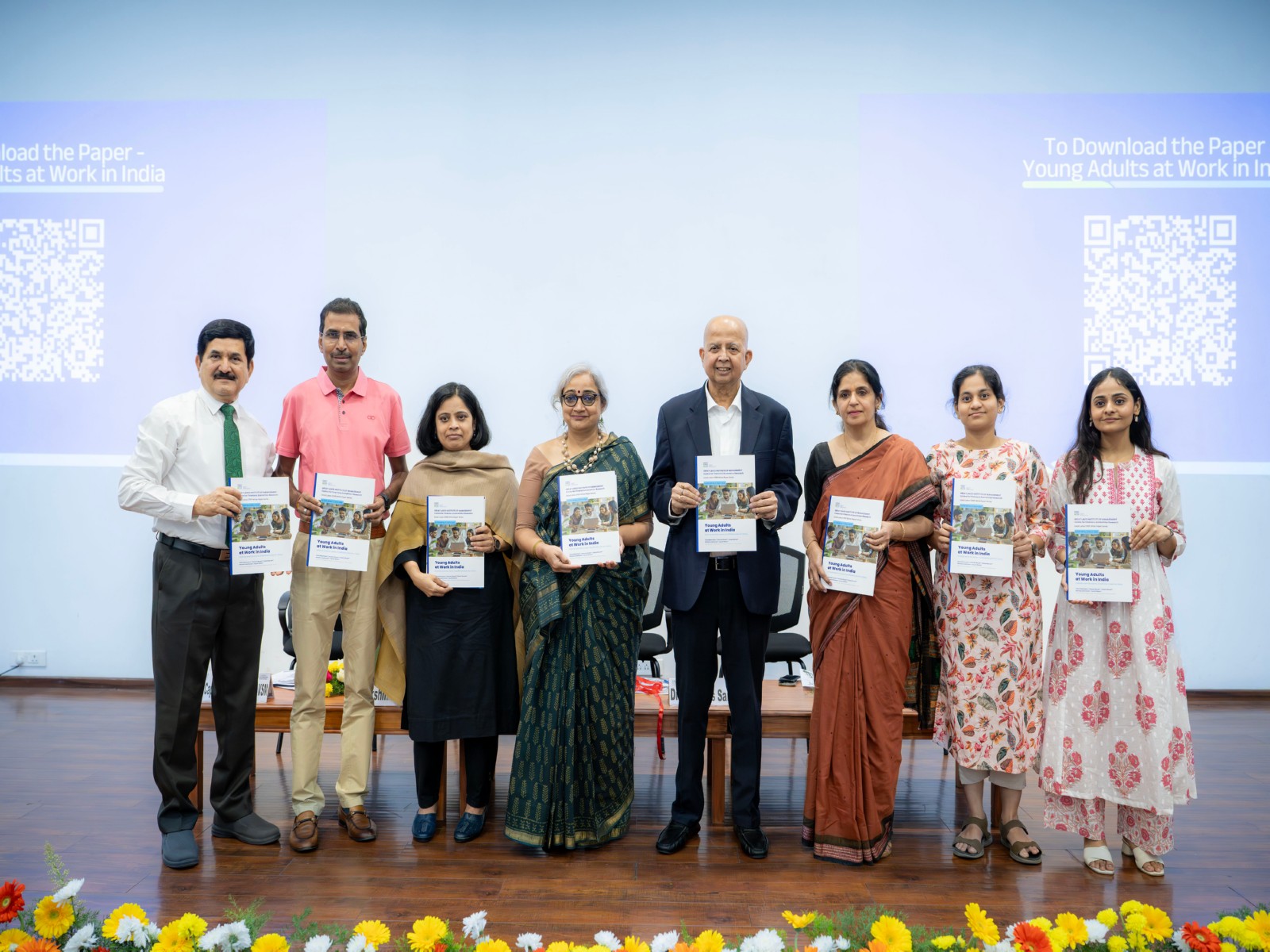
New Delhi [India], March 6 (ANI): Only 18 per cent of young women in India aged 20-29 are in paid employment compared to nearly 79 per cent of young men, despite achieving near gender parity in higher education. A new white paper by the Centre for Finance & Economics Research (CFER) at Great Lakes Institute of Management reveals that fewer than half of young adults are employed, with women's low participation acting as the primary driver of interstate variation.
The study, titled 'Young Adults at Work in India: Intense Work for Some, Insufficient Jobs for Many', draws on data from India's nationwide Time Use Survey (TUS) 2024.
The report reveals that in several large states, fewer than one in ten young women are employed. Female employment participation is particularly low in Bihar at 6.9 per cent, Uttar Pradesh at 9.8 per cent, Uttarakhand at 11.2 per cent, and Jammu & Kashmir at 12.2 per cent. While higher participation is observed in Telangana at 31.3 per cent and Chhattisgarh at 26.5 per cent, even in these states, less than one in three young women is employed.
"India cannot speak of a demographic dividend if half its young women are unable to participate in paid work. Industry has a responsibility to look beyond hiring and examine the structural constraints: housing, mobility, safety, that determine whether women can even enter the workforce," says Gangapriya Chakraverti, India Site Head & Managing Director, Ford Motor Company.
The Great Lakes White Paper finds that the formal-informal divide affects women far more severely than men. Young men's daily work hours change by only 28 minutes between formal and informal enterprises.
For young women, work hours collapse from 6 hours 50 minutes in formal enterprises to 4 hours 53 minutes in informal ones. However, in Delhi, Tamil Nadu, and Telangana, the gap between men's and women's formal-enterprise work hours falls below 30 minutes.
Professor Debasish Sanyal, Director, Great Lakes Institute of Management, states, "When young women get access to formal jobs in states with more job opportunities, their work intensity matches men's almost exactly. The policy implication is clear: the binding constraint is not supply - it is the ecosystem of housing, transport, safety, and institutional support that determines whether women can participate."
The study also documents an invisible burden where young women in paid work face a total work time of 9 hours 31 minutes once unpaid care is included, exceeding men's total by over 90 minutes.
Vidya Mahambare, Union Bank Chair Professor of Economics and Chairperson, CFER, notes, "India has nearly 200 million young adults aged 20-29 who will remain in the working-age group for at least three decades. Our findings show that barely half are in paid work, and among those who are, there is a disturbing dual reality - excessive hours for some, and insufficient work for many, with young women who are employed, facing dual burden of work," said one of the authors of the papers.
To address these gaps, the white paper recommends four interconnected interventions:
First, removing binding constraints to women's employment by reducing housing, transport, and safety barriers, and expanding institutional housing such as working women's hostels.
Second, accelerating formalisation through simplified regulatory compliance, portable social protection, and rural formal-enterprise infrastructure.
Third, addressing overwork and spatial mismatch by co-locating affordable housing with employment centres and investing in public transport with safe last-mile connectivity.
Fourth, tackling underemployment through expanded market linkages, structured pathways from informal to formal work via skill certification, and the integration of time-use metrics into national employment monitoring. (ANI)
Get the App