"No one would have imagined...": Piyush Goyal hails PM Modi's Vibrant Gujarat initiative; inspiring other states to follow suit, sparking growth-driven competition
Union Minister of Commerce and Industry Piyush Goyal on Monday hailed Prime Minister Narendra Modi's vision for the Vibrant Gujarat initiative, calling it a game-changer that has inspired other states to follow suit and sparked a growth-driven competition.
ANI
Jan 12, 2026 19:53 IST

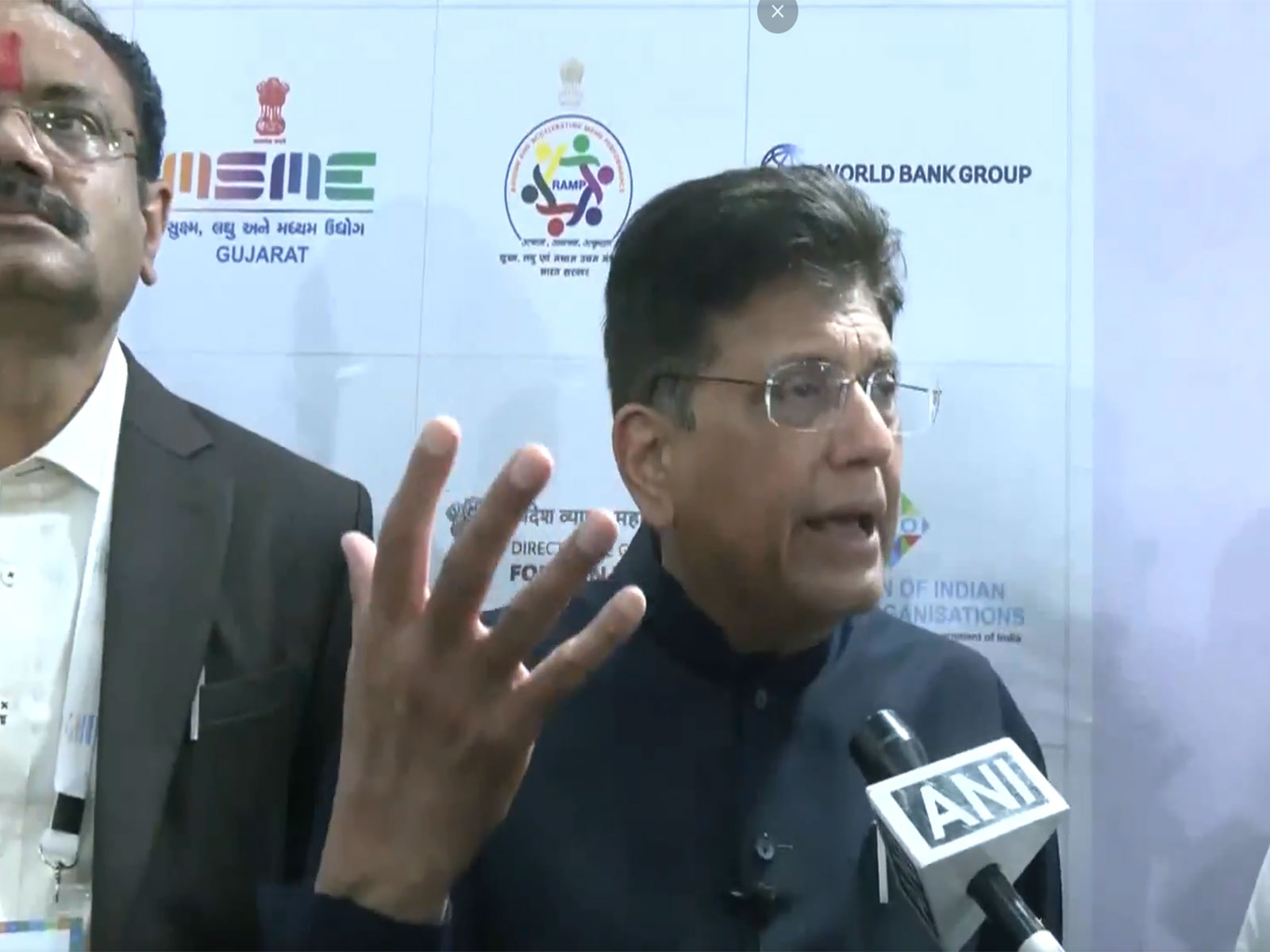
Rajkot (Gujarat) [India], January 12 (ANI): Union Minister of Commerce and Industry Piyush Goyal on Monday hailed Prime Minister Narendra Modi's vision for the Vibrant Gujarat initiative, calling it a game-changer that has inspired other states to follow suit and sparked a growth-driven competition.
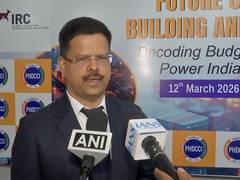
Speaking with ANI, Goyal said, "In 2003, when PM Narendra Modi started the Vibrant Gujarat Summit, no one would have imagined that this experiment would be so successful that other states would copy it. A spirit of competition will arise among states, which is essential for growth and nation-building... This conference will greatly boost the regional development. Businesses, startups and all sectors of industry in the region will greatly benefit."
The Vibrant Gujarat Summit was launched in 2003 by Narendra Modi, then Gujarat's Chief Minister, to promote investment in the state; it has since grown into a major global platform for business, knowledge sharing, and strategic partnerships under his vision.
Speaking at the Vibrant Gujarat Regional Conference flagship programme on Solar Dividends in Rajkot, Gujarat, Goyal highlighted how market competition and technological scaling transformed solar power from a high-cost alternative into an economically viable energy source.
The Minister recalled that during Prime Minister Narendra Modi's tenure as Gujarat's Chief Minister, solar energy faced significant criticism due to high upfront costs. Goyal noted that electricity was priced at Rs 16 per kilowatt-hour at the time.
He explained that the Prime Minister maintained a clear view that, while prices were high due to limited volumes and new technology, costs would inevitably drop as the scale of application increased and technology improved.
"When the Prime Minister was the Chief Minister of Gujarat, he started encouraging solar energy. I still remember, there was a lot of criticism. People used to say that electricity was so expensive. At that time, electricity cost Rs 16 per kilowatt-hour. People used to criticise: "Why are you buying electricity at Rs 16 per unit?" The Prime Minister had a very clear thought."
The transition from a feed-in tariff system to a competitive bidding model marked a pivotal change in India's energy economy. Goyal noted that in the final months of 2014, the government decided to procure solar energy through reverse auctions rather than have regulators set costs based on investment expenses. The introduction of market forces enabled developers to compete online and quote lower rates, which subsequently drove prices down significantly.
"I still remember that in the last few months of 2014, for the first time in the country, a directive was issued to procure solar energy through a reverse auction," Goyal said.
Reflecting on the impact of these reforms, Goyal noted that in the first auction conducted through reverse bidding, the rate fell to approximately Rs 2.5 per unit. This reduction represented less than half of the previous rates and paved the way for utility-scale projects.
These massive installations, ranging from 1,000 MW to 2,000 MW, began emerging rapidly across the country as the government prioritised renewable energy as a national necessity.
The scaling of ambition played a critical role in the sector's growth. Goyal noted that while the initial national goal was to produce 20,000 MW of solar energy by 2030, the target was revised to 100 Gigawatts (1 lakh Megawatts) shortly after the current administration took office in 2014.
This aggressive target-setting occurred when electricity cost approximately Rs 5 to Rs 6.5 per unit, underscoring the firm's resolve to promote renewables.
Beyond the financial metrics, the Minister emphasised the operational advantages of solar power. He stated that once the initial capital investment is made, there is no further fuel expenditure, such as for coal, gas, or diesel.
Goyal described solar energy as a large-scale, natural resource available across India and Gujarat, contributing to the broader effort to reduce pollution while providing a sustainable alternative to traditional fossil fuels. (ANI)
Tags:
Get the App